Saturday, August 5, 2023

A Man Called Otto (2022)


from Roger Ebert: https://www.rogerebert.com/reviews/a-man-called-otto-movie-review-2022

A Man Called Otto (2022)


In Marc Forster’s genial, earnest yet unremarkable dramedy “A Man Called Otto,” the titular character Otto can’t pick his daily battles even if his life depended on it. Living in an unfussy suburban neighborhood of identical row houses somewhere in the Midwest, the aging man gets easily annoyed by every little misstep of a stranger. And his protests are so pronounced that they even rival Larry David’s in an average episode of “Curb Your Enthusiasm.”

Portrayed by the beloved Tom Hanks in an indistinct performance that splits the difference between quirky and grounded, Otto is often right about his grievances, to his credit. Why should he pay for six feet of rope and waste a few extra cents, for instance, when he bought just a little over five? Why shouldn’t he warn inconsiderate drivers who often block garage doors or entitled neighbors who can’t as much as remember to close a gate and respect basic rules about trash disposal? Or pick up a fuss when the soulless real estate guys from the fictional and hilariously named “Dye & Merica” show up to sabotage the community’s peace?

Then again, not everything is as awful as Otto makes them out to be. And he could perhaps afford to have some manners himself, especially when a new, very pregnant neighbor drops by with a bowl of home-cooked meal as a courtesy.

If you’ve already seen 2015’s Oscar-nominated Swedish hit “A Man Called Ove” by Hannes Holm, a film that is not any better or worse than this middle-of-the-road American remake (yes, not all originals are automatically superior), you’ll know that Otto hasn’t always been this insufferable. In small doses of syrupy and visually overworked flashbacks, Forster and agile screenwriter David Magee show us that he was socially awkward even from his young days, but at least nice and approachable. With a squarely unstylish side-part haircut that aptly gives out a “nice but unworldly guy” vibe, young Otto (played by the star’s own son, Truman Hanks) had an interest in engineering, in figuring out how things work. His life apparently changed when he accidentally met the dreamy Sonya (Rachel Keller), who later on became his wife and passed away recently.

As was the case in “Ove,” Otto can’t wait to join his wife on the other side, but his frequent suicide attempts get interrupted in episodes that are sometimes awkwardly funny, and other times, just plain awkward. The chief interrupters of our get-off-my-lawn guy are the abovementioned new neighbors: the happily married-with-kids couple Marisol (a bubbly and scene-stealing Mariana TreviƱo, the absolute best thing about the film) and Tommy (Manuel Garcia-Ruflo), who often ask little favors from the grumpy Otto. There are also others in the neighborhood, like a kindly transgender teenager Malcolm (Mack Bayda) thrown out of his house by his dad, the fitness-obsessed Jimmy (Cameron Britton), Otto’s old friend Rueben (Peter Lawson Jones), and his wife Anita (Juanita Jennings), who are no longer on cordial terms with Otto. And let’s not forget a stray cat that no one seems to know what to do with for a while.

The mystery is that none of the supporting personalities in this story can take a hint about Otto, at least not well into the film’s second act. Instead, all the characters collectively treat Otto with patience and acceptance, as if he isn’t being willfully rude to them every chance he gets. For example, it’s anyone’s guess why Otto’s work colleagues bother to throw him a retirement party when it will surely go unappreciated or why Marisol continuously insists on trying to bring out the good side of him when Otto offensively shuts down every one of her genuine attempts.

Still, the story manages to land some charms when Otto finally lets his guard down and starts making all the expected amends, while suffering a rare heart condition on the side. First, he becomes a local hero when he unwittingly saves someone’s life in front of a group of unhelpful people too preoccupied with their phones. Later on, he racks up additional goodwill when he takes Malcolm in and builds a slow yet steady friendship with Marisol, a rewarding storyline in an otherwise predictable tale.

But the biggest win of Forster’s adaptation is its worthwhile message about the small wins of everyday people who operate as a functioning and harmonious community against the evils of faceless corporations. “A Man Called Otto” isn’t exactly as philosophical as “About Schmidt” or as socially conscious as “I, Daniel Blake,” two films that occasionally hit similar notes. But it’s nevertheless a wholesome crowd-pleaser for your next family gathering.

Tuesday, July 18, 2023

The Bear S1


from Collider: https://collider.com/the-bear-season-1-recap/

The Bear S1


BY TOPHER BIGELOW PUBLISHED JUN 21, 2023

The Bear was an unexpected smash of Summer 2022. Some of the initial fervor was fueled by the Chicago return of Jeremy Allen White after the ten-year run of Shameless. However, unlike Shameless, which was mostly filmed in LA, The Bear is all about Chicago.

The show follows White’s Carmy Berzatto, an award-winning chef. Carmy’s love of food extends beyond an Italian heritage to a greasy spoon Italian beef joint that has been in his family for years. Despite his overwhelming desire to work there, Carmy’s brother Michael (John Bernthal) refuses to let him. This core rejection drives Carmy’s ambition in the kitchen. He trains under an abusive executive chef (Joel McHale), adding to his conflation of love and pain as it relates to cooking.

His life falls apart after his brother commits suicide and inexplicably leaves him the business. Carmy quits his fine dining job in New York to return to Chicago to keep The Original Beef of Chicagoland (known simply as "The Beef") alive. To call the restaurant a functional business is generous. The whole thing seems to be maintained through duct tape and sheer force of will. The ragtag team of employees is chaotic in both personality and process, and none of them make Carny's transition into a new work environment easy.

For its brief season and even shorter episodes, The Bear packed a lot of action and emotional resonance into its first season. Fresh off of his James Beard award win, Carmy Berzatto returns to Chicago to take over The Beef after his brother’s unexpected suicide. He finds the restaurant in a sorry state: dirty, poorly stocked, inefficient. Michael’s best friend Richie (Ebon Moss-Bachrach) has taken over day-to-day operations, but he is woefully unfit for the task. The kitchen’s haphazard organization fills Carmy with equal parts anxiety and frustration. His early attempts to corral his new troops are unsuccessful, as are early attempts at changing the menu. Desperate for some link between this rickety restaurant and the fine dining world he’d just left, Carmy hires Sydney (Ayo Edebiri), a Culinary Institute of America graduate and Chicago native as his sous chef. Neither Carmy nor Sydney is fully accepted by the other staff. An uncomfortable truce settles over The Beef as they learn to work together in whatever way they can.

Natalie (Abby Elliott), Carmy’s younger sister, appears during a tense moment and the two struggle to connect. It’s clear that the siblings have never been close, and both were blindsided by Michael’s death. She is hurt that Carmy has dedicated all of his time to the restaurant and has spent so little time with the family grieving. She has also inherited a stake in the restaurant and tries to convince Carmy to sell it, as she has received threatening letters from the IRS about unpaid taxes. Carmy’s immediate instinct is to refuse. He wants to keep the restaurant open as an homage to his brother. She asks for a specific payroll tax form the IRS letters had asked for, and they step into the restaurant’s small office to find it. What they found could most easily be compared to the bottom of a middle schooler’s locker at the end of the school year, an absolute disaster area. Neither of them can find the missing document.

Conditions at The Beef worsen, quickly. A health inspector shows up and notes several health department violations. Carmy discovers his brother had borrowed $300,000 from their loan shark uncle, Jimmy Cicero (Oliver Platt). Cicero offers to buy the restaurant from Carmy and sell it, get it off of their hands so that Carmy can return to New York and his prestige, but he refuses. For all that he tries to suppress his feelings and pour all of his attention into The Beef, Carmy’s emotional health is spiraling. He secretly begins attending Al-Anon meetings to process his feelings and better understand his brother’s issues with addiction and suicide.

With Carmy preoccupied, Sydney is left to endure the staff’s rejection and hazing. She is also responsible for dealing with a lot of the day-to-day issues, even as Richie gets all the credit. Carmy has the bright idea of transforming The Beef’s workflow to something resembling his fine dining style. He leaves Sydney, ill-prepared and disrespected, to enforce it. Sydney feels abandoned and exploited. She eventually gets her feet under her, slowly gaining the respect of her coworkers. Many of them struggle to adjust to their new roles, but Marcus (Lionel Boyce) shines as a baker of chocolate cakes.

The Beef can’t catch a break: just before open, the restaurant’s toilet backs up, flooding the bathroom. Carmy sends for Fak (Matty Matheson), a childhood friend, to fix it. While there, Fak attempts to interview for a job at the Beef with Richie. Richie doesn’t want him working there and the two come to blows. Carmy rushes to break it up. Desperate to stay in Carmy’s good graces, Fak reveals Richie has been selling cocaine in the alley behind the restaurant. Carmy is furious. Richie explains that the money from selling drugs is the only thing that kept the restaurant open through COVID. Meanwhile, Marcus struggles to prepare enough batter to bake cakes for the lunch rush. He attempts to speed things along by turning up the mixer. It is too much for the poor restaurant to bear and the power goes out. Fak determines the restaurant needs a new condenser, but that the part would cost over $5,000 to replace. Uncertain about what else to do, Carmy asks Richie to do one more deal to cover the costs.

Carmy and Sydney mend their relationship when Carmy solicits her help with devising a new dinner menu to drive up profits. Amid all the frenzy, Sydney tries her best to rise to the challenge. She constantly seeks Carmy’s approval, but he is too distracted and stressed to provide it. Even when he tastes her food, he is short, telling her it’s “not ready,” but providing no additional details. Sydney crafts a risotto meal that she is very proud of. When Carmy refuses to even taste the dish, she feels betrayed. Not wanting her food to go to waste, she offers it to a customer free of charge. The next day, Ebraheim (Edwin Lee Gibson), one of The Beef’s line cooks, reads the newspaper as the staff begins prep. The food critic reviewed The Beef, making particular note of the spectacular risotto dish he was given. Carmy is both annoyed and proud of Sydney’s unexpected accomplishment.

This is also the day they’d implemented an online ordering system. During prep, Marcus gets distracted in his attempt to perfect a new pastry and is late getting bread and cakes ready for the day. Carmy powers on the ordering machine and learns that Sydney had accidentally left the pre-order option on when she set it up. Hundreds of tickets pour out, and the restaurant explodes in a frenzy of activity. Carmy screams at Sydney for the mistake and Marcus for being unprepared. In the chaos, Sydney accidentally stabs Richie. He refuses to believe at first that it was an accident. She quits on the spot. Marcus follows her.

The Beef hosts a bachelor party that quickly gets way out of hand. Richie gets into a fight with a patron, nearly killing him. Marcus returns to the restaurant after hearing about the commotion. Carmy, losing his grip on reality, accidentally starts a kitchen fire while trying to light a cigarette on the burner. He doesn’t react, even as the flames spread, staring blankly even as his staff rushes in to put out the fire.

Unexpectedly, Richie gives Carmy a letter he’d found in the break room. The envelope was addressed to Carmy from Michael. Carmy opens it, but is disappointed to find nothing but a recipe for spaghetti. He is angry, frustrated, and feels played by his brother from the afterlife. Not knowing what else to do, Carmy sets out to make the recipe. He notices an odd note in the ingredients section, a suggestion to use the smaller cans of tomatoes because they taste better. Incredulous, Carmy returns the larger can he’d originally retrieved and grabbed a small can. When he opens the can, he finds a wad of $100 bills covered in a sheen of tomato sauce.

He gathers the rest of the staff together and orders them to open all the small cans of tomatoes. All stuffed with cash. He texts Sydney, apologizing for his behavior and offering her a few pointers on her risotto. She shows up at the restaurant and is welcomed like a hero–just before she’s put to work opening cans, too. The season ends with Carmy putting a sign on the door announcing that The Beef is closed and a new restaurant, The Bear, is coming soon.


Part of what makes The Bear so incredible is its nuanced and moving depictions of grief. Michael’s absence is felt in every episode, with each character expressing the loss in their own way. The show exemplifies the resilience required to both weather deep personal loss and a career in the restaurant industry. It will be interesting to see the characters go through a deeper level of processing and healing, growing and starting something new.

The show is a love letter to Chicago, the City of Broad Shoulders, and we’ll hopefully get to see more of Carmy’s Chicago in Season 2. The show has taken on a new level of relevance to Chicagoans in recent weeks. Joseph Zucchero, the owner of Mr. Beef, the real Italian beef joint in River North that inspired The Beef, recently passed away after a long battle with cancer.

Monday, July 17, 2023

Yellowstone S2

Yellowstone S2


from At Home Daily: https://www.athomedaily.com/movies-entertainment/yellowstone-season-2-recap/


New Enemies

Beck Brothers

We are quickly learning that the Dutton family spends their whole lives fighting against enemies of all sorts. We are introduced to a new enemy in Season 2 via the Beck brothers.

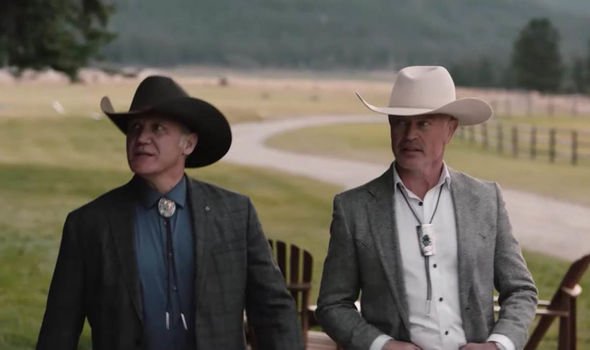
With their fitting cowboy hats and bolo ties, they have a lot of fingers in a lot of pies in, not only Bozeman but all of Montana. And they are not happy to hear about a casino being put in their backyard. Namely, a casino that is not theirs. At first, they seem like respectable men, or should I say cowboys? But as the season progresses, they are more dangerous than originally thought.

The Dutton Legacy
Kayce versus Rip

John Dutton continues to search for the perfect “son” to pick up the reins when he’s gone, a burden he felt the pressure of heavily with a recent cancer diagnosis. Only, we learn that he doesn’t actually have cancer. Congratulations! But he does have a nasty stomach ulcer that bursts.

The choice comes down to Kayce and Rip, who do seem to bear a little bit of ill will towards each other. Or maybe it’s just a healthy brotherly competitive spirit. Kayce is pretty badass, let’s admit it. He has elite military training, a get-anything-done kind of attitude, as well as the ability to perform under pressure.

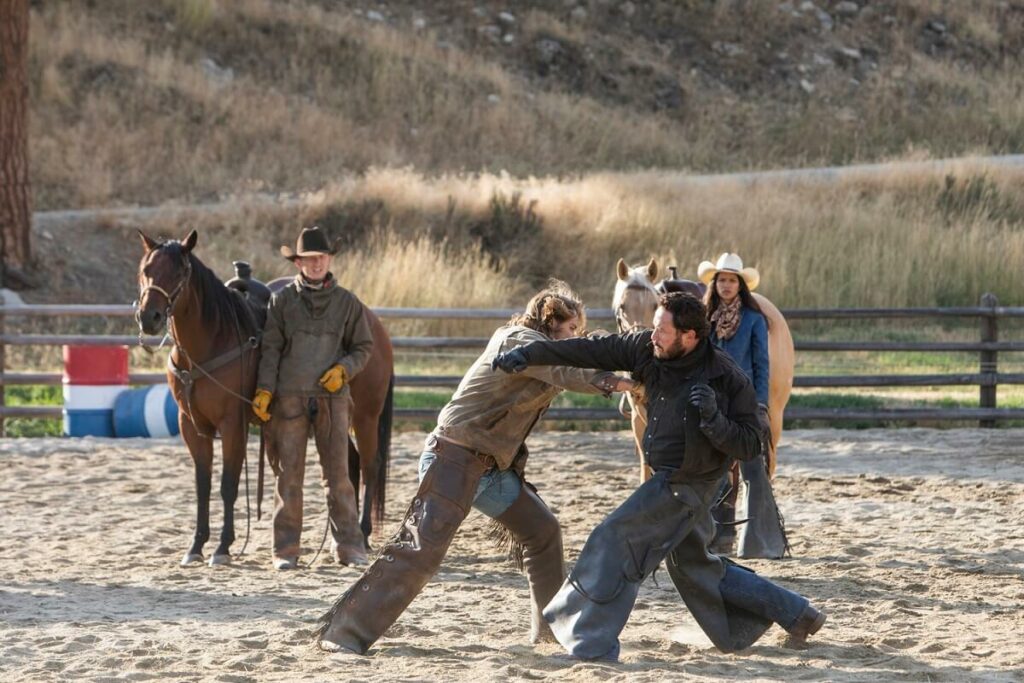
Rip, on the other hand, is the epitome of a henchman. He’s the muscle of the ranch, and he does the dirty work without asking any questions. He also doesn’t have anything to gain when John dies, so we know his loyalty is to John and John alone.

However, Kayce, as the biological son, gets given the automatic ranch foreman position and becomes responsible for giving direction to the rest of the ranch hands. Much to Rip’s chagrin. But he doesn’t complain. Meanwhile, a rift forms between Kayce and his Native American wife, Monica, who is just simply not a fan of John and his ways of running a business, or a family.

Business As Usual

Beth, ever trying to fill the shoes of the son her father so desperately wants, does anything she can to help protect the ranch. This includes buying up as much of the surrounding land as possible.

Her plan is to zone the land for agricultural use, where the government will actually pay her to not farm it (in order to keep the big food corporations at a status quo). She uses the money from her boss at Schwartz & Meyer.

It’s pretty fun to watch Beth at work. Not only is she vicious, but she’ll have fun with you while she does it.

The Black Sheep

Jamie, the black sheep of the family, continues to further his political career in his campaign for Attorney General. Neither John nor Beth take kindly to getting ignored by him when their family is in dire need. In a rage, John cuts him out of the family. Furious and vengeful, Jamie retaliates by spilling family secrets to a local reporter.

When he goes back on his word, she informs him it doesn’t work that way. That’s true. So he decides to kill her. Maybe he shouldn’t run for Attorney General after all.

Because Jamie lacks the real world “knack” all the other men seem to possess on the show, he goes to Rip for help with the body. Like I said, ultimate henchman.

Old Enemies Make New Friends

The battle with the Beck brothers intensifies when hundreds of Dutton cattle are killed by way of eating alfalfa that was purposely placed in their fields.

Dan Jenkins, our favorite land developer from last season, discovers he was served with a liquor license ban because, of course, the Beck brothers are head of the liquor license committee. His luxury country club will lose hundreds of customers.

Chief Rainwater discovers that he was served with a cease and desist order on his new casino, also by way of the Beck brothers.

What the Beck brothers did not expect from all of this, was Dutton, Rainwater, and Jenkins forming an alliance in order to take these nuisances down. But the Beck brothers aren’t done.

A Love Story
Beth and Rip

The Beck brothers send someone to assault Beth in her office. They shoot her assistant in the head and attempt to sexually assault her, while beating her up pretty bad. But smart Beth got a text message out to Rip before they could see.

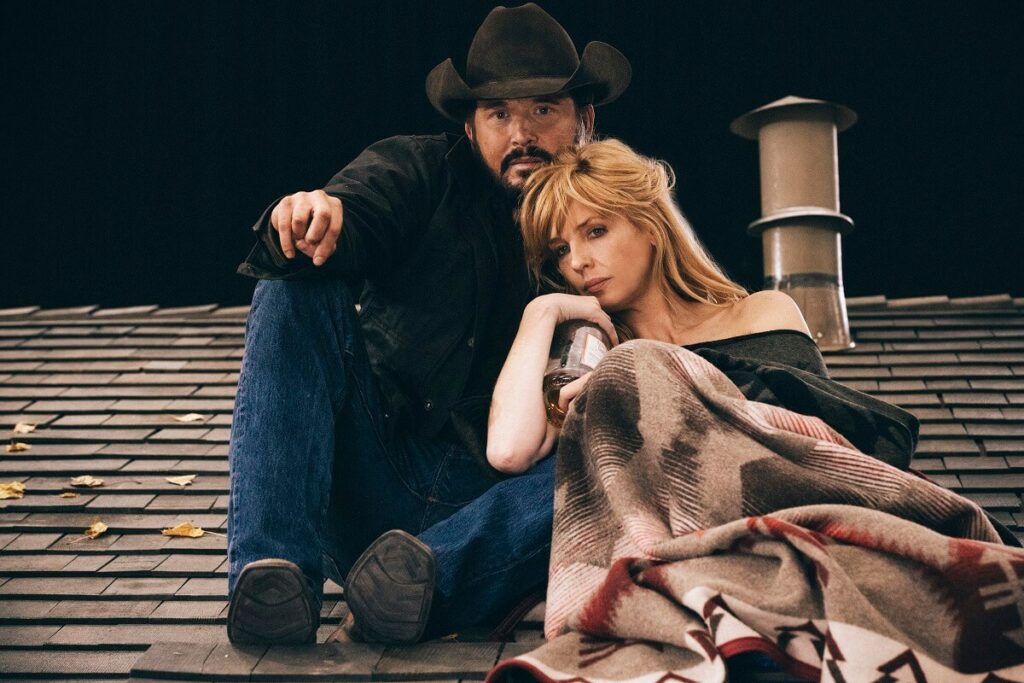
Just in time, Rip throws a chair through the glass window and kills the assailants, getting shot in the process. Rip and Beth realize they love each other. A true western romance.

The End

Still not done, the Beck brothers kill Dan Jenkins and kidnap Tate, Kayce’s son. The Duttons find out he’s being held at a white supremacist militia compound and stage an offensive attack to retrieve him, and the Beck brothers are satisfyingly and finally killed in the process.

The Duttons have managed to stave off another threat to their family, until the next season.

Wednesday, May 31, 2023

The Morning Show S2


from IndieWire: https://www.indiewire.com/criticism/shows/morning-show-season-2-review-apple-tv-plus-1234664446/


BY BEN TRAVERS
SEPTEMBER 17, 2021 2:00 PM

The Morning Show S2


Stella Bak is the quiet type. As the distressed anchors and flustered producers scurry about The Morning Show’s Manhattan newsroom, Stella (played by Greta Lee with a poise that barely reveals her umbrage) watches and listens more than she runs or shouts. When she speaks, she does so with a purpose befitting her mandate as the network’s new president of news, sent in to help UBA President Cory Ellison (Billy Crudup) change their toxic workplace. Despite prolific anchor Alex Levy (Jennifer Aniston) and newcomer Bradley Jackson (Reese Witherspoon) oh-so-publicly outing the company’s noxious culture following a slew of #MeToo-related allegations, UBA is still operating under institutional systems of discrimination, and that cannot stand.

Young and hungry, Stella isn’t here for your bullshit, but she still faces a never-ending stream of it: Her boss won’t listen to her ideas, her coworkers don’t trust her and, oh yeah, the anchor whose co-host and best friend turned out to be a sexual predator is being brought back to the very office she abandoned nine months prior. Alex’s return isn’t Stella’s idea — she doesn’t see the logic in courting a former star who represents the old regime rather than embracing new voices on the company’s biggest news platform. But her white, middle-aged boss still has a soft spot for Alex, and more importantly, he has a vision. So that’s that. Sounds kinda hard to start fresh, huh?

Stella struggles to have any sort of impact on her show, but what’s far more frustrating is that her character has just as little impact on “The Morning Show,” the Apple TV+ drama that remains creatively and dramatically inept throughout its 10-episode second season.

Despite an unfounded narrative that Season 1 “got better” as it went along, “The Morning Show” has been as consistent in its eye-rolling melodrama as it has in its hesitancy to wrestle with the questions of power and responsibility at its core — even Alex and Bradley’s long-awaited “Network” moment in the first season’s finale is cut into a montage, blurring specific language and key revelations in favor of implying that they said “something important.” In Season 2 (all of which was screened for critics), the series remains murky in its high-minded purpose and erratic in building meaningful drama, but most disturbing is an about-face in its dominant point of view: If Season 1 examined how a patriarchal system all-too-permissive of bad male behavior could be forced to change by external and internal efforts (aka Bradley and Alex), then Season 2 asks if those efforts went too far. Alex, Bradley, and Cory have ceased being so angry they aren’t going to take it anymore; instead, they’re so scared of being publicly shamed they’re willing to do whatever it takes to avoid it.


Yes, “The Morning Show” Season 2 revolves around “cancel culture,” and yes, its ultimate point seems to be that personal and professional accountability are bad, actually. Picking up in December 2019, Bradley is still co-anchoring UBA’s The Morning Show, only now she’s singing and dancing (for real) with new newscaster Eric Nomani (Hasan Minhaj). Alex, in leaving the show, has become a feminist icon — landing her own black-and-white Time magazine cover with the headline “The Woman Who Told the Truth” — and now lives alone in Maine, typing away at her tell-all memoir. But when it comes to Mitch Kessler (Steve Carell), she doesn’t tell nearly enough, and her publisher pushes Alex to take a longer look at her shared history with the exiled predator before going to print.

One of the most exciting aspects of “The Morning Show’s” first season was director Mimi Leder (who’s back helming four episodes of Season 2, along with Lesli Linka Glatter, Rachel Morrison, and an all-around incredible team of directors) and one of the finale’s few encouraging moments was her final shot’s slow retreat from Mitch; after being promised an interview on live TV that doubled as his shot at public redemption, Alex and Bradley’s on-air confession cut him out of the show, and Leder’s closing adieu, which pulled away from Mitch as he sat stewing in his big empty mansion, felt like a much-needed “fuck you” to a bad man we already knew all too well. But alas, Mitch is back, carrying his own episode arcs through most of Season 2 after fleeing persecution in America to live alone in an Italian villa and mope through a self-imposed sex-ile.

Why “The Morning Show” feels so committed to giving Mitch’s bland, predictable, “old guard” point of view equal weight to those of supposed gamechangers like Alex and Bradley is part of a larger problem surrounding the show’s relationship to power — but it’s also just dull. Veteran TV fans should see where things are going early on, even if getting there is somehow tedious and ludicrous, and while the rest of the crew’s arcs aren’t exactly satisfying, they’re at least active. Many are half-assed and nonsensical, like producer Chip Black, whose inexplicable return is held together solely by Mark Duplass’ naturalistic performance; others are enigmatic until they’re painfully obvious, like Emmy winner Billy Crudup’s Cory “#NotAllMen” Ellison, whose virtuous crusade on behalf of women can’t make up for a doomed late-season twist. Speaking of surprises, I dare not say one word about Bradley’s main storyline, although it’s ultimately just another reminder that the show doesn’t know how to build toward anything.
And then there’s Alex. In between all the accolades and book-writing, she has a breakdown that leaves her paralyzed by fear. It’s why she’s living in a remote cabin in Maine, why she left the show, and why she probably shouldn’t go back, at least until she deals with the root of her panic. But this is TV, and Alex/Jennifer Aniston has to come back, so you know she’s going to try, just like you know it won’t be easy: There’s another behind-the-scenes book on UBA looming, this one written by New York Magazine reporter Maggie Brenner (Marcia Gay Harden), and it’s got Alex spooked. What will it say? How much will it say? Does Maggie know Alex slept with Mitch (twice, as revealed in Season 1)? Will that revelation get her comeback prematurely canceled? Should she jet-set around the globe trying to cover it up, while talk of a little thing called COVID makes its way into the news?

The glare of the spotlight and the anxiety over being “canceled” don’t mix, so Alex spends most of the season in various states of desperation. It’s not only a clear regression from where her character ended up last year, but a choice that fails to stretch Aniston’s range in similar fashion to Season 1. (Remember the board room scene? Hell yeah you do! Welp, that kind of thing’s gone now.)

What little tenacity “The Morning Show” had is gone with it. Dark, ominous meetings give way to sunny offices built to evoke envy. Season 2 soon feels like a very expensive, very bland network drama. Yet even as broad, star-driven soap, it isn’t that fun. When Alex and Bradley fight, it has to end with one of them saying, “the gloves are coming off.” Why? Because it’s not clear enough from the fight itself that a line in their relationship has been crossed. Showrunner Kerry Ehrin and her writing team have to repeatedly spell things out for the audience, explaining how they should feel rather than evoking actual feelings, which doesn’t make for the kind of juicy, indelible moments these actors have delivered in the past. It just makes for a spectacle that’s hard to ignore.

Soon enough, the series devolves alongside its star, succumbing to the same panic Alex feels. And really, that’s to be expected. “The Morning Show” and The Morning Show parallel each other again and again, and everyone involved in both is privileged and powerful, from the wealthy central characters to the A-list stars and mega-tech company backing them — why wouldn’t they be afraid of losing their status, and how could that fear not take top priority in the lives they lead and the story they’re telling?

But “The Morning Show” doesn’t know how to interrogate these questions. Any drama that takes its central subject seriously — whether that’s fostering a safe workplace, fighting the patriarchy, or finding the line between objectionable and inexcusable behavior — should acknowledge the challenges of creating real, lasting change. (And a good drama would know how to craft engaging stories out of those challenges.) Altering systems that have been in place for hundreds of years isn’t easy, but Alex & Co. seem to have reversed course. This isn’t an insightful look at how sexual misconduct persists in American culture, a dissection of modern news consumption, or a hard look at who’s framing the world’s biggest stories; it’s a shouting match between powerful people terrified of losing their power. No one’s trying to tear down the system because no one understands why anyone would want to.

Stella Bak is the quiet type, but that doesn’t mean she lacks things to say. She’s the only one consistently fighting for what everyone around her purportedly wants, and watching them fumble around with personal distractions is exhausting. After 10 hours doing the same, I can empathize. “The Morning Show” Season 2 may be so glossy it’s hard not to stare into the sun, but in the end, all you’re left with is a headache. If Stella had the power that should come with her title, I think she would’ve canceled both shows a long time ago.

Guardians of the Galaxy Vol 3


from the New York Times:https://www.nytimes.com/2023/05/03/movies/guardians-of-the-galaxy-vol-3-review.html

Guardians of the Galaxy Vol 3


By Maya Phillips
Published May 3, 2023


Animal lovers, comic book fans and unofficial adjudicators of narrative continuity, action and style in the Marvel Cinematic Universe: Lend me your ears. “Guardians of the Galaxy Vol. 3” is not the movie for you.

Perhaps this dour, visually off-putting two-and-a-half-hour A.S.P.C.A. nightmare of a film is only for completionist fans like myself, arriving at the theater armed with overpriced popcorn and the hope that the director James Gunn’s latest could replicate the romp and anti-gravity gambol of the first.

For those who need help getting their multiversal timeline untangled, “Guardians” is the second film of the so far ecstatically bad Phase Five of the M.C.U., after the, to quote my colleague, “thoroughly uninspired” “Ant-Man and the Wasp: Quantumania.” We last caught our whole team of lovable riffraff together in “Avengers: Infinity War,” when Thanos (Josh Brolin) threw his adopted daughter and galaxy guardian, Gamora (Zoe SaldaƱa), into an abyss to get one of the Infinity Stones, which he used to snap away half of the universe. (There were some dancing Groots and a cute holiday special about abducting Kevin Bacon, but — sorry, Kev — they were irrelevant.)

Now the Guardians are settling in at Knowhere, a community in the severed head of a celestial that serves as their home base. With Gamora gone, Peter (Chris Pratt), a.k.a. Star-Lord, is still grieving, unaware of the fact that somehow Gamora — or, rather, a variant — is alive, sans her memories of him and the Guardians. When, a few minutes into the film, Rocket (voiced by Bradley Cooper) becomes victim to a deadly attack, the team is reunited with a hostile, partially amnesiac Gamora, who is reluctantly dragged into their plot to save him.

While Rocket is in critical condition, Peter and company do some risky snooping through Rocket’s traumatic back story to figure out how to save his life and stop the man pursuing him, the High Evolutionary (Chukwudi Iwuji). A powerful god-figure, the High Evolutionary has genetically altered Rocket, other animals and even children to create a perfect race to inhabit his imagined utopia. (Yes, that’s another Nazi-coded villain for your Bingo card.)
Dig deeper into the moment.Special offer: Subscribe for $1 a week for the first year.

So much of “Guardians 3” seems to erupt from left field, most prominently the main story, which is driven by Rocket, even though the Guardians have mostly played second-string to Star-Lord, the plot-driving hero. The shift makes sense given the role this film plays as the end of the trilogy, resulting in a Guardians team with a different starting lineup and an unclear position in the context of the rest of the M.C.U. But the shift also feels belabored and emotionally manipulative; scenes upon scenes of shot, blown up, tortured and incinerated C.G.I. animals with big, emotive eyes are as merciless as clips of injured animals set to a Sarah McLachlan song.

It seems “Guardians” needs this much gratuitous trauma bait to establish its stakes and prove that the bad guy is, in fact, bad. Which is unfortunate because Iwuji, who offered a much more nuanced performance in Gunn’s edgy-fun DC Extended Universe series, “Peacemaker,” is left with just a thin silhouette of an antagonist to work with here. (Will Poulter and Elizabeth Debicki also appear as idiotic secondary antagonists, for no real reason.)

Something like Thanos Lite or a knockoff Dr. Frankenstein, the High Evolutionary represents one of the central problems the franchise is facing in a post-“Endgame” M.C.U.: characters and circumstances that pale in comparison to Thanos and his cataclysmic, conclusive multi-arc-spanning plotline. Because at least the extent of Thanos’s power and the roots of his villain philosophy were clear. “There is no god — that’s why I stepped in,” the High Evolutionary says at one point. This tiny germ of a motivation does nothing but indicate all the questions that the film could have answered about this character to make him more interesting. Surely an atheist with a narcissistic personality and obsessive-compulsive disorder has some deeper psychology to unpack. Ah well.

Though this “Guardians” is certainly less fun than the others, there are still glints of joy in the more mundane and ancillary quibbles among the found family of misfits. Dave Bautista gives another priceless performance as Drax, and Bautista’s signature chemistry works with Pom Klementieff as Mantis. Groot (Vin Diesel) has leveled up in the bang-bang-shoot-em-up category, as has Nebula (Karen Gillan). Though the film makes no attempt to explain the logic behind Gamora’s magical reappearance (“I’m not some infinity stone scientist!” Peter exclaims after trying to puzzle things out), it does at least give SaldaƱa the opportunity to reinvent her character, which she manages beautifully. The same for Rocket, who gives an Oscar-worthy performance — via Cooper’s great voice acting, of course, but also via the animation, which makes his faces, postures and movements look so unbelievably believable.

Gunn makes the curious, bold choice to chase an unpleasant aesthetic that’s part Cronenberg, part “Osmosis Jones.” A series of scenes take place in a ship fashioned like viscera and innards, with fleshy globules and architectural dendrites, often in nude tones. Squishy sound effects add an unwelcome layer of grossness.

Even when the movie switches back to the more lambent palette of nebulae and the luminous shine of the stars, Gunn’s direction doesn’t serve the full tableau. His camera is too voyeuristic, spinning enthusiastically on every axis during group fight scenes rather than giving us a steady look at the choreography.

At least this “Guardians,” like the previous ones, stays on beat with a fantastic soundtrack of Spacehog, Beastie Boys and Earth Wind & Fire. But pumping soundtrack aside, after a breakout hit and the sequel, “Everything Would Have Been Fine if Your Dad the Space God Played Catch With You: The Movie,” this final piece of the trilogy makes one thing apparent: “Guardians” was just a one-hit wonder.

Wednesday, May 10, 2023

Miles Morales: Spider-Man (2018) #29-32

 Miles Morales: Spider-Man (2018) #29-32


   Ever since this character was created, there's been something I've found mightily enjoyable about it. Sometimes though, it comes off as a little pandering. Nothing really says 'diversification' more than a black/Puerto Rican Spider-Man created by a bunch of white people to really drive the point. The good news though is that it's easy to get past that when you're simply seeing what this character is on it's base - a new, young Spider-Man. What could be better when you get down to brass tacks?
   Miles was recently cloned, and now has to find a way to help one of his new, malformed brothers. HE has to make it quick though, because Starling is in trouble thanks to one of our favorite old school baddies, Taskmaster. Only problem: He couldn't kidnap and deliver his victim fast enough. Soon as time runs out on the contract, Tasky bails. Who was his employer? We'll have to wait to find out.


Sunday, May 7, 2023

Daredevil (2019) #33-36

 Daredevil (2019) #33-36

   The Chip Zdarsky run on Daredevil continues with the Kingpin cloning Bullseyes, Elektra donning the cowl for Daredevil while he's in jail, and of course more Chicago Detective Cole North. Unfortunately it wasn't really that eye opening of an arc but I'm hoping he manages to turn the corner in the next volume (hooray for more #1's). Typhoid Mary and Kingpin end this series as husband and wife, plus more appearances of Mike Murdock. Hopefully that will open up a little more as we continue. Overall, this story was a little boring and very average. Let's see what they can do with the next series.