Wow - so I've run out of reviews to just copy and paste.
BLACK MONDAY S2 Ep2: SO ANTOINE
So I guess I'll recap as best I can. Dawn tracks down Mo and Keith, who spend their days playing Nintendo and rollerblading as a Miami coke dealer respectively. Blair and Tiff have their "arrangement" in the works and completely break off any chance of reconciling with her parents when they buy their apartment. Eventually Keith is about to go on the run because he's lost all the drugs, and the last Lehman brother scores a location on how to turn Mo in.
At long last, The Umbrella Academy has unveiled its first supervillain — and it’s a member of the Umbrella Academy. Meet Vanya, the White Violin, who has channeled decades of pain and resentment into a single, horrifying plan: Play a concert that will culminate in the end of the world.
Five was right. Stopping Leonard Peabody could have prevented the apocalypse. They just didn’t do it early enough. By the time the Umbrella Academy figured it out, Vanya was already too far gone. The biggest tragedy — and something Luther will someday have to reckon with — is that it might still have been prevented if he hadn’t locked Vanya in the soundproof chamber, which was likely the tipping point for her shift into full-on supervillainy.
So after an entire season of buildup, this is how the apocalypse happens. It starts with Vanya, almost in a trance as she stalks through the Umbrella Academy building. Every room conjures up another painful memory from her childhood, which she pushes away by pulling the ceiling down. Each of her siblings manages to flee, but Pogo confronts her, saying that Hargreeves was only trying to protect her from herself.
This attempt to rationalize Hargreeves’s decision is doomed to failure, which Pogo probably knows; you get the sense that he’s mostly just buying time for the rest of the kids to get away. But the conversation ends when Vanya — enraged at the role Pogo played in enabling her tragic childhood — lifts him up and impales him on a pair of mounted antlers, killing him. It’s a tragic moment for viewers, and a huge relief to the Netflix accountants in charge of Umbrella Academy’s effects budget. Grace also “dies” when the building collapses. (But again: robot! And a robot specifically designed to be repairable after Vanya’s attacks!)
Still, if you want to establish how high the stakes are, Umbrella Academycan’t do much better than killing off two major characters and destroying the Umbrella Academy building. This, the show implicitly assures us, is a sign that — after using time travel to reset some big consequences in a previous episode — they’re actually playing for keeps this time.
So the Umbrella Academy heads off to the Super Star Lanes bowling alley, where they form a strategy for finding and stopping Vanya before she ends the world. Finding her turns out to be easy: A particularly convenient newspaper ad reminds them that Vanya is making her debut as the first chair violinist at the Icarus Theater. Using her superpowers, she plans to harness the sound of the violin to launch a series of devastating energy blasts.
But how to stop her? That’s a subject of debate. Luther raises the possibility that they’ll need to kill her; Allison firmly refuses that she’ll ever do it. But before the problem can be resolved, the gang is interrupted by timecops from the Commission, doing their best to ensure that the apocalypse still happens. Everybody manages to escape, and the Umbrella Academy arrives at the Icarus Theater in time to catch the beginning of Vanya’s plan.
And so the last big fight scene begins (set, mercifully, to Vanya’s violin-playing, and not some over-the-top classic rock cut). Every Umbrella Academy alumnus plays some role in taking Vanya down — even Ben, who uses his tentacle powers to subdue gun-toting adversaries after Klaus manages to summon him from the afterlife. After Vanya manages to stop everybody else, the final blow comes down to Allison, who gets the chance to shoot her sister in the head but decides to spare her. Instead, she fires a bullet next to Vanya’s ear, disrupting her flow and knocking her into unconsciousness.
For a brief moment, everybody celebrates saving the world. But there’s one last nasty surprise in store. The accumulated energy from Vanya’s concert launches a beam into space that crashes directly into the moon. (Hey, maybe Luther’s moon base wasn’t so useless after all!) The splintered moon rocks start falling to Earth, causing a horrifying chain reaction of craters and explosions.
It’s the end of the world after all. And none of the Umbrella Academy’s superpowers can do anything to stop it. As the moon rocks come crashing down to the Earth, Five comes up with one last Hail Mary. Using a power he didn’t know he had, Five manages to draw all six of his siblings into one of his time-jumps. All seven of them vanish — to what time period, we don’t know — just as the fire engulfs the Icarus Theater.
And, uh, the rest of the world.
In case that wasn’t clear enough: To the best of our knowledge, literally every other character in Umbrella Academy is dead now. Hazel — who betrays Cha-Cha, kills the Handler, and rescues Agnes — gets the briefest of happy endings before the world goes up in flames. [Note: After this article was published, several eagle-eyed viewers noted that Hazel and Agnes managed to teleport away just as the apocalypse hit. A happy ending after all!]
Cha-Cha, stumbling around with a drawn pistol, never gets her revenge on Hazel. Allison’s estranged husband and daughter. Diego’s friends on the police force. That poor kid having his birthday party at the bowling alley when the Commission attacks. They’re all gone.
I’m a little split on this ending. On one level, you have to admire the gall of a show that repeatedly threatened the end of the world and then, despite our heroes’ best efforts, actually delivered the end of the world.
But given that every single member of the Umbrella Academy got away in time, it’s hard to look at the apocalypse and see anything permanent about it. Where the comic came right up to the brink of the apocalypse — and, after the climax of that story arc, forced all the characters to live in the shadow of it — the TV show seems poised to spend another season on preventing the apocalypse. That’s the thing about time travel; no matter how badly you screw things up, you always get another shot.
Raindrops:
• So, assuming The Umbrella Academy gets a second season, where do youwant this story to go from here. Fans of the comic know there’s a second major Umbrella Academy arc, “Dallas,” which was partially adapted in season one, but has a main narrative that was basically left untouched. Of course, the time-travel thing means Umbrella Academy can go pretty much anywhere in season two. Are there other eras you’d like to see? Characters you want to see more of? Less? Any of the now-dead, non–Umbrella Academy characters you’d like to see again somehow? Let me know in the comments below.
• The episode opens with a flashback to a younger Reginald Hargreeves — acting sweeter and kinder than we’ve ever seen him — saying good-bye to a dying woman, who gifts him a violin. When he opens the window, there are a bunch of rockets launching from a field outside; after a cut, we’re in the early 1900s, where Hargreeves buys the old umbrella shop that will eventually become the Umbrella Academy building. So … what’s going on here? How old was Hargreeves when he died? Where did he come from? Who was that woman?
• I have never been a fan of the Allison-Luther relationship, but I did find the scene where Luther delivers a good-bye speech to Allison’s daughter — and, in doing so, reveals his feelings for Allison — unexpectedly moving. This show nails irreverence, but I think it could stand to play it earnest a little more often.
• The machine-gun-wielding timecops from the Commission managed to hit zero of the Umbrella Academy members as they ran, in straight lines, down the bowling lanes. That’s stormtrooper levels of comical inaccuracy.
• I also loved the whirling shot of the Umbrella Academy members at the end of the episode, which poignantly shifted from the adult versions to the more innocent, hopeful kids they used to be.
• Umbrella Academy never met an on-the-nose music cue it didn’t love, but I feel like Vanya’s trek to the Icarus Theater would have been exponentially more chilling if it had been set to a violin song instead of Heart’s “Barracuda.”
We Recap DOOM PATROL Episode 10: Five Things We Learned From “Hair Patrol”
April 20, 2019
If you haven't yet fallen in love with the World's Strangest Heroes in DC Universe's Doom Patrol, then you haven't seen "Hair Patrol." In the show's latest episode, there's a whole lot to discover and enjoy. Here are the five most vital takeaways...
Niles Caulder Has a Secret Past and a Romantic Side
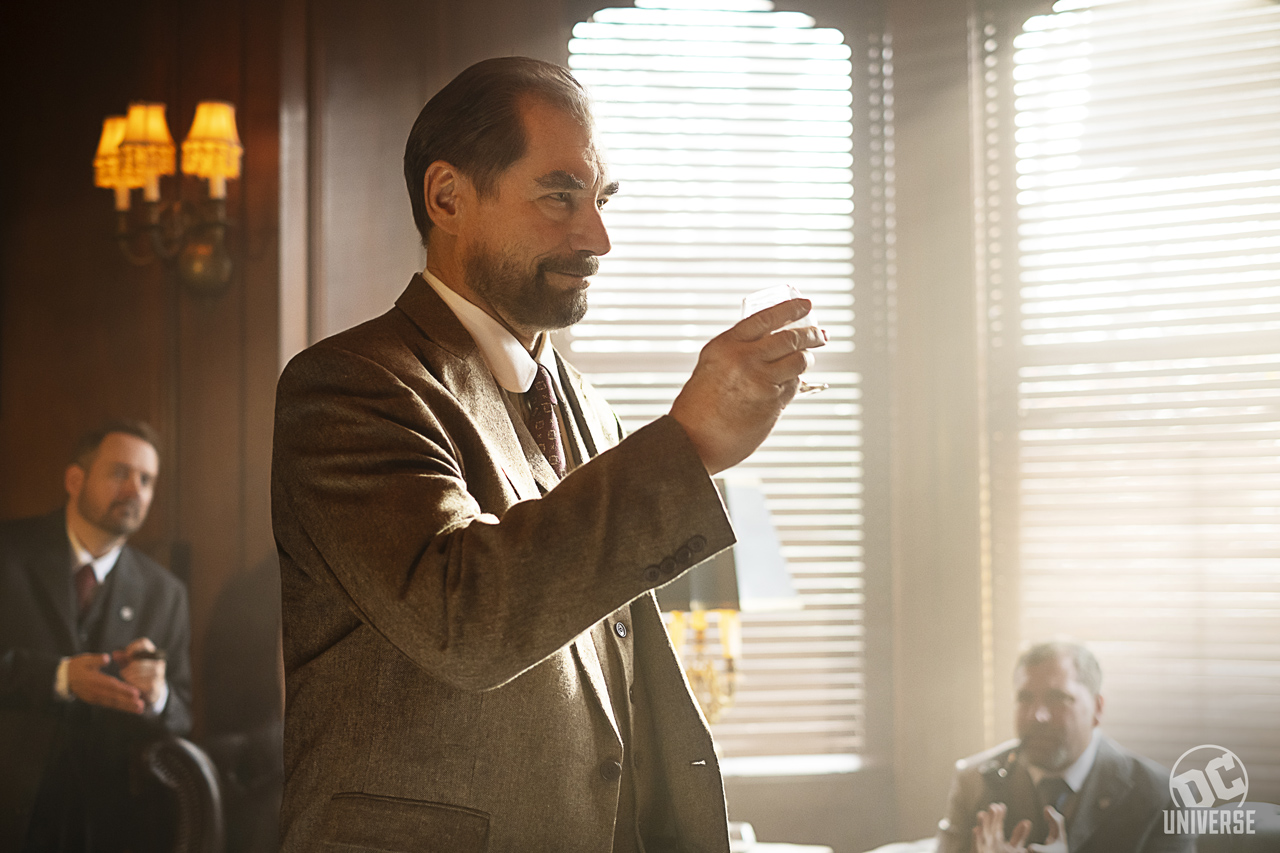
Doom Patrol is, of course, about the superhero team at its center, but this season has largely revolved around the mystery of their missing leader, Niles Caulder. The explorer is a puzzle wrapped in an enigma. And in the 10th episode viewers were given a keen insight into what drives Timothy Dalton's duplicitous patriarch. In the wilds of Yukon, his past is explored in a montage which begins in 1913, revealing that the Chief is far older than he appears.
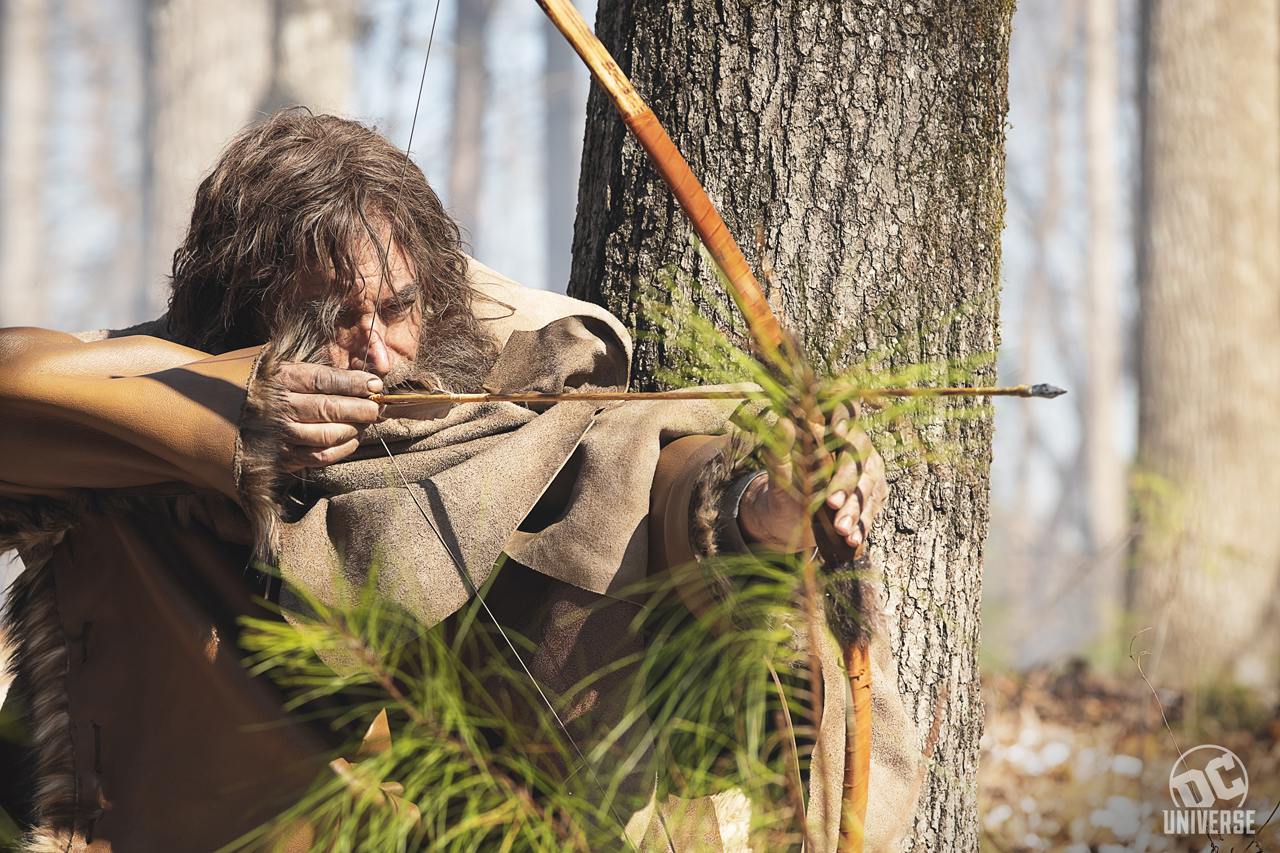
The key reveal here, however, is the fact that during an exploratory venture in Canada, Caulder fell in love with one of his research subjects. Spanning years, the sequence showcases a massive shift in Caulder's mindset from colonial hunter to protector of the unknown. Niles' passion for the outcasts of society is what brought the Doom Patrol together, and this chilly flashback offers up the origin of his peculiar interest. We also learn the Chief's dedication to the woman who changed his life is still strong a century later, and it's clear that he will do anything to protect her -- even if it puts his new surrogate family in danger.
Beard Hunter Is the Weirdest Villain We've Encountered Yet
Throughout the team's almost six-decade history, the Doom Patrol has showcased some of the DC Universe's most outrageous and imaginative characters, both heroic and villainous. But in "Hair Patrol," fans meet perhaps the strangest villain of all in Ernest Franklin, a.k.a. the Beard Hunter.
In the comics, Beard Hunter has no super powers. But that's not the case here, as the creative team has bestowed upon him some terrifying abilities. Ernest actually manages to up the show's level of grotesqueness by virtue of the fact that he can imbibe the "essence" -- read that as beard trimmings -- of any person, and track them via their facial hair anywhere in the universe. No matter the time or place. This specific set of skills makes him an asset to everyone looking for Niles Caulder, on both sides of the proverbial aisle. But Ernest, alas, is a super-villain, so for Rita, Vic, Larry, Jane, and Cliff, the Beard Hunter is just another obstacle in their search for the Chief.
The Origins of the Bureau of Normalcy
During the psychedelic events of "Danny Patrol," a new foe entered the fray, hunting down the titular sentient roadway. The Bureau of Normalcy also had a history with Larry Trainor, who was tortured by the government agency not only as a result of his powers, but also his sexuality. Fascistic and brutal, the Bureau a world away from the usual antagonists the Patrol faces, but they're easily the most vile.
As it turns out, Niles also has a history with the black ops organization, whose mission is to destroy anything they view as an aberration. Here, however, it's revealed the group first began hunting down so-called "Oddities" to collect, catalog, and learn from them. The so-called Bureau of Oddities was an imperialist force that Niles believed in, and they were the reason he ended up in Canada in the arms of the woman who would change his life.
Cyborg is Slowly Losing Control
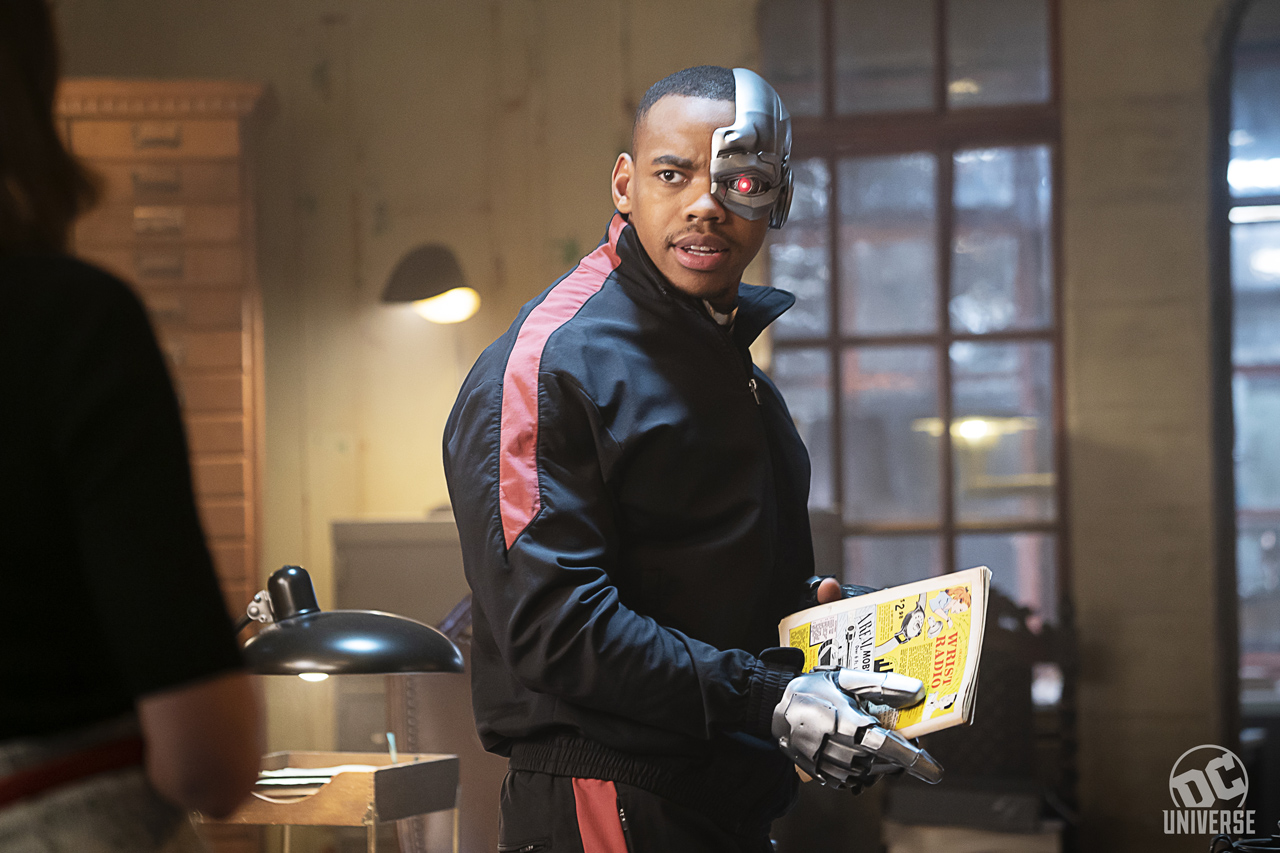
Ever since Jane painted a psychic portrait of Victor Stone killing his teammates and potentially ending the world, the young hero has been understandably distracted. Though it appears he's broken the chains of his controlling father, when Vic has to face down Beard Hunter the freedom he so dearly desired seems to have come at a price.
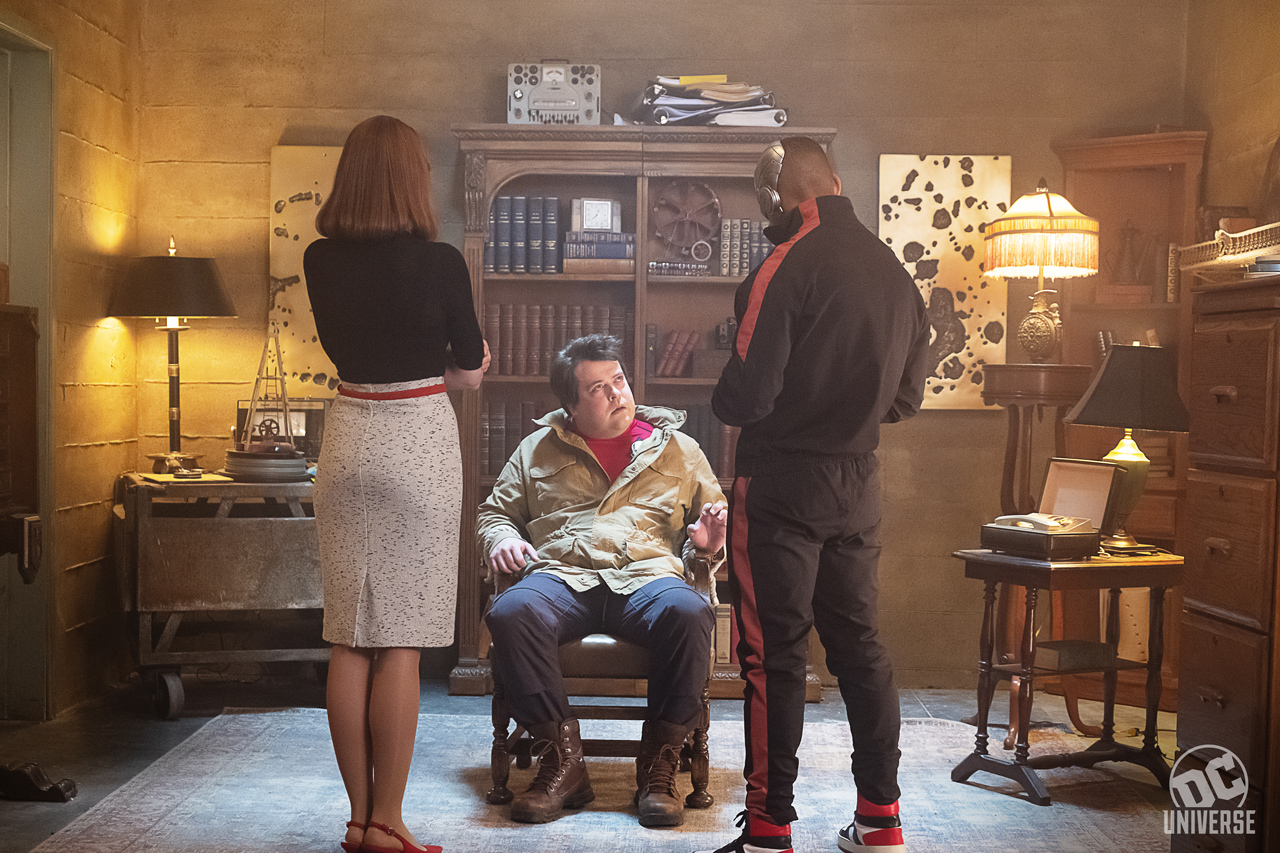
Despite being the most seasoned hero on the team, Cyborg is having a rough time finding his place in the world, and his ever-growing loss of control isn't helping. Though Ernest Franklin seems like he should be harmless, he eats one of the Detroit native's hairs and suddenly Vic can't harness his own body during their battle, even losing agency over the weaponized enhancements with which his father rebuilt him. The Chief's basement barely survives Vic's arm cannon, but with Rita's help he manages to protect his teammates. Although Beard Hunter escapes...
Flex Mentallo is Coming!
Longtime Doom Patrol fans have likely been wondering when a couple of core comic characters would appear in the live-action adaptation. But as the show moves towards the end of its first season, another of writer Grant Morrison's greatest creations is making his way to the screen.
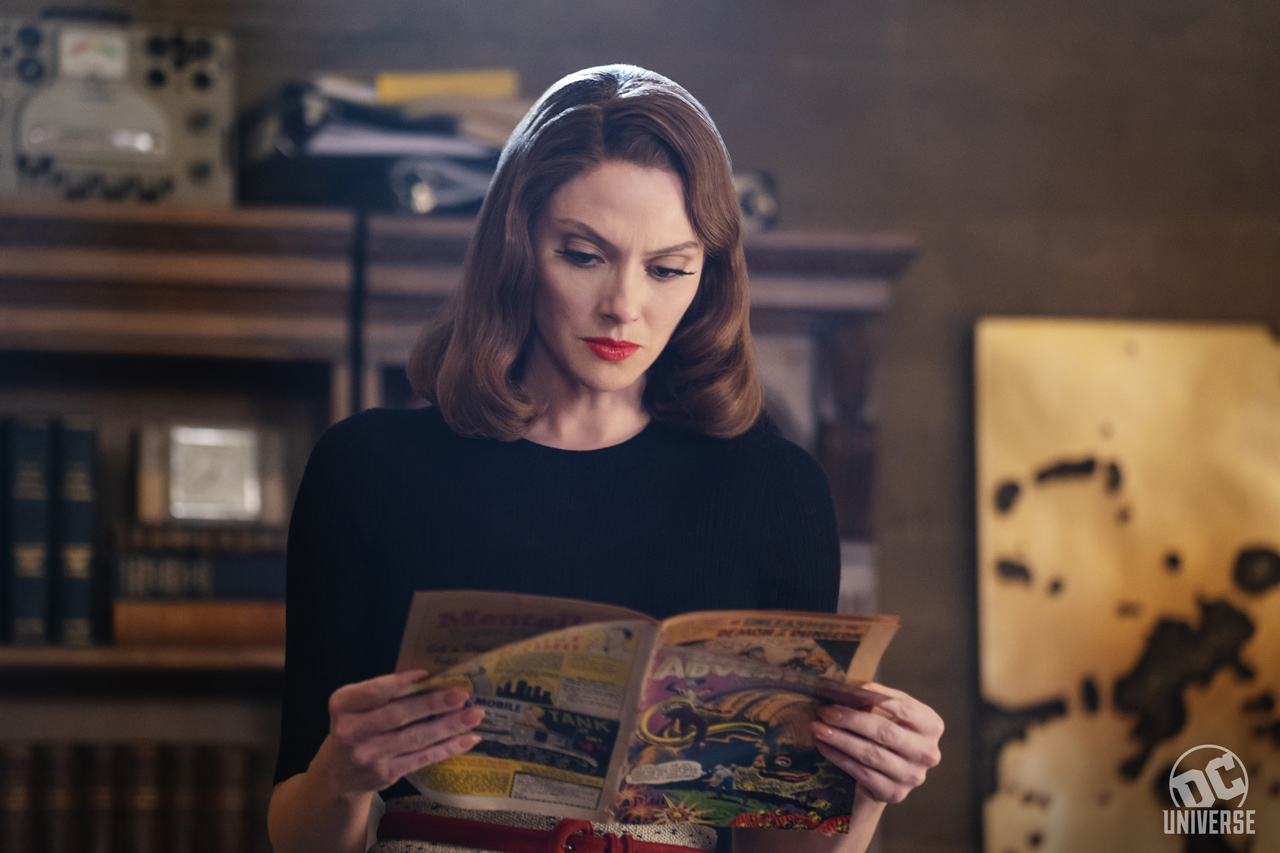
During a scheme the pair hatch, Rita and Vic flip through a comic, My Greatest Adventure -- the very title the Patrol originally debuted in -- and the former film star notices a "hunk" is missing from the pages of an advert for a cereal known as "Mentall-o's." If you know the origin of the one-time Doom Patroller, Flex Mentallo, it's a brilliant nod to his inspiration -- an old Charles Atlas fitness advert that would appear in comics with the headline, "The insult that made a man out of Mac." The fact that the muscled Flex is missing from his own ad can only mean one thing: we can get ready for "The Man of Muscle Mystery" to appear.
We’re deep in the weirdness now. The penultimate episode of Raised by Wolves‘ remarkable first season takes the show’s characters and the world they inhabit in increasingly strange directions. Body horror, splatstick comedy, visions of some unimagined past replete with mysteries—the austerity of the early episodes has been replaced by something far messier, but in its way, just as interesting.
Let’s focus on Mother first. It’s fascinating to watch her grapple with the impossible reality that she has a fetus growing inside of her. She’s sure of it, her caretaker programming confirms it, but she lacks the vocabulary—or the “human empathy,” to quote an initially skeptical Sue—to refer to it with the tenderness we associate with expectant mothers, for better or for worse. Her voice is always android-clinical, and she tends to describe the fetus in a way that makes it sound like an alien parasite, desperate to feed.
Which requires a food source…which is where Otho the explosive-helmet-wearing rapist cleric comes in. Discovered wandering around the wreckage of the Mithraic ark by Tempest, with his guardian android’s severed head stowed in a backpack, Otho is subdued by Mother and used as an ambulatory food source for her fetus, with a tube slowly sucking the blood out of him and into this new life form. It’s not the swift execution Tempest wanted to conduct, but she seems to see it as a fitting enough punishment eventually. The shots of Otho following Mother, Sue, and the children (who all reunite, with the kids literally putting themselves in the line of fire to protect Mother from Sue) like a dog on a leash provide the episode with dark comic relief.
Then things get really strange.
After discovering several metal cards bearing simple designs—parents and children, the Mithraic “Sol Invictus” sun symbol, et cetera—in a place where no humans or androids have been known to inhabit, Mother further discovers that the cards contain some kind of technology. When she decides to scan one, she’s greeted with a vision from what I take to be the ancient past. Unseen beings obscured by their black robes gather around a pentagonal stone, atop which the head of some kind of creature spits out liquid goop. It’s a bit like if the Sith from The Rise of Skywalker got together to pay homage to the baby from Eraserhead.
But when Mother emerges from her vision, she discovers that Otho has turned the tables on her, reversing the flow of plasma and gaining some of her preternatural strength and invulnerability in the process. This new, hulked-up Otho makes short work of the group’s defensive efforts and is about to carry Tempest away until Holly intervenes, offering herself in lieu of the “impure” unbeliever Tempest and holding out a holy relic, a tooth allegedly belonging to the mythical Roman founding father Romulus, as proof. (Romulus and his brother Remus were raised by a wolf. Get it???) This gives Tempest the opportunity to seize Otho’s leash-android head from his backpack and chuck it away, triggering his helmet to squash his head like a grape. This is somehow funnier than it sounds.
There’s more good news for our heroes, if that’s what they are. Overcoming her initial skepticism and fear, Sue voluntarily donates blood to help keep Mother’s fetus alive, and the two bond over their shared experience of parenthood. Similarly, the devout but brash Hunter has a change of heart about his Mithraic cohorts after Marcus wrongfully accuses him of helping the other children escape and attempts to light the kid’s arm on fire using the giant stone temple’s mysterious, red-hot opening. Hunter restores Father to his original programming—it turns out “SOL IS THE LIGHT,” which his twitchy trigger finger kept tapping out in Morse code, was the override password the Mithraics used when they reprogrammed him—and the pair flee, reconnecting with Mother, Sue, Campion, and the other Mithraic children.
And then there’s Marcus, for whom things are not going well. He no longer hears the voice of Sol. He’s lost the children, and his wife and son, and Hunter and Father. He straight-up murders the guy who was on guard duty when the latter pair stole their landing craft and fled, more for questioning Marcus’s command than for letting his guard down. And Marcus’s dubious grasp of Mithraic beliefs—he claims to have prayed for the souls of the impure people he’s killed, something a true Mithraic would never do—confirms for his lieutenant Lucius that he isn’t who he says he is at all. A fight ensues, and Lucius beats the tar out of him, ultimately taking out the weaponized android eyes Marcus wears in a pouch around his neck and force-feeding them to him. I expected lasers and explosions, but no, all that happens is that the defeated Marcus dribbles out some liquid goo of his own.
What happens now? It’s doubtful that the season finale will solve the mystery of Kepler-22b—something that becomes a lot more difficult when Paul, now hearing voices himself, torches the metal cards that might contain more information about the planet—much less resolve the interpersonal drama in under an hour. It’s likely it will fire even more mysteries at us, in fact. From that incredible pilot and its shocking conclusion onward, Raised by Wolves has opened several new doors every time an old one closes. I’m excited to peer through.
“Though of all races, the schoolchildren were mostly black and Latino, and they didn't even approach Mister Rogers and ask him for his autograph. They just sang.”
If you’ve seen an ad or trailer for Marielle Heller’s “A Beautiful Day in the Neighborhood,” perhaps you noticed the scene above. At first, even I thought this snippet of the movie was trying too hard to push my nostalgia buttons, but then I found these words in Tom Junod’s exemplary profile of Mr. Rogers, "Can You Say ... Hero?" It’s the same profile that gives “A Beautiful Day in the Neighborhood” its premise, but with a noticeable departure: Mr. Rogers isn’t the main character of the movie.
Set up much like a Mr. Rogers episode—complete with the show’s twinkling piano theme music, miniature sets and the star (played by Tom Hanks) arriving home, singing, changing his sweater and shoes—the movie instead follows Lloyd (Matthew Rhys), a cynical journalist assigned to write an inoffensive puff piece on the popular kid’s TV show host for Esquire. He rolls his eyes at the too-easy job and begrudgingly meets the sweatered legend, someone so venerable, even his wife Andrea (Susan Kelechi Watson) asks him not to "ruin her childhood" with a hard-hitting article. But even his dyed-in-the-wool cynicism is no match for Fred Rogers, whose kindness and never-ending prodding questions get Lloyd to talk more about himself, his new foray into fatherhood, his strained relationship with his father Jerry (Chris Cooper) and how it continues to affect him after all these years.
"A Beautiful Day in the Neighborhood" isn't so much a biopic as it is a way to look at the way Mr. Rogers affected generations of children, young and grown. If his character seems too simple, it's likely because that's how many people saw him, uncomplicated and confined to his on-screen persona. If his presence seems too good to be true—and trust me, it does many times throughout the film—sometimes, often the scene can be traced back to the article or an old episode. Others, of course, are very much made up by screenwriters Micah Fitzerman-Blue and Noah Harpster. And yet, these fabricated scenes don’t feel so detached from the recreated stories. There seem to be few limits to Mr. Roger’s kindness.
The movie’s most delightful scenes usually revolve around Lloyd’s skepticism of that unending kindness. Rhys plays the part of a man hurt by his past well, his character has closed off certain emotions in order to survive, but that just won’t do when interviewing Mr. Rogers. Heller's film gives him an emotional journey shaped by Mr. Rogers’ philosophy, with his profile subject doubling as a therapist. It’s a storytelling device that sometimes prioritizes his character development over their shared interactions, but it also answers the question of what can adults learn from watching Mr. Rogers.
While not exactly the spitting image of Mr. Rogers, Hanks convincingly imitates the mannerisms of the former minister-turned-childhood staple. He slows his speech to get Rogers’ soothing cadence, gives hugs and holds hands almost too freely, and walks with a vulnerability that reminds us that he’s not just playing a character on a TV show but a person with his own fears and pain. It’s a dream match of two well-known and well-liked personas, one kind actor portraying one of the kindest humans ever to work in entertainment. Hanks’ energy in the role wonderfully gets at what “A Beautiful Day in the Neighborhood” wants to convey.
Following on the heels of two darker edged dramedies, “Can You Ever Forgive Me?” and “The Diary of a Teenage Girl,” Heller’s instinct to follow a flawed character—which compared to Rogers, could probably be any one of us—is right on. Along with cinematographer Jody Lee Lipes, Heller balances the well-lit sets of the PBS affiliate where Rogers tapes his shows and the dark rooms where Lloyd does much of his research watching old episodes or reflects on the advice Rogers gives him about his dad. He’s isolated and gloomy in these scenes, but when he’s sitting across from Rogers, it’s almost as if the light from the host reflects back on the journalist, quite literally lighting his existence. Heller and her team’s devotion to incorporating references to his show and its new incarnation based on one of his favorite puppets, “Daniel Tiger’s Neighborhood,” extends throughout the film, like in interstitial scenes of miniature sets of New York and Pittsburgh showing Lloyd traveling between the two cities or Nate Heller’s score which feels to be in conversation with the notes of the show’s theme song. It ties back to the book-end-like set-up of the movie where Hanks as Mr. Rogers speaks directly to the audience and introduces us to his friend, Lloyd, which so quickly reminds of the show millions of us once watched and taps right into those feelings.
As with Morgan Neville's documentary "Won't You Be My Neighbor?", the tears may flow freely due to nostalgia or from some subjects hitting too close to home, but “A Beautiful Day in the Neighborhood” fits as a companion piece. Where the documentary offers a more complex view of the man in the red sweater and tennis shoes, Heller’s movie is more about the cultural impression Rogers left behind—his almost supernatural ability to calmly connect with so many and de-stigmatize the way we express or discuss emotion. It was a treat to visit Junod’s article after watching the movie just to dispel my own cynical reading, and find out just how much of Rogers’ scenes were quite true-to-life, including one of my favorite upbeat responses from Rogers to Lloyd’s incredulous expression: "Look at us—I've just met you, but I'm investing in who you are and who you will be, and I can't help it." There’s not been an era in the world where it wasn’t nasty, scary or mean, but for a time, so many of us were lucky enough to learn that it didn’t have to be that way. That’s the lasting power of Mr. Rogers.
Monica Castillo is a freelance writer and University of Southern California Annenberg graduate film critic fellow. Although she originally went to Boston University for biochemistry and molecular biology before landing in the sociology department, she went on to review films for The Boston Phoenix, WBUR, Dig Boston, The Boston Globe, and co-hosted the podcast “Cinema Fix.”