Wednesday, December 11, 2024

Strange (2021) #1-5


Strange (2021) #1-5


 Marvel Comics' Strange (2021) by Jed MacKay begins with Clea Strange stepping into the role of Sorcerer Supreme following the death of her husband, Stephen Strange. The first issue sets the stage with Clea navigating her grief while asserting herself as a powerful and determined protector of Earth. She faces challenges from Wong, who questions her motivations, and hostile threats from magical enemies seeking to exploit Stephen’s absence. Clea’s resolve is clear: she intends not only to protect the world but also to find a way to resurrect her husband, no matter the cost.

In the second issue, Clea takes on the Blasphemy Cartel, a mysterious organization exploiting dark magic for nefarious purposes. The Cartel's soldiers wield undead-like powers, posing a significant threat. Clea demonstrates her otherworldly strength and her unique approach to magic, which diverges from Stephen’s methods, showcasing her lineage as the Faltine, a race of powerful magical beings. This issue also begins to unravel the secrets behind the Blasphemy Cartel and its connections to the larger Marvel Universe.

By the third issue, Clea’s investigations into Stephen’s death and the Cartel lead her to a shocking revelation: a corrupted version of the Harvestman, a grim reaper-like figure tied to Death, is stalking her every move. This confrontation escalates her quest to find Stephen's soul. Clea’s determination to resurrect her husband puts her at odds with cosmic and mystical forces, raising questions about the balance between life and death and the potential consequences of her actions.

In the fourth issue, Clea’s battle with the Harvestman intensifies, as their encounters reveal deeper truths about the fabric of magic and the forces opposing her. The issue balances intense action with Clea’s introspective moments as she reflects on her identity—not just as Stephen’s widow, but as a powerful sorceress in her own right. Clea’s sharp wit, combined with her raw power, sets her apart as she faces mounting challenges from enemies both old and new.

The fifth issue climaxes with Clea uncovering critical information about the Blasphemy Cartel’s origins and their links to a larger magical conspiracy. She also faces a heart-wrenching moral dilemma when the Harvestman’s identity is revealed to be closely tied to Stephen Strange in a twisted and unexpected way. This revelation reframes Clea’s mission and sets up a powerful emotional conflict for the series moving forward, highlighting Jed MacKay’s intricate plotting and Clea’s growth as both a hero and a person.

I give this arc a 7/10.

Monday, December 2, 2024

Kinds of Kindness (2024)

My take: This movie was weird as hell. And not all that great. Just saying.


Kinds of Kindness (2024)


By Alissa Wilkinson

You could endlessly pick apart “Kinds of Kindness,” but I don’t recommend it. The closest to a prĂ©cis you’ll get for the film comes at the start, when the strains of the Eurythmics’ banger “Sweet Dreams (Are Made of This)” ring out over the opening titles. The lyrics repeat the discomfiting notion that:

Some of them want to use you.
Some of them want to get used by you.
Some of them want to abuse you.
Some of them want to be abused.
Well, who am I to disagree?

“Kinds of Kindness” is a return to a certain form of form, if you will, for the director Yorgos Lanthimos, fresh off his warmer, cuddlier films “The Favourite” and “Poor Things.” His earlier movies, “Dogtooth,” “Alps,” “The Killing of a Sacred Deer” and “The Lobster” — all four written with Efthimis Filippou, who was his collaborator on “Kinds” — are less accessible, more deranged, less logical, more disturbing. Which is of course why they’re so polarizing. And so beloved.

I expect “Kinds of Kindness” to take its place among that latter group, with its vibrantly, defiantly off-putting stance and sidesplittingly sick sense of humor. It’s a triptych that at first seems slight, then gains meaning the longer you hold its three seemingly disconnected short films in juxtaposition and peer through the overlaps. All three share a cast that includes some returning Lanthimos players, like Margaret Qualley, Joe Alwyn, Willem Dafoe and Emma Stone, who won her second Oscar earlier this year for “Poor Things.” There are newcomers, too: Hong Chau, Mamoudou Athie and especially Jesse Plemons, who won the best actor prize at Cannes for his performance.

Plemons is the main character for most of the film. In the first segment, he plays a man whose every move is dictated by his boss (Dafoe), until it isn’t. In the second, Plemons is a cop whose researcher wife (Stone) goes missing on a desert island; when she returns, he’s convinced she’s not actually his wife. And in the third, Plemons and Stone play members of a strange cult (led by Dafoe and Chau) who are desperately seeking a young woman who will become its spiritual leader.

It’s all presented with the eerie air of a very dark comedy, the sort where sudden savagery can come crashing through the wall at any second. Violence and cruelty are the drivers of “Kinds of Kindness,” often presented not as the opposite of that kindness but as kindness itself. This strange world calls for delicious off-kilter performances, and the cast — particularly Stone, who’s proven her mettle in this regard, and Plemons — deliver. If you think you know what’s happening in a scene, just wait.

I mentioned the temptation to endlessly pick it apart. “Kinds of Kindness” unabashedly invites that treatment. Each of the three stories, for instance, has its own title in which a character named “R.M.F.” is mentioned; he shows up at the start of the first, “The Death of R.M.F.” (which, just to mess with us, also mostly features characters whose first and last names begin with R and F). But is this the R.M.F.? Is it the same guy in all three films? And, if so, what does that mean for the actors playing very different characters in each segment?

If tiny tidbits like this are a key to unlock some mystery, I haven’t figured it out yet after two viewings. But this is not a puzzle box movie; it’s a Lanthimos joint. That means it displays certain stylistic tics, especially a deadpan, almost robotic dialogue delivery and strangely insular, often airless settings. The tie that binds his whole filmography together is a fascination with the brutal dynamics of power that govern human relationships: parent to child, husband to wife, ruler to subject, woman to man. Lanthimos’s characters tend to speak their minds bluntly, which strips away any social niceties. It’s as if he’s trying to peel the skin and muscle off the skeleton of human society, and if it’s kind of gross, well, that’s the point.

Threaded through the three segments of “Kinds of Kindness” is a fascination with one dynamic in particular — the desire to dominate, or to be dominated, or quite possibly both. It only takes a peek into a schoolyard or a political arena to see that a lot of people want to be told what to do, and other people want to be the tellers.

That means there are many ways to read “Kinds of Kindness,” pretty much all of which will be supported by the text. Domination shows up all over contemporary life, in part because the proliferation of choices present to most of us — about what we’ll wear, what we’ll do, what we’ll eat, who we’ll be — can throw us into chaos. This accounts, in part, for the abundance of cults we’re always watching documentaries about. It can feel counterintuitive, but the scariness of boundless freedom sometimes manifests in a desire to find someone who can tell us what to do.

So the reading that wouldn’t leave me — and this may say more about me than the movie — is that “Kinds of Kindness” skewers a particular strain of “wellness culture,” or maybe the seedy underbelly of the “life coach” industrial complex. I don’t want to say too much, but in the first film, Plemons’s character loses all sense of himself and reality when he is no longer handed instructions for his daily life, a routine that’s time-stamped and microplanned, right down to his menu and whether or not he’ll have sex that night. A similar spinout happens in the third film, when Stone’s character is deemed not clean enough, in her purity-obsessed cult, to be granted the privilege of being controlled anymore. There’s a sense that deviation from regulated expectations results in madness.

You may see something else in “Kinds of Kindness.” There are many ways to read a fable, especially one as unhinged as this. You might love it. You might hate it. You might find yourself obsessed with it, or you might dismiss it as a load of hogwash. Who am I to disagree?

Monday, November 25, 2024

Civil War (2024)


From Vulture: https://www.vulture.com/article/review-civil-war-starring-kirsten-dunst-and-cailee-spaeny.html


By Bilge Ebiri

Americans sure do love to see their institutions destroyed onscreen. I remember back when it was sorta-kinda news that audiences applauded and cheered as aliens blew up the White House in Roland Emmerich’s Independence Day (1996). Since then, it’s been standard operating practice for blockbusters, particularly the disaster-y ones, to incinerate or otherwise defile a monument or an iconic government building. (We took a brief recess after 9/11 — “too soon,” etc. — but went right back to it once the cultural all-clear sounded.) Maybe because our institutions were deemed so secure and unchanging for so long, the idea that they might be ravaged by aliens, meteors, zombies, or Dylan McDermott became a naughty fantasy we were eager to see played out onscreen, over and over and over again. A variation on this kind of chaos has become all too real over the past few years, with more than 40 percent of the country in a 2022 poll saying they think a civil war is likely within the next decade. I’m not entirely convinced that the constant barrage of apocalyptic destruction on our screens is unrelated. We’ve been spectators to the fantasy for so long that we’ve come to imagine we’re participants in it.

Here’s another truth about repeatedly indulging in our fantasies: We become desensitized to them. What makes Alex Garland’s Civil War so diabolically clever is the way that it both revels in and abhors our fascination with the idea of America as a battlefield. No real monuments get done blowed up real good in this one. The spectacle this time is coyer but somehow all-consuming. What’s being incinerated in Civil War is the American idea itself.

The film is set in what appears to be the present, but in this version of the present a combination of strongman tactics and secessionist movements have fractured the United States into multiple armed, politically unspecified factions. The president (Nick Offerman) has refused to give up power and is now serving his third term; he’s dissolved the FBI, bombed American cities, and made a point of killing journalists on sight, or so we’re told. California and Texas have joined forces and become something called the Western Front. There’s also the so-called Florida Alliance. Smoke rises from the cities; the highways are filled with walls of wrecked cars; suicide bombers dive into crowds lined up for water rations; death squads, snipers, and mass graves dot the countryside.

How we got here, or what these people are fighting over, is mostly meaningless to Kirsten Dunst’s Lee and Wagner Moura’s Joel, two war journalists making the treacherous drive from New York City to Washington, D.C., for an exclusive, probably dangerous interview with the beleaguered president. Tagging along for the ride in their van are Jessie, played by Cailee Spaeny, a young, inexperienced photographer who aspires to a career like Lee’s, and Sammy (Stephen McKinley Henderson), an aging reporter who wants to go to the front lines in Charlottesville. Lee is vexed by both their presences. Jessie’s too young, and Sammy’s too old. The blood-soaked highways of the divided states of America are no place for either of them.

The journalists covering this war gather in hotel bars, get drunk, and loudly yuk it up with the jacked-up bonhomie we might recognize from movies set in foreign lands like The Killing Fields, Under Fire, and Salvador. They’re mostly numb to the horrors they’re chronicling. After the young Jessie is scarred by an early run-in with a man who threatens to shoot two unarmed, tortured, barely alive captives, Lee tells her that it’s not their job to ask questions or get involved: “We take pictures so others can ask these questions.”

One of the reasons Lee is such a legend in her field is because she has grown a protective shell around herself. She wants to get the picture. That’s it. She’s protective of Jessie but only to the extent that the girl will slow them down or upend their plans. “Would you photograph that moment, if I got shot?” Jessie asks. “What do you think?” Lee responds, as if the answer is obviously yes. But we also understand that Lee bears the psychological scars of what she’s seen. At night, alone in her bath at a hotel, she covers her eyes and revisits the horrors she’s photographed all over the world. “I thought I was sending a message home: Don’t do this,” she says of her earlier work. “But here we are.” Garland can be clunky and obvious with his dialogue, but Dunst can also make just about any line sound true. Her face tells one story, her words tell another; together, they bring this conflicted woman to life.

The film embodies Lee’s traumatized numbness to a degree. Garland knows how to build suspense, and he depicts astonishing violence with the requisite horror, but he also moves his film along in playfully provocative ways. After one ghastly sequence in which guerrillas shoot a weeping soldier, the director cuts to a montage set to De La Soul’s “Say No Go,” a song about a horrific subject that adds a peppy beat to the grisly images onscreen. (I was reminded of the way Stanley Kubrick’s Full Metal Jacket cut to the Trashmen’s “Surfin’ Bird” right after a similar firefight.)

Even the film’s episodic quality — it’s really just a ghastly travelogue through the war-torn Eastern Seaboard, with our protagonists confronted at each stop with some upsetting new incident — feels like a provocation. Part of shutting yourself off to such horrors involves being able to move past them, and Civil War, like its characters, glides past each monstrous vignette with unbothered brio. This can make the film feel weirdly weightless at times. Its characters are observers and nomads. If anything, they feel less invested in what they’re witnessing as the movie goes on.

Civil War’s lack of a political point of view, as well as its refusal to really identify the positions of its warring parties, has come in for some understandable criticism. But does any sane person really want a version of this film that attempts to spell out these people’s politics or, even worse, takes sides in its fictional conflict? (That sounds like it would be the worst movie ever made.) Garland does include flashes of real news footage from a variety of recent American disturbances, but he’s clearly done more research into media depictions of other countries’ war zones.

This is maybe his best idea, and why the film’s lack of political context feels more pointed than spineless: The conceit here is to depict Americans acting the way we’ve seen people act in other international conflicts, be it Vietnam or Lebanon or the former Yugoslavia or Iraq or Gaza or … well, the list goes on. In that sense, Civil War winds up becoming a movie about itself. Beyond the plausibility of war in the United States or the tragedy of such an eventuality, it’s about the way we refuse to let images from wars like this get to us. It’s more a call for reflection, an attempt to put us in the shoes of others, than a warning — not an It Can Happen Here movie, but a Here’s What It’s Like movie. It doesn’t want to make us feel so much as it wants us to ask why we don’t feel anything.

Thursday, November 14, 2024

Disclaimer (2024)


from the BBC: https://www.bbc.com/culture/article/20241010-disclaimer-review

Caryn James

In Alfonso CuarĂ³n's most dazzling films, including Children of Men, he trusts his audience to follow his lead, however winding the narrative path. That approach shines through in Disclaimer, a twisting series that takes on the eternal yet timelier-than-ever subject of fiction v reality. Cate Blanchett stars in the juicy role of Catherine Ravenscroft, a famous investigative journalist who is anonymously sent a novel in which she is, unmistakably, a scandalous character. Disclaimer doesn't have anything new to say about how our imaginations fill in the blanks of reality, but CuarĂ³n and Blanchett make the series an engrossing, intelligent romp.


CuarĂ³n wrote and directed all seven episodes, and slows the pace from its source, the 2015 novel by RenĂ©e Knight. The story flashes back and forth in time, gradually filling in details, at first with some deliberate confusion. We see a young couple having sex on a train travelling in Europe, but don't yet know who they are. Soon we meet a retired London teacher with the suitably fussy name Stephen Brigstocke, played by Kevin Kline with devilish glee. Stephen has just discovered a novel written by his late wife. Recognising Catherine in it, he has the book self-published under a pseudonym and mailed to her, with the disclaimer usually found in fiction altered to read: "Any resemblance to persons living or dead is not a coincidence".

Catherine is not the most challenging role Blanchett has ever played, but she is, as always, enormously convincing, ramping up Catherine's distress with each turn of the screw from Stephen as he threatens to ruin her life. He blames her for a tragedy that touched him, and, out for revenge, follows up by sending her photos even more explosive than the novel. Blanchett navigates the performance beautifully. Catherine becomes increasingly frenzied, yet remains sympathetic in her desperation, no matter how badly she might – or might not – have behaved years before.

Kline plays Stephen with great precision. He is full of grief for his wife, who died nine years ago, and wanders around wearing her worn-out pink cardigan. But he is also mean-spirited about his former students. As his scheme goes on we see him masquerade as a pathetic old man when it suits him, only to turn his back and show a sly grin that gives the game away. Stephen becomes reprehensible, yet Kline is always intriguing to watch. Kodi Smit-McPhee is touching as Catherine's aimless, unhappy son. A miscast Sacha Baron Cohen, in what looks like an unfathomably bad wig, plays her husband, Robert. His stiff performance makes Robert more of a gullible dolt than he's meant to be.
The show's middle section is a reminder that CuarĂ³n has been a master of simmering eroticism going back to Y Tu MamĂ¡ TambiĂ©n

The first section of the series lays out the revenge plot, and Catherine's efforts to find – and then silence – Stephen. Much of the middle section is given to flashbacks, and many of those take place in Italy. The great cinematographers Emmanuel Lubezki and Bruno Delbonnel create a gauzy, enticing look there, but they make even the rainiest London days look glowing.

Lesley Manville is heartbreaking as Stephen's wife, Nancy, who spirals downwards into a lasting depression after the death of their teenage son, Jonathan (Louis Partridge). Other flashbacks play out scenes from Nancy's novel, with Leila George as a younger Catherine. That middle section is also the sexy part of the show, a reminder that CuarĂ³n has been a master of simmering eroticism going back to Y Tu MamĂ¡ TambiĂ©n (2001). Here he makes words and glances steamy. But Nancy could not possibly have witnessed everything she put in the novel, and CuarĂ³n's story becomes even more teasing.

In voiceover, we often hear Stephen explain his plans, a first-person narration that works because he seems to be addressing us, making us complicit in his scheme. But an alternating narration from Catherine's point of view in which a disembodied voice (Indira Varma) addresses her as "you", is just annoying. When a distraught Catherine looks in the mirror after reading the novel we hear, "You have seen this face before. You hoped never to see it again. Your mask has fallen." Blanchett lets us see what Catherine is feeling. There's no need to explain her thoughts.

Narrators are unreliable and memories are subjective, in fiction and reality. Why it takes some characters in Disclaimer so long to figure that out is a bit of a head-scratcher. That hardly matters, though, as CuarĂ³n leads us through this constantly intriguing maze of possibilities.

Monday, October 21, 2024

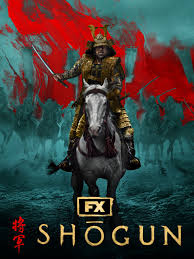
Shogun (2024)


from New York Times:https://www.nytimes.com/2024/02/26/arts/television/shogun-review.html


‘Shogun’ Review: Rediscovering Japan

The FX remake of the classic mini-series is classed up, retuned for contemporary sensibilities and still an epic soap opera.

By Mike Hale
Published Feb. 26, 2024Updated Feb. 28, 2024


The new FX mini-series “Shogun” is getting a lot of credit simply for not being “Shogun,” the 1980 NBC mini-series also adapted from James Clavell’s best-selling novel about the last days of feudal Japan. But the new show stands and falls on the same terms as the old show: its success as an epic costumed soap opera. You can correct for wooden acting, dated production values and Eurocentrism, but you can’t really correct for the basic nature of the material.

And on those terms, this “Shogun” — which premieres Tuesday on FX and Hulu with two of its 10 episodes — is perfectly successful. It is sumptuously produced, mostly well acted and not excessively sentimental or sensational. If its story seems to stop and start a bit, there are reasons for that, which become clear in a satisfying and moving ending; if there are major characters who don’t stand up to scrutiny, there are others who come alive and hold your interest. It may not live up to its hype, and it may leave you wondering why so much time (more than a decade) and money needed to be spent reanimating Clavell’s tale. But it delivers.

Created by the husband-and-wife team of Justin Marks and Rachel Kondo, the FX “Shogun” is still the story of an English navigator, John Blackthorne, who arrives in Japan at the turn of the 17th century and becomes embroiled — to a startling degree — in the political, cultural and romantic life of the country. (Blackthorne, like most of the significant characters, is loosely based on a historical figure.)

Kondo and Marks have recalibrated the narrative, however, moving Blackthorne’s point of view down in the mix and elevating the roles of many of the Japanese characters, particularly Toda Mariko, the noblewoman who becomes Blackthorne’s translator and love interest, and Yoshii Toranaga, the lord who both protects and manipulates him.

That’s a notable change from the original “Shogun,” but 44 years down the road, it’s not as if the show should get a ton of credit — it’s an easy win. In the current global TV environment, the show’s emphasis on Japanese characters and language is welcome but not exceptional. (Tremendous effort reportedly also went into vetting the details of period costume and behavior; few viewers, even in Japan, are likely to know the difference, but what’s onscreen certainly looks credible to the rest of us.)

As the plot, busy yet not all that complicated, unwinds — Toranaga and his rival Ishido jockeying for power, with Blackthorne as a reluctant pawn; Blackthorne being alternately repulsed and seduced by his new surroundings — the real difference between the old and new shows has less to do with cultural enlightenment than with a higher level of tastefulness and technique. Though there is a multicultural dimension there, too: Marks and Kondo’s show is informed by the craftsmanship of classic Japanese samurai films, which were in turn heavily influenced by the attitudes and styles of Hollywood westerns and swashbucklers. This “Shogun” sits in a polyglot comfort zone.

Not everything has been improved. Cosmo Jarvis (“Lady Macbeth”), stepping in for Richard Chamberlain as Blackthorne, seems just as lost as his stranded, bewildered character. He works a dull note of dazed petulance for much of the series, eventually shifting to stunned sorrow. While the story builds Blackthorne up — he is continually (improbably) saving the day — Jarvis’s lack of presence works against the narrative, making Mariko’s attraction to Blackthorne and Toranaga’s sympathy for him hard to buy.


We stay engaged, though, because the actors Jarvis is matched against easily hold our attention. Anna Sawai, who did not quite click as a contemporary action hero in “Monarch: Legacy of Monsters,” is thoroughly convincing and captivating as Mariko. And Hiroyuki Sanada carries the show as the relentlessly pragmatic, humanely inhumane Toranaga; he is not the most expressive of actors, but he has a quiet force and regality that fit the part.

A number of the supporting players are also excellent, beginning with the Japanese film mainstay Tadanobu Asano as the scheming daimyo Yabushige and including Takehiro Hira as Ishido, Moeka Hoshi as Blackthorne’s consort and Tokuma Nishioka as Toranaga’s most loyal retainer.

The roles those performers play so capably are familiar ones, and if the creators of the show display an increased sensitivity to stereotypes, that does not prevent this “Shogun” from exhibiting signs of a familiar cinematic Japonisme. It’s there in the fetishization of death (seppuku recurs) and the central contrast of Blackthorne’s Western individualism with the Japanese characters’ devotion to duty and sacrifice. Sex is aestheticized; a maid is a member of a secret assassin’s guild (though the character is no longer a full-on ninja, as in 1980). Dialogue keeps blossoming into poetry.

All these things may be historically and culturally accurate to some degree, but they are also undeniably the tropes of Western romanticization of Japan. And at the end of the day, “Shogun” — if it stays tied to Clavell’s book at all — remains a prime example of the Westerner’s attempt to encapsulate his fascination, or infatuation, with Japanese style and attitude.

So why go to so much trouble to spruce up a British writer’s half-century-old fantasy of Japanese history? It may be defensible only in commercial terms. But when Toranaga and Yabushige meet on a cliff in the rising sun and explain what the whole story has been about, Sanada and Asano glide past all those paltry concerns.

Wednesday, September 4, 2024

The Boys Season 4


The Boys Season 4


from Wikipedia

1 "Department of Dirty Tricks"

The CIA tasks The Boys to assassinate Victoria Neuman, but the mission goes awry when they are discovered by her superpowered daughter, Zoe, who attacks the group. Ryan learns that Butcher has approximately six months to live. At CIA headquarters, Butcher reunites with Joe Kessler, an old friend, who attempts to recruit him to take down the Supes. Homelander, obsessed with his aging and fed up with his sycophant group, recruits Sister Sage (known for being the smartest person on the planet) to join The Seven. He and Sage have three supporters beaten to death by the Deep and Black Noir II, including Monique's ex-boyfriend Todd. Sage instigates a riot outside the courthouse when Homelander is found "not guilty"; A-Train dumps the corpses of Homelander's supporters into the riot, ensuring the Starlighters are blamed. Butcher arranges a meeting with Neuman for the Red River files but changes his mind at the last second after having a hallucination of his deceased wife, Becca. Hughie learns his father has suffered a stroke and reunites with his mother.

2 "Life Among the Septics"

Butcher tells The Boys his remaining time to live and is kicked out. However, Butcher tracks them and helps them to spy on Sage, who is recruiting alt-right Supe Firecracker at TruthCon. Butcher and M.M. fight, causing the former to leave. Their plan is thwarted when Sage, Firecracker, and Splinter intervene; Sage leaves and a fight ensues. Butcher returns and kills Splinter, and Firecracker flees in the aftermath. Guilty over his actions, A-Train gives Hughie and Annie files exonerating the Starlighters accused of murder. Homelander and Sage organize Ryan's first public mission, a scripted rescue. The mission ends awfully when Homelander appears off-script and shocks Ryan into killing the stuntman disguised as the criminal. Butcher opens up to M.M. in an attempt to rejoin The Boys, to no avail.

3 "We'll Keep the Red Flag Flying Here"

Homelander introduces Sage and Firecracker as new members of The Seven and appoints Sage as the new CEO, replacing Ashley, who is reduced to "mascot" status. Butcher meets with Kessler, and they devise a plan to kidnap Ryan. The former arranges a meeting with Ryan with the intent of drugging him, but they instead spend time bonding together. M.M. recruits A-Train as a spy, who reluctantly accepts. Frenchie and Kimiko go on a mission to destroy a Shining Light Liberation Army cell. During the mission, a drugged Frenchie hallucinates about his past, while an old acquaintance confronts Kimiko. Annie confronts Firecracker, who reveals that she holds a grudge against her because of a rumor she spread that ruined her career. Hughie and M.M. infiltrate a meeting between Homelander, Neuman, and Sage to assassinate President Robert Singer, which goes awry when Homelander detects and attempts to kill Hughie; A-Train rescues him. Hughie's mother, Daphne, reveals that depression and a failed suicide attempt led to her departure. Ryan returns home only to be confronted by Homelander for visiting Butcher, which results in Homelander having a mental breakdown.

4 "Wisdom of the Ages"

Homelander returns to the Vought lab where he was raised and experimented upon, tormenting most of the employees before its director, Barbara, intervenes. Daphne's plan to take Hugh Sr. off life support angers Hughie. Annie meets with Singer to strike a deal to take down Vought. Hughie and Kimiko secure Compound V from A-Train for Hughie's father but are ambushed by the Shining Light. M.M. and Butcher fail to blackmail Firecracker, who publicly discredits Annie by revealing her decision to have an abortion months prior, leading to a brutal fight that damages Annie's reputation and ends her alliance with Singer. Ezekiel attacks Frenchie while investigating Firecracker, but Butcher intervenes only to be choked unconscious; he awakes to find Ezekiel dead, torn to pieces. Butcher tells Hughie that he used V to cure his illness but admits that it failed and accelerated it instead. Frenchie confesses to Colin about killing his family and is brutally beaten by him before threatening his life should he see Frenchie again. Hughie witnesses his father waking up from his coma after receiving Compound V. Bloodied, Homelander leaves Barbara locked in a room with the corpses of her colleagues.

 5 "Beware the Jabberwock, My Son"

After Hugh Sr. wakes from his coma, Daphne reveals she administered the V. Butcher informs The Boys about a virus that kills Supes, acquired by Neuman.[a] He and M.M. visit Stan Edgar in prison, seeking help to obtain the virus in exchange for amnesty. The Boys and Edgar discover V and the virus being tested on animals at a farmhouse, where Neuman arrives as well. After being attacked by the mutated farm animals, they locate Dr. Sameer Shah who has the last remaining sample of the virus, but are forced to use it to kill a herd of mutated sheep. Afterward, Sameer goes missing and is presumed dead. M.M. returns Edgar to prison, but Neuman frees him. Empowered and mentally confused, Hugh Sr. kills patients at the hospital but soon returns to his sense; Hughie ends his life peacefully. Homelander declares The Seven will now be "wrathful gods" for the "greater good". In the presence of Robert Vernon / Tek Knight, Cate Dunlap, and Sam Riordan, VNN anchor Cameron Coleman is framed as the leak by Ashley and killed by The Seven. Wracked with guilt, Frenchie surrenders to the police. Butcher reveals to Kessler that Sameer is alive and he has kidnapped him to replicate the virus.

6 "Dirty Business" 

The Boys learn that Tek Knight is hosting a party at his mansion with Neuman and The Seven in attendance; they infiltrate the party by disguising Hughie as the Supe Webweaver. When Tek Knight discovers Hughie's identity and attempts to torture him, they enter the mansion to rescue Hughie. M.M. shoots Sage in the head right before he has a panic attack; A-Train saves M.M., rushing him to the hospital, and Sage survives. Annie and Kimiko save Hughie and restrain Tek Knight. The three antagonize Tek Knight until he reveals that Homelander and Sage plan to use his prisons as internment camps before he is killed by his butler Elijah. Homelander and Neuman convince the senators to rally against Singer. Firecracker tells Homelander about her encounter with Annie, realizing that the leak is still alive. Meanwhile, Butcher forces Sameer to replicate and make the virus strong enough to kill Homelander. When Sameer reveals that enhancing the virus could potentially eradicate every Supe on Earth, Butcher is pressured by Kessler to continue but discovers he is a hallucination, as the real Joe Kessler died years ago.

7 "The Insider"

Butcher bails Frenchie out of jail to assist Sameer with the virus. M.M. gives up leadership of The Boys, passes the baton back to Butcher again, and considers leaving with Monique and Janine; A-Train convinces him not to leave. The Boys discover a plan to assassinate Singer that will be carried out by an unidentified Supe shapeshifter. Homelander kills Webweaver, believing he is the leak. Hughie goes to Neuman's house to convince her to stop everything, to no avail. Homelander sends The Deep and Black Noir II to kill The Boys, starting a fight with Butcher and Annie, who are saved by A-Train and M.M. Infuriated, Homelander fires Sage from The Seven for hiding A-Train, who has fled the country with his family, as the leak. Tired of being used by Vought and Homelander's manipulation, Ryan gets fed up, interrupts a live show to give a speech, and leaves. Frenchie and Kimiko reconcile by telling each other what they blame themselves for before Sameer injects Kimiko with the dose of the virus he has prepared and escapes; Frenchie saws off her leg so the virus doesn't spread. Butcher passes out in a bar and Annie wakes up to find herself shackled in a room somewhere, realizing that she has been impersonated and replaced by the shapeshifter.

"Assassination Run"

While Butcher recovers, Mallory and Ryan visit him, where the latter is told of Homelander's crimes and that he must kill him. However, Ryan refuses, accidentally kills Mallory, and leaves, causing Butcher to embrace his dark side of Kessler. Homelander tasks the remaining Seven with killing everyone at Vought who has incriminating evidence against them; a targeted Ashley injects herself with V. While Frenchie develops the virus, The Boys monitor Singer in a bunker where they discover Annie is the shapeshifter and a fight ensues; the real Annie arrives and kills the shapeshifter. When Homelander reveals that Neuman is a Supe on air live, she calls on Hughie to protect her and Zoe in exchange for help. When The Boys and Neuman meet, Butcher arrives, kills Neuman with his new superpowers, and steals the virus. Sage reveals to Homelander that his plan has been a success when Singer is arrested for conspiring with The Boys to kill Neuman. Speaker of the House Steven Calhoun becomes the new President of the United States, swears allegiance to Homelander and declares martial law, deputizing Homelander and his army of superhumans. The rest of The Boys are ambushed and captured by Vought troops, led by multiple Supes, but Annie regains her powers and manages to escape; Butcher drives off with the virus. In the mid-credits scene, Calhoun shows Homelander where Soldier Boy is being held captive.