Tuesday, October 10, 2023

George Harrison: Living in the Material World


from Wikipedia: https://en.wikipedia.org/wiki/George_Harrison:_Living_in_the_Material_World

George Harrison: Living in the Material World is a 2011 documentary film co-produced and directed by Martin Scorsese, based on the life of musician George Harrison, former member of the Beatles. The film's release was coordinated with both a companion book and an album of Harrison's demo recordings. The film earned Emmy Awards for Outstanding Directing for Nonfiction Programming and Outstanding Nonfiction Special.
Premise

The film offers a biographical perspective on the life of musician George Harrison, from his early life in Liverpool, the Beatlemania phenomenon, his travels to India, the influence of Krishna Consciousness movement in his music, and his relevance and importance as a member of the Beatles. It consists of previously unseen footage alongside a wide range of interviews, including Olivia and Dhani Harrison.

After Harrison's death in 2001, various production companies approached his widow Olivia about producing a film about her late husband's life. She declined because he had wanted to tell his own life story through his video archive. Upon meeting Scorsese, she gave her blessings and signed on to the film project as a producer.

According to Scorsese, he was attracted to the project because "That subject matter has never left me...The more you're in the material world, the more there is a tendency for a search for serenity and a need to not be distracted by physical elements that are around you. His music is very important to me, so I was interested in the journey that he took as an artist. The film is an exploration. We don't know. We're just feeling our way through."

Throughout 2008 and 2009, Scorsese alternated working between Shutter Island and the documentary. Scorsese, his editor David Tedeschi, and a small army of researchers spent five years assembling interviews, music, film clips, photos, and memorabilia.

The documentary premièred at the Foundation for Art and Creative Technology in Liverpool on 2 October 2011. It was shown on HBO in two parts on 5 and 6 October 2011 in the United States and Canada and as a two-part Arena special on BBC Two on 12 and 13 November 2011 in the United Kingdom. It was first theatrically released in Australia on 20 October 2011

Saturday, October 7, 2023

Paddington (2014)


from the Paddington wiki: https://paddingtonbear.fandom.com/wiki/Paddington_(film)

Plot

A grainy film shows a British explorer, Montgomery Clyde, who travels to Darkest Peru and discovers a new species of bear. Clyde befriends the two bears he finds and learns that they are able to grasp the English language. He leaves the country and goes back to his family in England, gifting his explorer's hat to the bear he has named Pastuzo.

Years later, a young bear in Darkest Peru announces that it is Marmalade Day. Him and his guardians, Lucy and Pastuzo, spend the day making marmalade. During the night, the three bears feel tremors and head towards an emergency bunker on the forest floor. Pastuzo doesn't make it, and the two other bears find his body in the morning, when the tremors have stopped. The younger bear is sent away on a cargo ship to London.

Finding himself lost and alone at Paddington Station, he begins to realize that city life is not all he had imagined - until he meets the kind Brown family, who read the label around his neck (which reads 'Please look after this bear. Thank you.') and offer him a temporary haven. It looks as though his luck has changed until this rarest of bears catches the eye of a museum taxidermist named Millicent Clyde.

Paddington, with the aid of Mrs. Mary Brown, searches for the explorer who came to Darkest Peru. He accidentally floods and sets fire to the Browns' house, and is criticised by Mr. Henry Brown, who thinks Paddington is a bad influence on Judy and Jonathan.

Paddington leaves in shame and looks for M. Clyde at every address that Mrs. Mary Brown could find. He finally finds Millicent Clyde, who says that the explorer was her father. She takes Paddington to the Natural History Museum, where she works as a taxidermist. She reveals to Paddington that she resents her father for not obtaining a specimen of Paddington's species when he went to Peru. Her family lost status and was relegated to a lower class in society. Millicent tells Paddington that she plans to correct her father's mistake and stuff Paddington so her father's discovery can be immortalised in the museum.

Mr. Curry warns the Browns of Millicent's plan, and they rush to the museum to save Paddington. They cause a power outage and help Paddington escape from Millicent's office. They meet on the roof where Millicent intercepts them. Paddington surrenders and asks for one last request - to eat a marmalade sandwich. Millicent grants his request and he throws the sandwich at Millicent, causing a flock of pigeons to fly at her and cause her to almost trip over the edge of the roof. Millicent regains her balance and prepares to tranquilize Paddington when Mrs. Bird, drunk on rum, bursts through a trapdoor which pushes Millicent off the roof. Hanging onto a flagpole far above the ground, Millicent is weaponless and defeated.

Paddington is welcomed into the Brown household as a new member of the family. Millicent is sentenced to community service at a petting zoo, her worst nightmare. Paddington writes to his Aunt Lucy, elated that he has finally found a home where he belongs.

Friday, September 22, 2023

Iron Man #11-19 Vol 3. Books of Korvac III: Cosmic Iron Man


Iron Man #11-19 Vol 3.
Books of Korvac III: Cosmic Iron Man


Iron Man is marooned in a small colony on a remote planet! A message from home warns him that Korvac is still a threat, but recovering from his injuries means pain medication - which might mean a relapse. Will Tony succumb to the temptation that has plagued him for years? Either way, Iron Man will soon face a cosmic showdown on the deck of Galactus' worldship. And to survive, he must battle Korvac's zealous and powerful disciples: Controller, Unicorn, Blizzard and a robotically enslaved Original Human Torch! Tony could use some friends, but does Doctor Doom count?! When the dust settles, Iron Man will emerge majorly upgraded and forever changed! But with great power comes great ego, and now his friends on Earth must decide: Has Tony Stark become an Iron God, or a dangerous threat?


Monday, September 18, 2023

The Wonder (2022)


from the New York Times: https://www.nytimes.com/2022/11/17/movies/the-wonder-review.html

The Wonder (2022)


By Manohla Dargis
Published Nov. 17, 2022
Updated Dec. 27, 2022


From the moment that Florence Pugh appears in the period drama “The Wonder” — seated at a table on a dimly lit ship and methodically eating from a plate while she gazes into some private horizon — you are with her. Her character, Lib Wright, looks so self-contained and so manifestly uninterested in the other passengers that you can’t help but be intrigued by her. She’ll keep you watching and interested as you follow her through this perverse, provocative story about women, their appetites and a world that barbarically tries to control them both.

A story of faith and sacrifice, “The Wonder” is a mystery wrapped in a welter of complications. Set in Ireland in 1862 — roughly a decade after the end of the Great Famine that ravaged the country, leaving an estimated one million dead — the story takes off when Lib, a nurse from London, arrives for her new and uncommon duties in a remote village. For two weeks, she is to closely observe a pious 11-year-old girl who’s said not to have eaten for four months. How the child remains alive is the puzzle that Lib briskly sets about solving, fortified by her seemingly unshakable confidence in science and an attitude of clinical detachment.

Lib’s journey to Ireland is arduous — she travels by boat, train and horse-drawn cart, her head like a prow, her face a mask of stoicism — and soon proves more existentially difficult than physically challenging. At the village, she meets her employers, a dour committee of patriarchs that includes a doctor (Toby Jones) and a priest (Ciarán Hinds). Anna O’Donnell (Kíla Lord Cassidy) does not eat, will not eat, or so it appears, they tell the incredulous Lib. Whether the fast is a miracle or a hoax, Anna has become an attraction and, as far as the men are concerned, has drawn unwanted attention from gawkers and the press.

Although some on the committee seem ready to canonize the fasting girl, others are more skeptical. Whatever the truth, Anna belongs to the ranks of women and girls who are problems in need of remedying, which is why Lib and a nun (Josie Walker) are to watch her in alternating eight-hour shifts. (Why the committee hires a British nurse remains a mystery.) Lib’s no-nonsense demeanor and grim history — she was a nurse in the Crimean War, presumably alongside Florence Nightingale — make her seem perfect for the position. That Lib is another problem becomes evident later that evening when she ingests some opium.

The Chilean director Sebastián Lelio — his credits include “Gloria,” its English-language remake “Gloria Bell” and “A Fantastic Woman” — gracefully introduces the pieces of this peculiar tale with economy, beauty, his characteristic intimacy and usual complement of memorable faces. His only real misstep is a framing device: two quasi-Brechtian scenes on a soundstage that bookend the story and announce its artifice. “The people you are about to meet, the characters, believe in their stories with complete devotion,” an offscreen woman says, as the camera glides past film equipment and splashes of color before stopping on Lib.

The voice belongs to Kitty (Niamh Algar), who’s close to the O’Donnell family and will sometime later, when in character, look at the camera and say, “Hello again. I told you we are nothing without stories.” No kidding. It’s unclear why Lelio bothered with these forced alienation effects, which are meant to compel you to think about what you’re watching (as if you ever stop thinking) rather than identify psychologically with the characters (as if that’s all viewers do). It’s a dubious move — and the assertive modern score is already doing some of that work — and generally is as stale as one of old Hollywood’s phony happy endings.

Certainly there’s already much to consider as “The Wonder” circles around questions of control — via church, state and men — and vulnerable bodies in peril. The movie is based on the novel of the same title by Emma Donoghue, who shares credit for the script with Lelio and Alice Birch. Donoghue also wrote the screen adaptation of her novel “Room,” about a mother and her young son held prisoner in a tiny shed. Although “The Wonder” is a different kind of captivity narrative, it too turns on trauma and nurturance — the care and feeding of children — and presents maternity as both an act of independence and of salvation.

Lib assumes the mantle of motherhood gradually and with enough complexity that the story never falls into predictability. It also doesn’t confuse empathy with essentialism. Although she warms toward Anna (how could she not?) and also takes up with a journalist (Tom Burke), creating an allegorical family unit, the character remains convincingly sovereign throughout. Anchored by Lelio’s intelligent filmmaking — and by Pugh’s beautifully calibrated mix of physical vigor and temperamental astringency — Lib embodies the story’s arguments, themes and power with vivid clarity. There’s no denying her or her ravenous hunger for life.

The Wonder
Rated R for extreme bodily peril and forced feeding. Running time: 1 hour 48 minutes. Watch on Netflix.

A correction was made on
Dec. 27, 2022:

An earlier version of this article misstated the title of the novel Emma Donoghue wrote and adapted for screen. It is “Room,” not “The Room.”

Saturday, August 5, 2023

A Man Called Otto (2022)


from Roger Ebert: https://www.rogerebert.com/reviews/a-man-called-otto-movie-review-2022

A Man Called Otto (2022)


In Marc Forster’s genial, earnest yet unremarkable dramedy “A Man Called Otto,” the titular character Otto can’t pick his daily battles even if his life depended on it. Living in an unfussy suburban neighborhood of identical row houses somewhere in the Midwest, the aging man gets easily annoyed by every little misstep of a stranger. And his protests are so pronounced that they even rival Larry David’s in an average episode of “Curb Your Enthusiasm.”

Portrayed by the beloved Tom Hanks in an indistinct performance that splits the difference between quirky and grounded, Otto is often right about his grievances, to his credit. Why should he pay for six feet of rope and waste a few extra cents, for instance, when he bought just a little over five? Why shouldn’t he warn inconsiderate drivers who often block garage doors or entitled neighbors who can’t as much as remember to close a gate and respect basic rules about trash disposal? Or pick up a fuss when the soulless real estate guys from the fictional and hilariously named “Dye & Merica” show up to sabotage the community’s peace?

Then again, not everything is as awful as Otto makes them out to be. And he could perhaps afford to have some manners himself, especially when a new, very pregnant neighbor drops by with a bowl of home-cooked meal as a courtesy.

If you’ve already seen 2015’s Oscar-nominated Swedish hit “A Man Called Ove” by Hannes Holm, a film that is not any better or worse than this middle-of-the-road American remake (yes, not all originals are automatically superior), you’ll know that Otto hasn’t always been this insufferable. In small doses of syrupy and visually overworked flashbacks, Forster and agile screenwriter David Magee show us that he was socially awkward even from his young days, but at least nice and approachable. With a squarely unstylish side-part haircut that aptly gives out a “nice but unworldly guy” vibe, young Otto (played by the star’s own son, Truman Hanks) had an interest in engineering, in figuring out how things work. His life apparently changed when he accidentally met the dreamy Sonya (Rachel Keller), who later on became his wife and passed away recently.

As was the case in “Ove,” Otto can’t wait to join his wife on the other side, but his frequent suicide attempts get interrupted in episodes that are sometimes awkwardly funny, and other times, just plain awkward. The chief interrupters of our get-off-my-lawn guy are the abovementioned new neighbors: the happily married-with-kids couple Marisol (a bubbly and scene-stealing Mariana Treviño, the absolute best thing about the film) and Tommy (Manuel Garcia-Ruflo), who often ask little favors from the grumpy Otto. There are also others in the neighborhood, like a kindly transgender teenager Malcolm (Mack Bayda) thrown out of his house by his dad, the fitness-obsessed Jimmy (Cameron Britton), Otto’s old friend Rueben (Peter Lawson Jones), and his wife Anita (Juanita Jennings), who are no longer on cordial terms with Otto. And let’s not forget a stray cat that no one seems to know what to do with for a while.

The mystery is that none of the supporting personalities in this story can take a hint about Otto, at least not well into the film’s second act. Instead, all the characters collectively treat Otto with patience and acceptance, as if he isn’t being willfully rude to them every chance he gets. For example, it’s anyone’s guess why Otto’s work colleagues bother to throw him a retirement party when it will surely go unappreciated or why Marisol continuously insists on trying to bring out the good side of him when Otto offensively shuts down every one of her genuine attempts.

Still, the story manages to land some charms when Otto finally lets his guard down and starts making all the expected amends, while suffering a rare heart condition on the side. First, he becomes a local hero when he unwittingly saves someone’s life in front of a group of unhelpful people too preoccupied with their phones. Later on, he racks up additional goodwill when he takes Malcolm in and builds a slow yet steady friendship with Marisol, a rewarding storyline in an otherwise predictable tale.

But the biggest win of Forster’s adaptation is its worthwhile message about the small wins of everyday people who operate as a functioning and harmonious community against the evils of faceless corporations. “A Man Called Otto” isn’t exactly as philosophical as “About Schmidt” or as socially conscious as “I, Daniel Blake,” two films that occasionally hit similar notes. But it’s nevertheless a wholesome crowd-pleaser for your next family gathering.

Tuesday, July 18, 2023

The Bear S1


from Collider: https://collider.com/the-bear-season-1-recap/

The Bear S1


BY TOPHER BIGELOW PUBLISHED JUN 21, 2023

The Bear was an unexpected smash of Summer 2022. Some of the initial fervor was fueled by the Chicago return of Jeremy Allen White after the ten-year run of Shameless. However, unlike Shameless, which was mostly filmed in LA, The Bear is all about Chicago.

The show follows White’s Carmy Berzatto, an award-winning chef. Carmy’s love of food extends beyond an Italian heritage to a greasy spoon Italian beef joint that has been in his family for years. Despite his overwhelming desire to work there, Carmy’s brother Michael (John Bernthal) refuses to let him. This core rejection drives Carmy’s ambition in the kitchen. He trains under an abusive executive chef (Joel McHale), adding to his conflation of love and pain as it relates to cooking.

His life falls apart after his brother commits suicide and inexplicably leaves him the business. Carmy quits his fine dining job in New York to return to Chicago to keep The Original Beef of Chicagoland (known simply as "The Beef") alive. To call the restaurant a functional business is generous. The whole thing seems to be maintained through duct tape and sheer force of will. The ragtag team of employees is chaotic in both personality and process, and none of them make Carny's transition into a new work environment easy.

For its brief season and even shorter episodes, The Bear packed a lot of action and emotional resonance into its first season. Fresh off of his James Beard award win, Carmy Berzatto returns to Chicago to take over The Beef after his brother’s unexpected suicide. He finds the restaurant in a sorry state: dirty, poorly stocked, inefficient. Michael’s best friend Richie (Ebon Moss-Bachrach) has taken over day-to-day operations, but he is woefully unfit for the task. The kitchen’s haphazard organization fills Carmy with equal parts anxiety and frustration. His early attempts to corral his new troops are unsuccessful, as are early attempts at changing the menu. Desperate for some link between this rickety restaurant and the fine dining world he’d just left, Carmy hires Sydney (Ayo Edebiri), a Culinary Institute of America graduate and Chicago native as his sous chef. Neither Carmy nor Sydney is fully accepted by the other staff. An uncomfortable truce settles over The Beef as they learn to work together in whatever way they can.

Natalie (Abby Elliott), Carmy’s younger sister, appears during a tense moment and the two struggle to connect. It’s clear that the siblings have never been close, and both were blindsided by Michael’s death. She is hurt that Carmy has dedicated all of his time to the restaurant and has spent so little time with the family grieving. She has also inherited a stake in the restaurant and tries to convince Carmy to sell it, as she has received threatening letters from the IRS about unpaid taxes. Carmy’s immediate instinct is to refuse. He wants to keep the restaurant open as an homage to his brother. She asks for a specific payroll tax form the IRS letters had asked for, and they step into the restaurant’s small office to find it. What they found could most easily be compared to the bottom of a middle schooler’s locker at the end of the school year, an absolute disaster area. Neither of them can find the missing document.

Conditions at The Beef worsen, quickly. A health inspector shows up and notes several health department violations. Carmy discovers his brother had borrowed $300,000 from their loan shark uncle, Jimmy Cicero (Oliver Platt). Cicero offers to buy the restaurant from Carmy and sell it, get it off of their hands so that Carmy can return to New York and his prestige, but he refuses. For all that he tries to suppress his feelings and pour all of his attention into The Beef, Carmy’s emotional health is spiraling. He secretly begins attending Al-Anon meetings to process his feelings and better understand his brother’s issues with addiction and suicide.

With Carmy preoccupied, Sydney is left to endure the staff’s rejection and hazing. She is also responsible for dealing with a lot of the day-to-day issues, even as Richie gets all the credit. Carmy has the bright idea of transforming The Beef’s workflow to something resembling his fine dining style. He leaves Sydney, ill-prepared and disrespected, to enforce it. Sydney feels abandoned and exploited. She eventually gets her feet under her, slowly gaining the respect of her coworkers. Many of them struggle to adjust to their new roles, but Marcus (Lionel Boyce) shines as a baker of chocolate cakes.

The Beef can’t catch a break: just before open, the restaurant’s toilet backs up, flooding the bathroom. Carmy sends for Fak (Matty Matheson), a childhood friend, to fix it. While there, Fak attempts to interview for a job at the Beef with Richie. Richie doesn’t want him working there and the two come to blows. Carmy rushes to break it up. Desperate to stay in Carmy’s good graces, Fak reveals Richie has been selling cocaine in the alley behind the restaurant. Carmy is furious. Richie explains that the money from selling drugs is the only thing that kept the restaurant open through COVID. Meanwhile, Marcus struggles to prepare enough batter to bake cakes for the lunch rush. He attempts to speed things along by turning up the mixer. It is too much for the poor restaurant to bear and the power goes out. Fak determines the restaurant needs a new condenser, but that the part would cost over $5,000 to replace. Uncertain about what else to do, Carmy asks Richie to do one more deal to cover the costs.

Carmy and Sydney mend their relationship when Carmy solicits her help with devising a new dinner menu to drive up profits. Amid all the frenzy, Sydney tries her best to rise to the challenge. She constantly seeks Carmy’s approval, but he is too distracted and stressed to provide it. Even when he tastes her food, he is short, telling her it’s “not ready,” but providing no additional details. Sydney crafts a risotto meal that she is very proud of. When Carmy refuses to even taste the dish, she feels betrayed. Not wanting her food to go to waste, she offers it to a customer free of charge. The next day, Ebraheim (Edwin Lee Gibson), one of The Beef’s line cooks, reads the newspaper as the staff begins prep. The food critic reviewed The Beef, making particular note of the spectacular risotto dish he was given. Carmy is both annoyed and proud of Sydney’s unexpected accomplishment.

This is also the day they’d implemented an online ordering system. During prep, Marcus gets distracted in his attempt to perfect a new pastry and is late getting bread and cakes ready for the day. Carmy powers on the ordering machine and learns that Sydney had accidentally left the pre-order option on when she set it up. Hundreds of tickets pour out, and the restaurant explodes in a frenzy of activity. Carmy screams at Sydney for the mistake and Marcus for being unprepared. In the chaos, Sydney accidentally stabs Richie. He refuses to believe at first that it was an accident. She quits on the spot. Marcus follows her.

The Beef hosts a bachelor party that quickly gets way out of hand. Richie gets into a fight with a patron, nearly killing him. Marcus returns to the restaurant after hearing about the commotion. Carmy, losing his grip on reality, accidentally starts a kitchen fire while trying to light a cigarette on the burner. He doesn’t react, even as the flames spread, staring blankly even as his staff rushes in to put out the fire.

Unexpectedly, Richie gives Carmy a letter he’d found in the break room. The envelope was addressed to Carmy from Michael. Carmy opens it, but is disappointed to find nothing but a recipe for spaghetti. He is angry, frustrated, and feels played by his brother from the afterlife. Not knowing what else to do, Carmy sets out to make the recipe. He notices an odd note in the ingredients section, a suggestion to use the smaller cans of tomatoes because they taste better. Incredulous, Carmy returns the larger can he’d originally retrieved and grabbed a small can. When he opens the can, he finds a wad of $100 bills covered in a sheen of tomato sauce.

He gathers the rest of the staff together and orders them to open all the small cans of tomatoes. All stuffed with cash. He texts Sydney, apologizing for his behavior and offering her a few pointers on her risotto. She shows up at the restaurant and is welcomed like a hero–just before she’s put to work opening cans, too. The season ends with Carmy putting a sign on the door announcing that The Beef is closed and a new restaurant, The Bear, is coming soon.


Part of what makes The Bear so incredible is its nuanced and moving depictions of grief. Michael’s absence is felt in every episode, with each character expressing the loss in their own way. The show exemplifies the resilience required to both weather deep personal loss and a career in the restaurant industry. It will be interesting to see the characters go through a deeper level of processing and healing, growing and starting something new.

The show is a love letter to Chicago, the City of Broad Shoulders, and we’ll hopefully get to see more of Carmy’s Chicago in Season 2. The show has taken on a new level of relevance to Chicagoans in recent weeks. Joseph Zucchero, the owner of Mr. Beef, the real Italian beef joint in River North that inspired The Beef, recently passed away after a long battle with cancer.

Monday, July 17, 2023

Yellowstone S2

Yellowstone S2


from At Home Daily: https://www.athomedaily.com/movies-entertainment/yellowstone-season-2-recap/


New Enemies
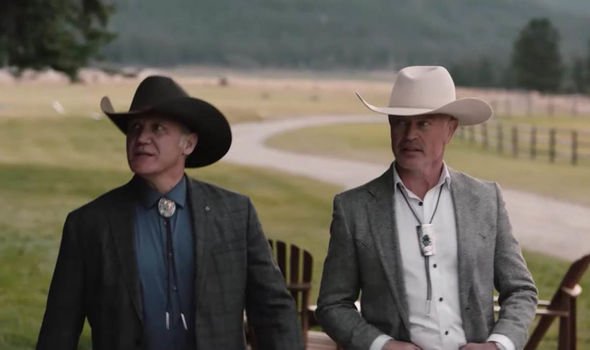
Beck Brothers

We are quickly learning that the Dutton family spends their whole lives fighting against enemies of all sorts. We are introduced to a new enemy in Season 2 via the Beck brothers.

With their fitting cowboy hats and bolo ties, they have a lot of fingers in a lot of pies in, not only Bozeman but all of Montana. And they are not happy to hear about a casino being put in their backyard. Namely, a casino that is not theirs. At first, they seem like respectable men, or should I say cowboys? But as the season progresses, they are more dangerous than originally thought.

The Dutton Legacy
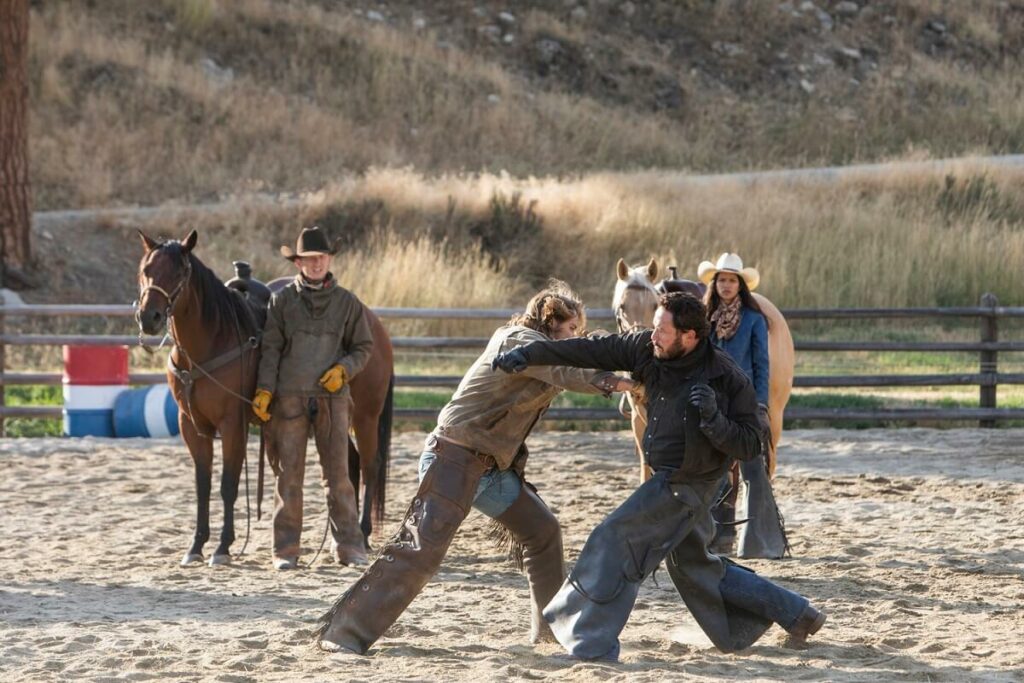
Kayce versus Rip

John Dutton continues to search for the perfect “son” to pick up the reins when he’s gone, a burden he felt the pressure of heavily with a recent cancer diagnosis. Only, we learn that he doesn’t actually have cancer. Congratulations! But he does have a nasty stomach ulcer that bursts.

The choice comes down to Kayce and Rip, who do seem to bear a little bit of ill will towards each other. Or maybe it’s just a healthy brotherly competitive spirit. Kayce is pretty badass, let’s admit it. He has elite military training, a get-anything-done kind of attitude, as well as the ability to perform under pressure.

Rip, on the other hand, is the epitome of a henchman. He’s the muscle of the ranch, and he does the dirty work without asking any questions. He also doesn’t have anything to gain when John dies, so we know his loyalty is to John and John alone.

However, Kayce, as the biological son, gets given the automatic ranch foreman position and becomes responsible for giving direction to the rest of the ranch hands. Much to Rip’s chagrin. But he doesn’t complain. Meanwhile, a rift forms between Kayce and his Native American wife, Monica, who is just simply not a fan of John and his ways of running a business, or a family.

Business As Usual

Beth, ever trying to fill the shoes of the son her father so desperately wants, does anything she can to help protect the ranch. This includes buying up as much of the surrounding land as possible.

Her plan is to zone the land for agricultural use, where the government will actually pay her to not farm it (in order to keep the big food corporations at a status quo). She uses the money from her boss at Schwartz & Meyer.

It’s pretty fun to watch Beth at work. Not only is she vicious, but she’ll have fun with you while she does it.

The Black Sheep

Jamie, the black sheep of the family, continues to further his political career in his campaign for Attorney General. Neither John nor Beth take kindly to getting ignored by him when their family is in dire need. In a rage, John cuts him out of the family. Furious and vengeful, Jamie retaliates by spilling family secrets to a local reporter.

When he goes back on his word, she informs him it doesn’t work that way. That’s true. So he decides to kill her. Maybe he shouldn’t run for Attorney General after all.

Because Jamie lacks the real world “knack” all the other men seem to possess on the show, he goes to Rip for help with the body. Like I said, ultimate henchman.

Old Enemies Make New Friends

The battle with the Beck brothers intensifies when hundreds of Dutton cattle are killed by way of eating alfalfa that was purposely placed in their fields.

Dan Jenkins, our favorite land developer from last season, discovers he was served with a liquor license ban because, of course, the Beck brothers are head of the liquor license committee. His luxury country club will lose hundreds of customers.

Chief Rainwater discovers that he was served with a cease and desist order on his new casino, also by way of the Beck brothers.

What the Beck brothers did not expect from all of this, was Dutton, Rainwater, and Jenkins forming an alliance in order to take these nuisances down. But the Beck brothers aren’t done.

A Love Story

Beth and Rip

The Beck brothers send someone to assault Beth in her office. They shoot her assistant in the head and attempt to sexually assault her, while beating her up pretty bad. But smart Beth got a text message out to Rip before they could see.

Just in time, Rip throws a chair through the glass window and kills the assailants, getting shot in the process. Rip and Beth realize they love each other. A true western romance.

The End

Still not done, the Beck brothers kill Dan Jenkins and kidnap Tate, Kayce’s son. The Duttons find out he’s being held at a white supremacist militia compound and stage an offensive attack to retrieve him, and the Beck brothers are satisfyingly and finally killed in the process.

The Duttons have managed to stave off another threat to their family, until the next season.