Tuesday, June 7, 2022

The Morning Show S2 Ep 4: Kill The Fatted Calf

The Morning Show S2 Ep 4: 
Kill The Fatted Calf


from NPR: https://www.npr.org/2021/10/08/1044000910/the-morning-show-recap-season-2-episode-4-why-drag-neil-diamond-into-this#:~:text=Bradley%20and%20Laura%3A%20A%20confusing%20drama&text=While%20she's%20getting%20dressed%2C%20Bradley,head%20of%20news%2C%20was%20fired.

by Linda Holmes
October 8, 20216:00 AM ET


Where we start: I don't know how Dave Grohl became the go-to Gamest Person In Show Business, but here's to you, Dave Grohl. Here's to you, Foo Fighters, playing Alex's comeback show.

Stella is feeling annoyed at how well Cory's "wall of blondes" strategy is going, but she can't deny that the audience loves it, which I cannot stop finding completely implausible, since they saw these women together for three weeks almost a year ago.

If you liked Poor Mitch sitting around cancelled in Italy, perhaps you'll like Poor Yanko, who's getting yelled at on Twitter for having referred to Punxatawney Phil as his "spirit animal" on Groundhog Day. Social media makes this a huge thing, he has to make a big on-air apology, and so forth. Not included in this story: Any real opportunity for anyone — ideally a Native American person, but I would have accepted anyone — to actually explain why stuff like this actually bugs people. Mia speaks the words "cultural appropriation," but that's pretty bare-bones. If you must do this kind of story, I feel like you should at least give a fair airing to what the objection is.


Poor Mitch: A romantic comedy

Poor Mitch goes on a fun date with Paola, because he's helping her out with her documentary about sexual violence, and just ... I wish I had stayed back at the villa. While Paola is interviewing a professor, Mitch takes a call from Paige, who tells him that someone is trying to plant a nasty story about Hannah in the press, and she suspects it's him — but he knows it's Fred "Even Worse Than Mitch" Micklen.

So Mitch, suddenly interested in Hannah's family's best interests, calls to tell Cory that he'd better settle the lawsuit and put a stop to all this. Cory isn't really interested in a morality lecture from Mitch, and guess what? Neither am I! Later, back at Paola's place, she affectionately reaches over to kiss Mitch on the cheek, and he says "Don't do that!" like he's very upset, and apparently now Mitch is afraid of affectionate touch because he feels so bad? Is this a "Mitch heals his trauma" story? My goodness, I hope nobody strains a muscle reaching for that angle. In other news, the professor Paola interviewed has COVID, so now they have to quarantine together. And now you know why Poor Mitch was in Italy: to serve this story.

Bradley and Laura: A confusing drama

Bradley and Laura are now sleeping together — Laura says, "For someone in the closet, you sure know your way around." "I'm not in the closet," Bradley says, "I'm just not actually a lesbian." I will grant you that this is not my area of expertise, but what a weird thing to say to the woman you just had sex with! Not because you have to be a lesbian to have slept with her, obviously, but this kind of flat "eh, it's more that I have nothing to be in the closet about" thing is ... odd at this moment, I think? Since she didn't say you were a lesbian; she said you were in the closet?

While she's getting dressed, Bradley unloads the story of the events that followed last season's finale, at long last: After Bradley and Alex made their big move, Fred, who was the CEO, was put on leave, while Cory, who was the head of news, was fired. Alex bolted, and Bradley was suspended. But then — and stay with me here — while Bradley, who had been in her job for three weeks, was still suspended, she went to the board and demanded that the Fred be fired and Cory be not only rehired but given Fred's job, and they were like, "Sure." So Cory became CEO and lifted her suspension, and she and Cory got to be really good friends. And that's why she's going to get him to give her the position moderating the presidential debate, ta-da!

Look ... a certain lack of realism is to be expected on a show like this, but making it seem like one person who had been in her job for three weeks would have the power to force the board of her network to do what she said kind of trivializes how much risk there actually is in standing up to your bosses. Three weeks on the air, when you were not previously famous, is not really going to imbue you with the power to topple a CEO and replace them with someone who just got fired by yelling at the board.

Anyway, Laura tells Bradley that Cory may be fired anyway now, because the company is losing so much money on the streaming service they're trying to launch. (There are some yuk-yuk "another streaming service?" jokes here that are supposed to be funny because this is airing on Apple TV+, and they would land better if the service were doing better or the show were better.) Laura's bizarre piece of imagery: "The company's balance sheet looks like a hemophiliac's used Band-Aid." That is ... a sweaty, sweaty line, right there, wowza. Anyway, Laura tells her to make nice with Cory and the network for the time being.

So Bradley goes to visit Cory, and she's trying to make up with him, and even though she says it's about their friendship, he knows it's really about moderating the debate. He declares his devotion to her, but tells her that it's probably going to be Alex moderating, and he can't use two straight white women, so Bradley is out of luck.

When Bradley comes back and explains all this to Laura, Laura's interested in the fact that she's identified at work as a straight white woman (this is what Laura meant by being in the closet), and Bradley gives her the whole "I hate labels" talk. But Laura tells Bradley that being a queer journalist would actually be good for her career, unlike when Laura was younger and not out at work, and rumors about her sexuality got her pushed out of her job. Laura kind of wishes Bradley would embrace it in a way that she herself couldn't, but Bradley doesn't want to "use her identity" like that.

Laura points out that she already uses an identity, it's just not her real one. Laura also calls Bradley repressed, and to prove she's not repressed, Bradley breaks a vase, which is not a thing a real person would do. Anyway, Laura essentially tells her "well then scram, and by the way, pay for my tchotchke," and Bradley goes. She thinks about Laura's advice, though, and she ends up almost telling Stella she's bisexual (as a way to promote herself as a debate moderator!), but she chokes at the last minute and sells herself on the basis that she's from a "conservative southern background."

Daniel: A musical

Daniel is back from China and eager to talk to Mia. He would like her help addressing racism at TMS and at UBA. And he would like her to start by pushing for him to moderate the debate. Mia takes up his cause with Stella, but Stella says that Daniel has "reached the level of his charisma" (which is one of the most quietly devastating insults I have ever heard) and she doesn't think he has the "it factor" necessary to be as big a star as he'd like to be.

And because Cory, who's her boss, wants Alex to moderate, Stella has to go and try to sell Alex on doing it, even though she herself didn't even want Alex to come back at all. Alex responds by calling Stella a "punk" behind her back to Chip, who tries to oh so very gently let Alex know that Stella is the president of news? So maybe don't call her a punk? It's impossible to tell whether the show is consciously writing Alex as someone who dismisses younger women of color in a way she would probably not dismiss anybody else, but there you have it. (Again, these people! Are villains! Let them be villains!)

Meanwhile, Mia breaks it to Daniel that he's not getting the gig because of said "it factor" concerns (which he points out are impossible to tease out from racism), and Daniel expresses his frustration that it's going to be another straight white person (namely Alex, if Stella has her way).

And then ... the show is sort of not clear about whether he's trying to blow up his career or show off his charisma, but Daniel takes advantage of a sudden opening in the show to sing Neil Diamond's "America." Everyone is gobsmacked, and I don't know whether we're supposed to believe that a live show has no plan in place if they need to fade out a person singing a song and vamp to fill some time, nor do I think a live show would just let you sing an unplanned song on a live broadcast without ... you know, securing the music rights? These people sometimes feel like Martians. Martians who have never done television before.

After Daniel's stunt, Stella visits him in his dressing room, and while we don't see their conversation, he does not look happy after that. You can tell that a character isn't being given enough clarity when you can't tell whether he was trying to help his career or flipping everybody the bird.


Other stuff:
Yanko gets around to his on-air apology, but first you get to hear him complain a lot about how he's Cuban and not racist, and I honestly have no idea whether the people who are writing this show think that's a defense or not.

Stella continues to be the most interesting thing about this show right now, because she eventually gives Alex a pep talk of sorts that convinces Alex to do the debate after all, but you can tell she absolutely hates having to kiss this lady's behind, and it's hard to blame her, since Alex is being completely hateful to her.

Chip tries to help out when there's a Bernadette Peters emergency (really!), but Mia feels like he's undermining her authority, and he quickly realizes she's not super on board with the Return of Chip any more than Stella is.

Speaking of Stella, when Cory rakes her over the coals about not being able to talk Alex into doing the debate, she unloads about how it's really beginning to feel like she was hired to make him look good for promoting an Asian woman, and that if he wants her in the job he has to listen to her, instead of ignoring everything she has to say. She's completely right about everything, but it bounces off him like a rubber ball off a concrete slab. I've often been pretty pro-Cory because of how much I love that Billy Crudup performance, but: 100 percent Team Stella.

Star Wars #12-18: War Of The Bounty Hunters

Star Wars #12-18:
War Of The Bounty Hunters


Star Wars (2020) #12
Published:
March 10, 2021Writer:
Charles Soule
Penciler:
Ramon Rosanas
Cover Artist:
Carlo Pagulayan


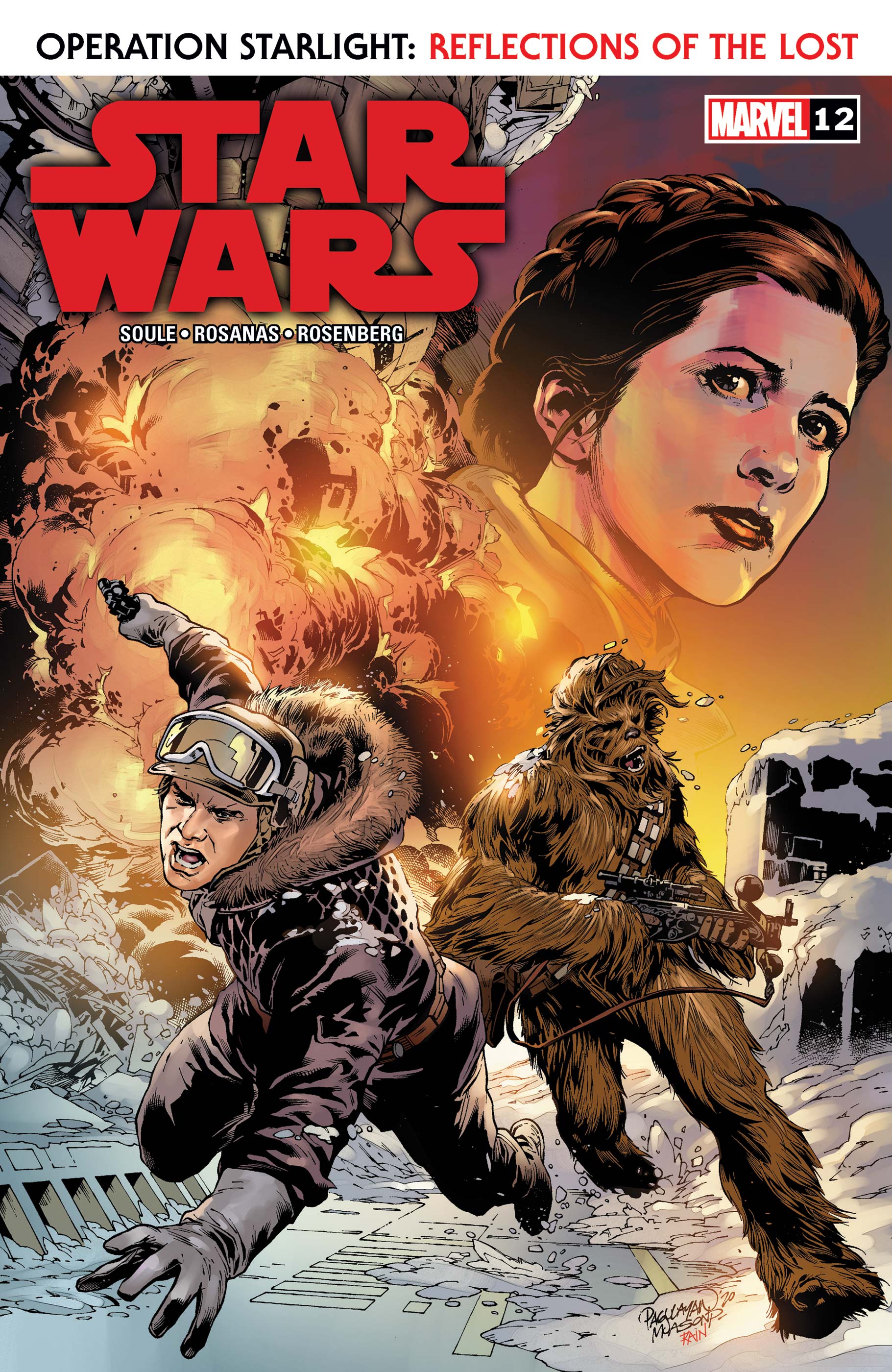
REFLECTIONS ON THE LOST! LEIA ORGANA and KES DAMERON share stories of their lost loves! Learn how POE DAMERON'S parents met! Learn the real reason HAN SOLO is so important to THE REBELLION!


Star Wars (2020) #13
Published:
May 12, 2021Writer:
Charles Soule
Penciler:
Ramon Rosanas
Cover Artist:
Carlo Pagulayan


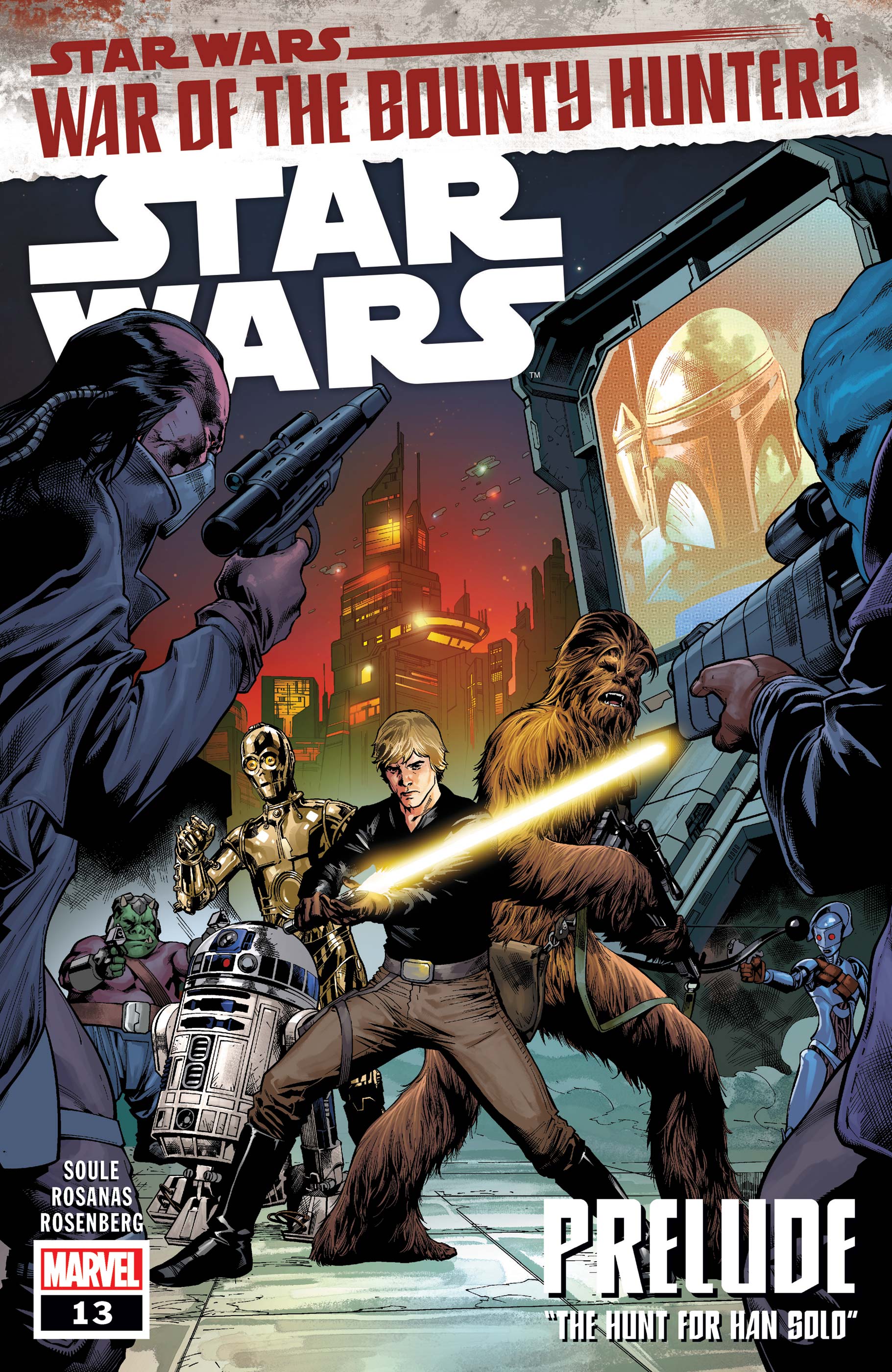
PRELUDE TO WAR OF THE BOUNTY HUNTERS: ""THE HUNT FOR HAN"" CHEWBACCA has heard from an old friend with intelligence on the location of notorious bounty hunter BOBA FETT, known to be in possession of HAN SOLO.Along with LUKE SKYWALKER, the loyal Wookiee sets off in search of his lost friend, on an adventure to Nar Shadaa... the SMUGGLER'S MOON! But will this mission prevent plucky astromech droid ARTOO DETOO from passing along a crucial message to Luke, one that will affect the fate of the entire Jedi Order...?


Star Wars (2020) #14
Published:
June 16, 2021Writer:
Charles Soule
Penciler:
Ramon Rosanas
Cover Artist:
Carlo Pagulayan


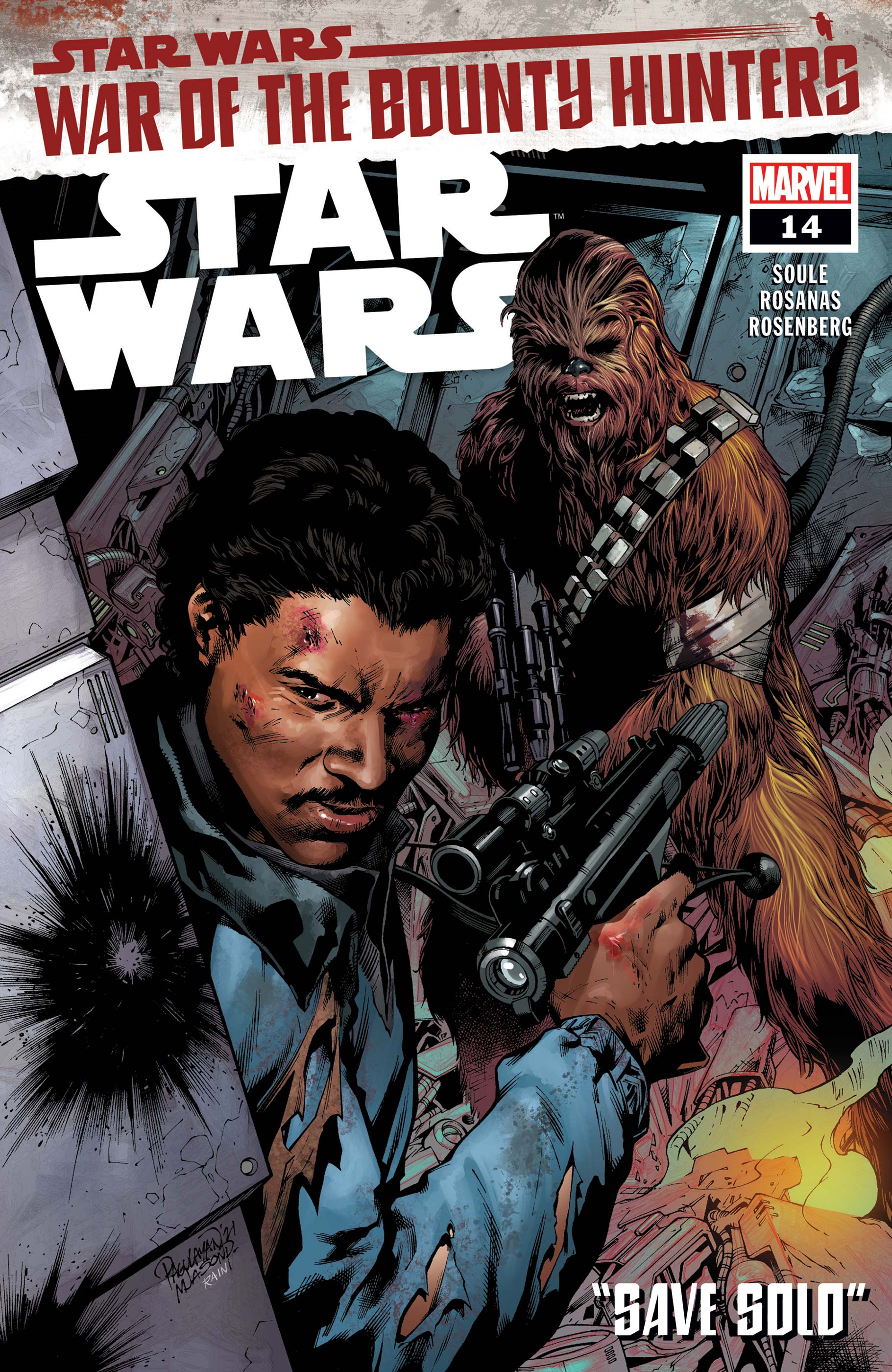
WAR OF THE BOUNTY HUNTERS TIE-IN! The REBELS finally have a lead on the location of HAN SOLO! It's time to save the captain of the MILLENNIUM FALCON from his frozen carbonite tomb! A general, a Jedi and a Wookiee will mount a desperate rescue mission... But they have no idea what actually awaits them.


Star Wars (2020) #15
Published:
July 28, 2021Writer:
Charles Soule
Penciler:
Ramon Rosanas
Cover Artist:
Carlo Pagulayan


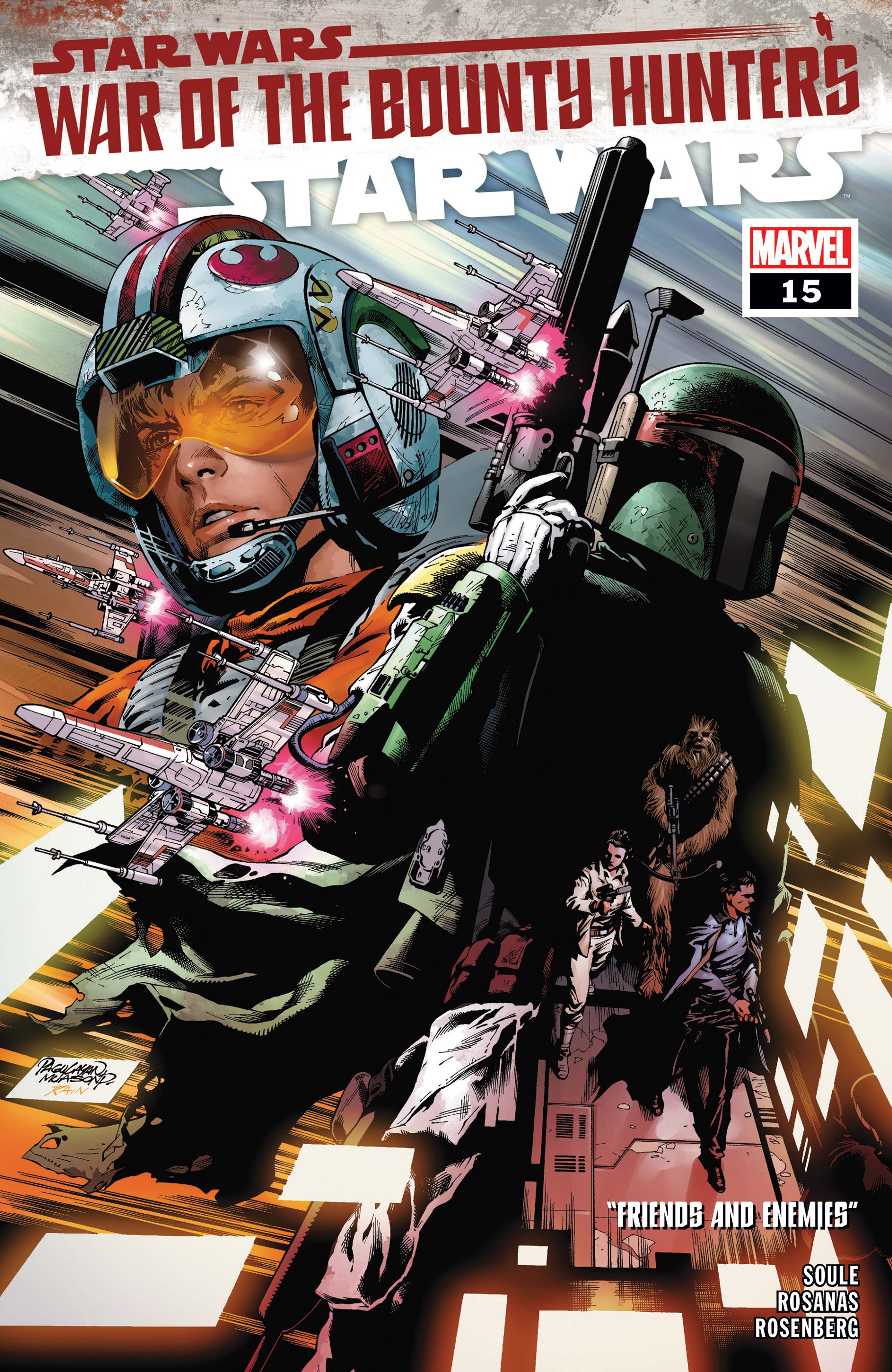
“FRIENDS AND ENEMIES” LUKE SKYWALKER embarks upon an epic mission with WEDGE ANTILLES and the brave pilots of STARLIGHT SQUADRON to rescue a lost division of the REBEL FLEET.LEIA ORGANA, CHEWBACCA and LANDO CALRISSIAN attempt to save HAN SOLO from the evil clutches of BOBA FETT. But what hidden vision will the Force send to Luke about the troubles to come?


Star Wars (2020) #16
Published:
August 18, 2021Writer:
Charles Soule
Penciler:
Ramon Rosanas
Cover Artist:
Carlo Pagulayan


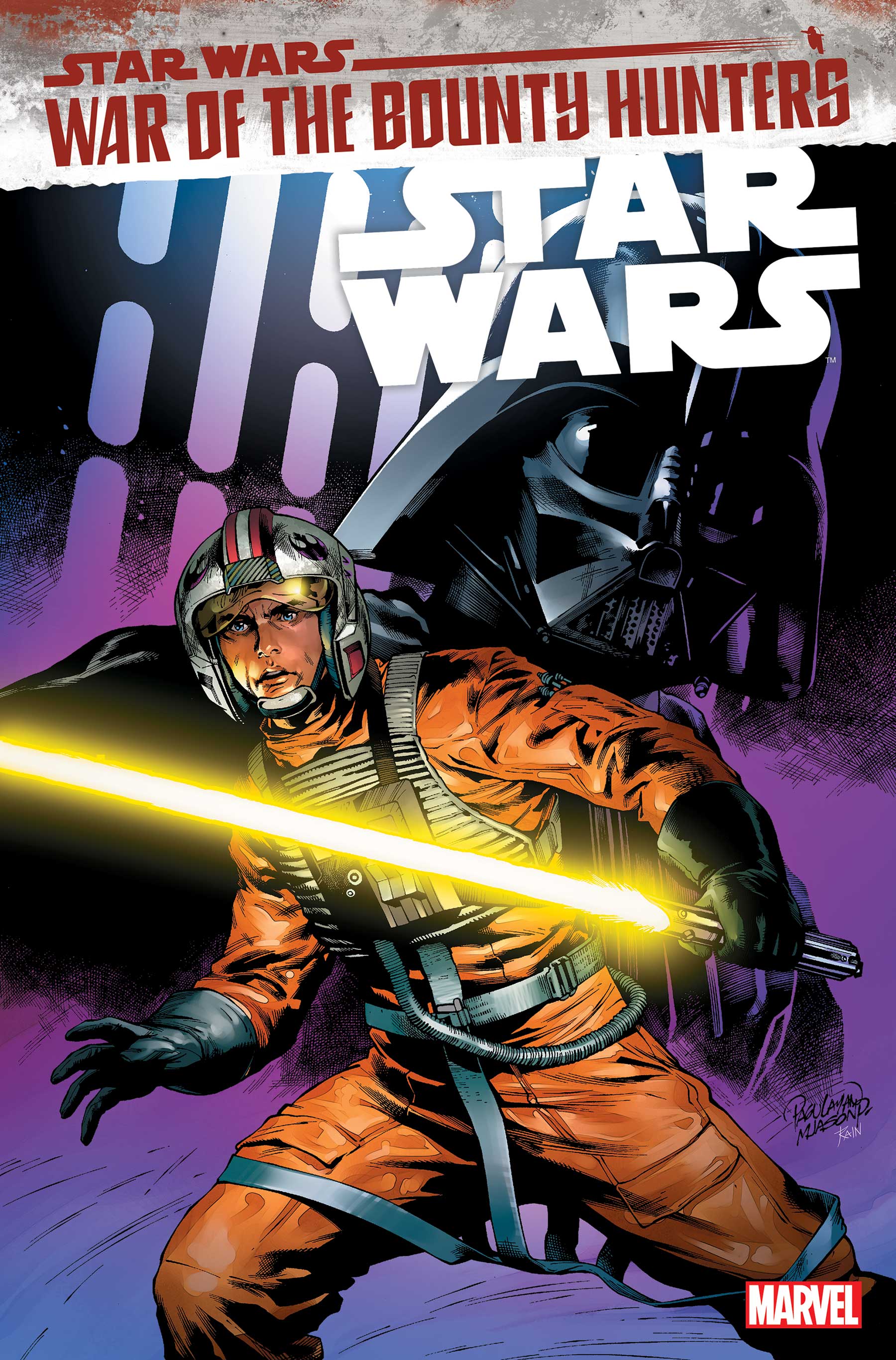
MISSING IN ACTION LEIA ORGANA, CHEWBACCA and LANDO CALRISSIAN battle BOBA FETT for the ultimate prize — HAN SOLO! But they are not the only people who have come to the remote world of JEKARA seeking the smuggler. DARTH VADER, JABBA THE HUTT and more are in the mix as well... Jedi LUKE SKYWALKER may be the Rebels' only hope…but WHERE is he?


Star Wars (2020) #17
Published:
September 29, 2021Writer:
Charles Soule
Penciler:
Ramon Rosanas
Cover Artist:
Carlo Pagulayan


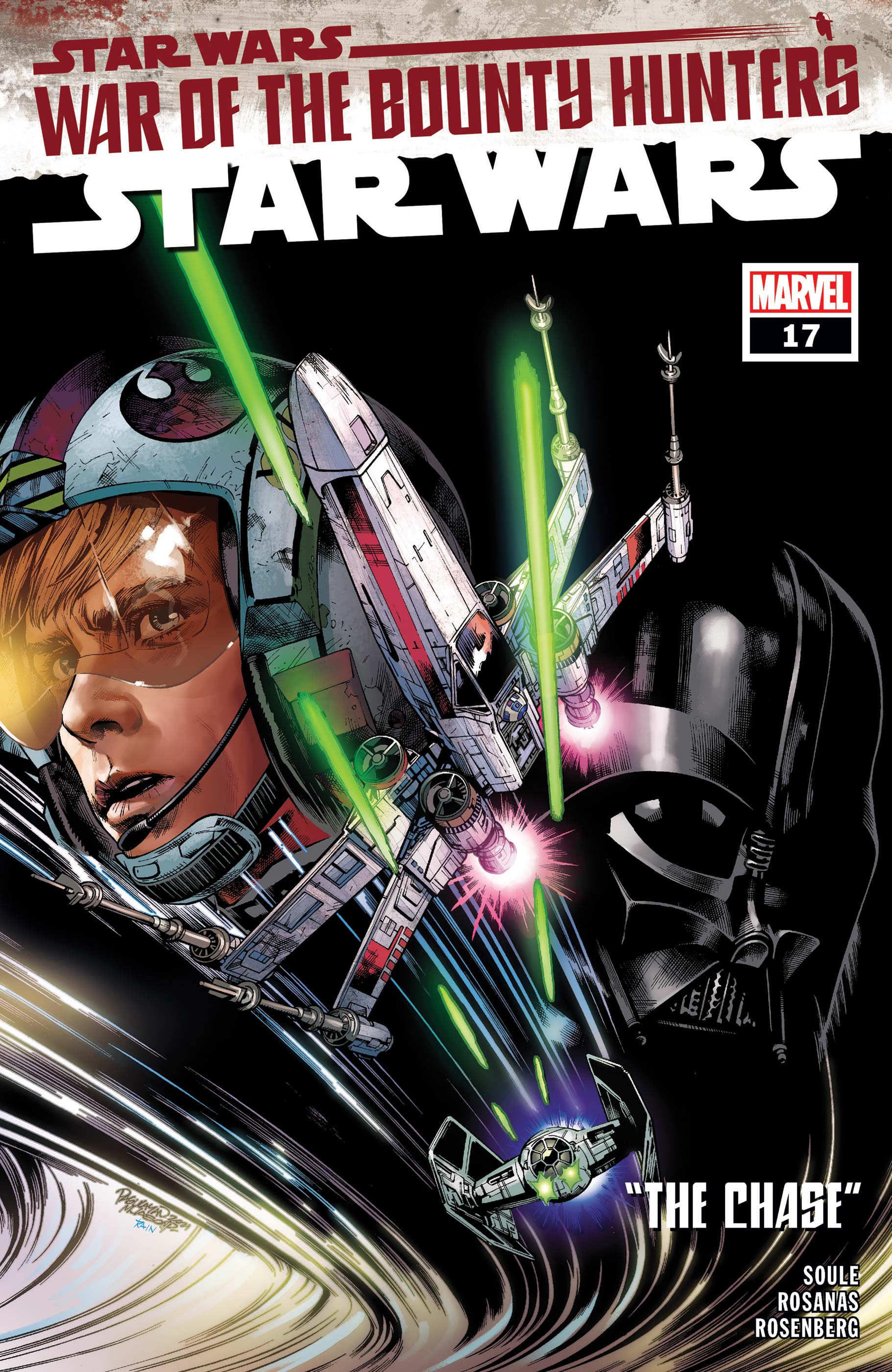
“THE CHASE!” SITH LORD DARTH VADER has discovered that his son, Jedi Knight LUKE SKYWALKER, is finally within striking distance. He will pursue him to the very ends of space...Who is hunting whom? Meanwhile, LEIA ORGANA battles the forces of CRIMSON DAWN to regain her lost love, HAN SOLO.


Star Wars (2020) #18
Published:
November 03, 2021Writer:
Charles Soule
Penciler:
Ramon Rosanas
Cover Artist:
Carlo Pagulayan


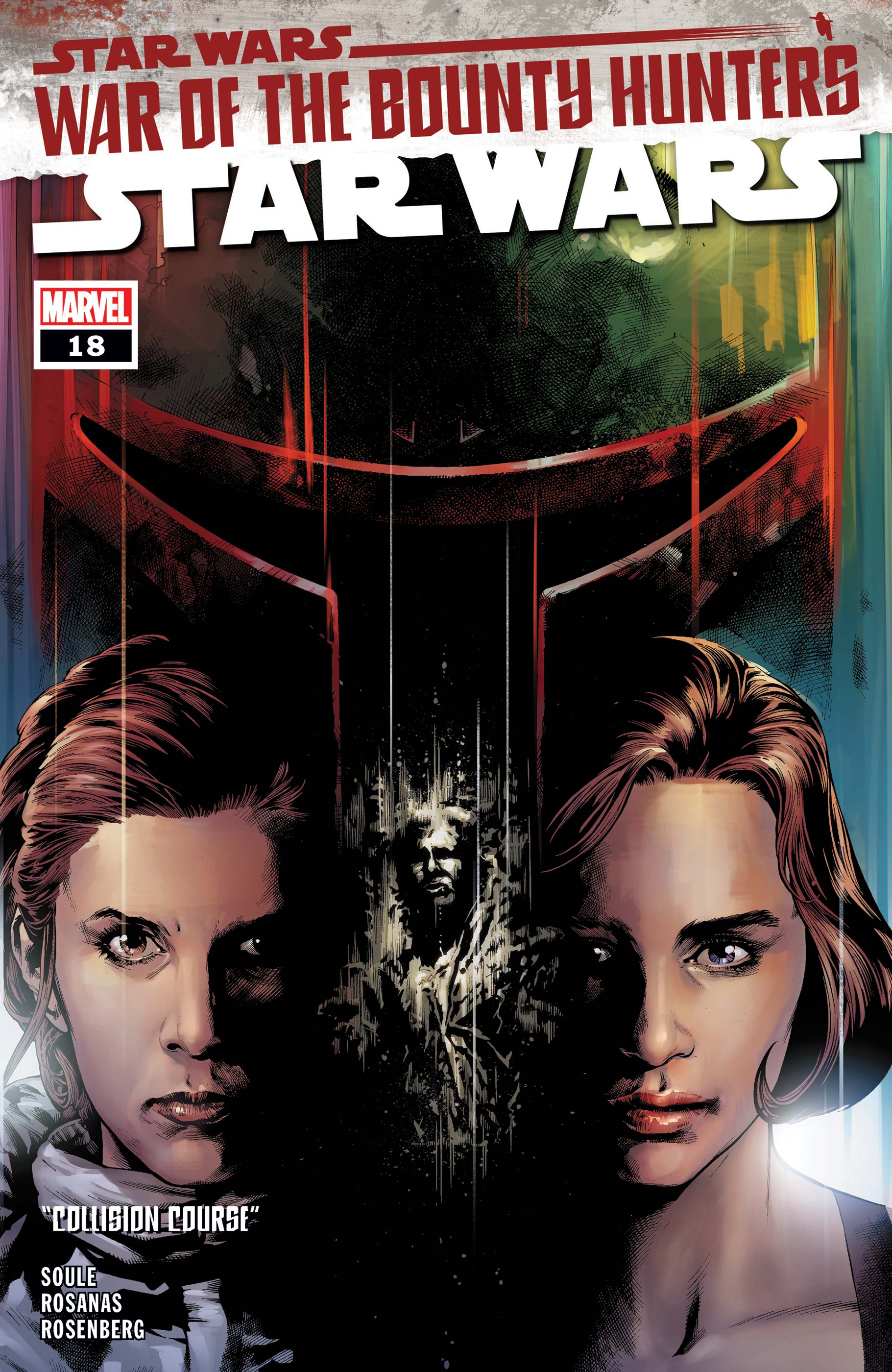
"COLLISION COURSE" Reeling from the events on JEKARA and forced to confront the reality of her own choices and losses, LEIA ORGANA meets QI'RA to discuss the person they both have in common - heroic smuggler HAN SOLO! How has he influenced their lives to that point? And how will it change their fate moving forward?

Monday, June 6, 2022

Peaky Blinders S6 Ep 1: Black Day


from Decider: https://decider.com/2022/06/10/peaky-blinders-season-6-episode-1-recap/

Peaky Blinders S6 Ep 1: Black Day


By Benjamin H. Smith @bhsmithnyc Jun 10, 2022 at 10:05am

It’s a tale that takes place in Great Britain decades in the past. It’s about smartly dressed working class kids who drink and fight and shag and do copious amounts of drugs, thumbing their nose at the pretensions of the upper crust and reveling in the chaos. No, I’m not talking about the new Sex Pistols bio-dramady Pistol, though that’s cool, too. I’m talking about PEAKY BLINDERS, whose sixth and final season premieres today on Netflix.

Over the past five seasons, Peaky Blinders has vacillated between being a stylized period-noir (season 1), a blood-soaked pulp-epic (seasons 2 and 4), and a British historical drama (seasons 3 and 5). The costume and set design are impeccable, the soundtrack’s hip and unpredictable, and the acting ranges from good to great. Are there fakakta plot twists that make no rational sense? Why yes, yes there are. Do they egregiously rewrite historical events? Well, yeah, they do that too. Do we care? Not really.

Before we move forward, there’s A LOT to catch up on. It’s been nine years since the show’s 2013 premiere on BBC Two and almost three years since Season 5 wrapped up in the fall of 2019. Shooting of Season 6 was put on hold in March 2020 due the COVID-19 pandemic. When filming resumed, it was almost completely derailed by the death of actor Helen McCrory, who died from breast cancer in April 2021. Her character, Aunt Polly, was one of Peaky Blinders’ main characters and her death necessitated changes to the storyline and scenes to be re-shot.

When last we saw Peaky Blinders gang leader Tommy Shelby, played by Cillian Murphy, he was pressing a gun to his head and screaming into the abyss, having been outsmarted by some unknown foe. Over the years the Shelby crime family have vanquished Birmingham rivals, London gangsters, interloping American Mafiosos, crooked cops and at least one pedophile priest. However, Tommy’s plans to assassinate his Season 5 nemesis, British fascist leader Oswald Mosley, went tits up quicker than a toot of coke snorted by one of his crew.

The click of an empty gun barrel starts off Episode 601, titled “Black Day.” Haunted by visions of his dead first wife Grace and the unknown “man I can’t defeat,” Tommy pulls the trigger only to find Arthur removed the bullets from his gun and ignominiously plops face down in the mud. Still-very much alive second wife Lizzie finds him wallowing in the dirt, calls him a coward and gives him the bullets should he want to finish the job, which is…hurtful.Yay, I’m still alive!

We learn the Mosley assasination plot was ruined by the fookin’ I.R.A. after Tommy receives a call from femme fatale Captain Swing, who we last saw in Peaky Blinders Season 5, Episode 2 (yeah, I forgot about her too). “We need to keep Mr. Mosley alive. That’s all you need to know,” she says mysteriously but they were nice enough to bring back the bodies of the dead, which includes Aberama Gold (Aidan Gillen) and Aunt Polly, who is given a proper Gypsy funeral, which apparently means being set on fire in your caravan. Her son, Michael Gray (Finn Cole), blames Tommy for her death and pledges revenge.

Big text in all caps tells us it’s now “FOUR YEARS LATER” on “MIQUELON ISLAND.” Where the fook is that? Oh, it’s in “NEWFOUNDLAND, FRENCH TERRITORY,” the text explains. A newly sober Tommy prepares to meet up with Michael and his gang, but not before he beats up a couple surly Frenchman and shoots a pigeon.“HEY MAN NICE SHOT!”

Tommy says Prohibition is coming to an end and it’s time to diversify, and by diversify he means OPIUM. Michael now works for his wife’s uncle, who’s repeatedly referred to as a South Boston gangster because, like, of course, Bay State gangsters are only ever from SOUTH BOSTON (someone tell the script writers Whitey Bulger was from Somerville). Michael’s crew are total Massholes to Tommy but that’s OK because he’s a jerk too and narcs on Michael after giving him a giant bag of drugs.

Michael is visited in prison by his wife Gina Gray, played by Anya Taylor-Joy, who has become a BIG STAR since appearing in Peaky Blinders Season 5 with a bad New York accent she’s since dropped. She makes her entrance to Joy Division’s “Disorder,” which is the coolest synch of the episode though somewhat incongruous. Gina asks Michael why he’s doing business with Tommy again and he says they have unfinished business (I think he means REVENGE).

While Michael rots in jail, Gina cuts loose to some jazz and pours her first legal drink since 1920. Tommy shows up to talk opium biz, but Gina says, “No deal.” Tommy says if her uncle doesn’t buy, he’ll sell his opium to the “the East Boston Jews,” relatives of everybody’s favorite London gangster, Alfie Solomons, which is a good thing since it means Tom Hardy will be coming back.

While Tommy celebrates by shagging a Beantown prostitute, his good time comes to an end when Lizzie calls from overseas to say their daughter is sick with fever and speaking Gypsy and having visions of a man with green eyes, which is apparently a very, very bad. Tommy rushes back to England but not before visiting Michael in prison to exchange unpleasantries.

Though not quite the big bang of past premieres, Season 6’s first episode has lit several fuses that could blow the Peaky Blinders’ fortunes sky-high. The question is who else will get caught in the blast.

Sunday, June 5, 2022

Doctor Strange In The Multiverse of Madness (2022)

from the New Yorker: https://www.newyorker.com/culture/the-front-row/doctor-strange-in-the-multiverse-of-madness-is-a-formulaic-corporate-slog

By Richard Brody
May 10, 2022


Doctor Strange In The Multiverse of Madness (2022)


The first “Doctor Strange” film introduced an idiosyncratic character by means of an apt cinematic peculiarity, but its sequel, “Doctor Strange in the Multiverse of Madness,” squeezes the character into the Marvel franchise by trimming away all the whimsy. The strength of the first “Doctor Strange” is the embrace of its protagonist’s weirdness, which enshrines him among the franchise’s fictional personalities. The sequel is conservative: the weirdness is reined in, and the narrative’s symbolic loose ends are replaced by chains that bind it to other characters and story lines from the Marvel stable. (The same fate befell the giddy “Ant-Man” in its sequel.) “Doctor Strange in the Multiverse of Madness” eliminates the playful idiosyncrasy in the interest of formula—of Marvel’s self-perpetuating business. The new film isn’t merely branded entertainment; it’s branding as entertainment.

In “Multiverse of Madness,” Stephen Strange (Benedict Cumberbatch), a former neurosurgeon who lost his dexterity in a car accident but gained magical powers, has an apparent nightmare involving his effort to rescue a teen-ager named America Chavez (Xochitl Gomez) from the clutches of a monster that threatens to tear her limb from limb. The nightmare turns out to be an alternate reality, because America has the superpower of travelling from universe to universe (and dreams are portals—so much for Freud). She initiates Strange into the theory of multiverses, and he gets firsthand experience of them soon enough, when, as a guest at the wedding of Christine Palmer (Rachel McAdams), a doctor and former colleague whom he loves and hoped to marry, he observes another monster on the rampage in downtown Manhattan. Leaping off a festive balcony, he flies into battle. It turns out that Wanda Maximoff (Elizabeth Olsen), a.k.a. the Scarlet Witch, so craves to be reunited, in an alternate universe, with her two young sons that she tries to take America’s power (and, yes, the script is filled with such double-entendres). She is prepared to kill the girl and to lay waste to multitudes. Neither reason nor moral suasion can deter Wanda from her dastardly mission; thus Strange, his longtime ally Wong (Benedict Wong), Christine, and America herself have no choice but to challenge the all-powerful sorceress in cataclysmic combat.

Along the way, Strange encounters and battles a host of other Marvel characters, notably, the members of a secret society called the Illuminati that includes his friend and nemesis Karl Mordo (Chiwetel Ejiofor) and other delegates from such a wide range of Marvel properties that they might as well wear nametags and do team-building exercises. The film is promotional and functional. It’s an omnium-gatherum of the company’s movies, series, and comics—an attempt to advertise these properties and prop them up as required viewing to understand the action. (Fear not: you can understand everything just fine even if you’ve missed “WandaVision” and “Inhumans.”) It’s also a blueprint for the building-out of subsequent productions involving these still-underdeveloped assets. The elaborate alt-worlds conceit plays a similar multiple role. It eliminates all definitive results from the dramas of Marvel franchise products—a mercantile cheat that already reared its head when Thanos’s murder spree at the end of “Avengers: Infinity War” proved reversible. And, of course, it multiplies the potential number of properties and story lines that popular characters can anchor.

Yet these principles of script construction—packing it with the footnotes of story lines and characters from other properties and planting them in a multiverse scheme—does the opposite of freeing the protagonists and their dramatic possibilities. Strange, America, Wong, and Wanda are reduced to minimally defined, maximally manipulated action puppets whose behavior oscillates within such a tight and narrow realm of interconnections as to efface the vestiges of humanity and the complexity that their inner and outer struggles imply. The dialogue is reduced to ponderous proverbs and telegram-like declarations. The action sequences—the key source of pleasure in the first “Doctor Strange”—reduce the wonder of the earlier film’s inspirations to pro-forma gyrations and transformations. Scenes of mass destruction that should be terrifying and agonizing seem facile and flip.

The involvement of a stylish horror-film director, Sam Raimi, in this tawdry slog of corporate constraint is as fascinating as it is disheartening. His directorial personality is put to superficial, all-too-conspicuous use in the movie’s later sections, which tease out horror-centric tropes—both mildly gory ones, such as a neck snap (parallel to the one in the superhero-proximate “Everything Everywhere All at Once”) and a decapitation, and classic ones from zombie films, notably the blood-spattered Scarlet Witch’s lurching gait and the decomposed monstrosity of an alt-universe undead Doctor Strange. The very absurdity of the horror trope on which the entire movie depends—Wanda’s colossally murderous rage, as a multiverse-scaled mother-outlaw—has an element neither of camp nor of parody. Rather, it plays like a sanctimonious Disney paean to family and maternity, in which Raimi’s art of expressive exaggeration is submerged.

But there is one sequence that feels like it was created by a person rather than concocted by committee, that embodies a point of view and a sincere sense of wonder. It arrives early, surprisingly, as part of the seemingly rote and obligatory exposition. Moments after an absurdly destructive downtown battle with a monstrous giant cyclopian octopus, Strange and Wong join America at a pizzeria, where she details the multiverse system. Raimi’s visual sensibility there is manifested in wide-eyed, candidly inflected closeups that convey his own attentive fascination at the strangeness of simultaneously existing multiple worlds and characters’ multiple identities. The slight scene thrums with the potential of a mighty work of speculative imagination—which, of course, the rest of the film, squeezed into the narrow and infantilized franchise mold, doesn’t come close to realizing. Early on, Raimi seems to declare that the most expressive and far-reaching “Doctor Strange” film that he could make is a film in speech—a talk-superhero movie, similar in texture and format to the work of the Coen brothers and Richard Linklater.

No, Disney didn’t pony up two hundred million dollars for a movie shot at café tables—but it’s nonetheless a movie gleefully implied at the core of the superhero genre. Such a movie, in which talk provides the action, would prove that those who take the comic-book stories seriously can love the telling as much as the showing, the dramatic intricacy as well as the superspectacle, the ideas as well as their effects. Such films would be possible if only the characters and stories whom it would involve were not kept under the studio’s lock and key.

Fans and even scholars have claimed that comic-book franchises are modern myths—so have critics who bend over backward to justify the ubiquity of superhero films. The claim is undone by the lockbox of copyright that prevents filmmakers and artists of any sort from issuing their own takes on these stories and characters. (The Greek tragedians had no such trouble when they dramatized tales from Homer.) If superhero stories were modern myths, their makers would welcome the open-source freedom to reimagine the tales of Marvel and DC. Instead, corporate studios transform these stories into quasi-religious texts that are pharisaically protected by copyright from heretical reinterpretation and innovation—in other words, fan service. The proprietary control of such popular stories exalts the very state of unfreedom that it embodies; viewers are conditioned to see the commercial considerations of corporate control as the natural condition of art. In this regard, the current dominance of franchise and blockbuster cinema isn’t a betrayal of the classic Hollywood heritage but merely a distillation and intensification of its essential practices. Insofar as the studios keep control of the stories in their own hands, their view of the tales should be considered not myth but dogma, not interpretation but propaganda.


Friday, June 3, 2022

Moon Knight S1 Ep 3: The Friendly Type

Moon Knight S1 Ep 3: The Friendly Type


What did you miss? For a review of the last episode, click HERE


from The Review Geek: https://www.thereviewgeek.com/moonknight-s1e3review/#:~:text=Senfu's%20Sarcophagus,location%20of%20the%20tomb%20himself.
by Greg Wheeler


Senfu’s Sarcophagus

Episode 3 of Moon Knight begins with Arthur leading a large caravan of people into Egypt. Using the scarab, he gets a fix on Ammit’s tomb and doubles his efforts to get there before Steven.

Meanwhile, Steven (who’s now Marc if you’ll remember) scrambles to find the location of the tomb himself. Noticing his reflection in a knife, Steven urges Marc to stop and seemingly takes control of his body again. It’s only temporary though, and Marc soon wakes up in a taxi bound for the airport. Naturally, he blacks out again and after chasing one of the goons, there’s a further blackout as Marc comes to and finds a knife plunged in the chest of a man.

Marc believes this is Steven’s doing but Steven urges him to listen and see the truth. There could well be a third in control here, but we’ll have to wait and see. With very few answers right now, Khonshu uses his magic to cause an eclipse in order to attract the attention of the Gods.

A secret entrance opens and in doing so, gains transport for Marc to head inside the Great Pyramid of Giza. Inside, they find Horus, Isis, Tefnut, Osiris and Hathor there, ready to hear Khonshu’s account. Arthur also rocks up not long after, and encourages the Gods to see how unhinged Khonshu actually is. Not only that, he points out Steven has multiple personality disorder, turning the Gods against him. Arthur’s concerns fall on deaf ears.

Instead, Marc/Steven is given an alternate quest to find the location of Ammit’s tomb, focusing on finding Senfu’s sarcophagus.

As Mard begins questioning the locals, Layla shows up and agrees to help. Marc isn’t exactly thrilled, given their history and what Khonsu has planned.

Marc dons a new alias as Layla leads him over to see a guy called Anton Mogart. The thing is, Steven is the one with the knowledge on Egypt but he refuses to divulge it until he gets his body back.

The pair do end up arguing and eventually Steven succumbs and agrees to help. Mogart is smart and stops Marc in his tracks, holding him up at gunpoint. This is only stopped by Arthur showing up with his cane, seducing Mogart into giving up the tomb.

While they’re talking, Marc transforms into Moon Knight (hey, couldn’t he have done that literally 30 seconds before?) and quickly dispatches all the guards, shrugging off several gunshots. We then cut back and forth between Layla dispatching Mogart’s bodyguard while Moon Knight takes out the rest of the guards himself. Eventually though he stabs Mogart as he passes on his bike and takes off.

More importantly, Layla and Marc manage to take off with the cloth of star constellations. Layla encourages him to let Steven take control. As Steven takes the reigns of his own body, he manages to solve the star constellation almost immediately.

Instead of leaving and heading home though, Steven doubles down on helping to find Ammit’s tomb, pointing out that Layla’s initial idea to triangulate stars into coordinates is a good one. Stars move over time and the only solution is to use Khonshu’s powers to turn back the night sky to how the constellation was originally back then.

Khonshu’s meddling causes the Gods to take action as we see them imprison Khonshu. Arthur shows up at the Pyramid, where the Gods confirm that Khonshu has been tethered there, like so many before him.

Tellingly, Steven passes out in the middle of the desert but they do learn the location they’re seeking – it’s 29 degrees north and 25 degrees east.

The Episode Review

Moon Knight returns with one long fetch quest as we see our two sides racing to find Ammit’s tomb. The rules around Moon Knight’s powers, changing from Steven to Marc and all the intricate ideas around this haven’t been fully explained but it still makes for an enjoyable watch.

AD


While the initial gimmick in episode 1 of switching away from the action and jumping in time is unique, this has now been overused to the point that it loses its effectiveness. At its worst, it distracts from the fight scenes. Did we really need to cut away from Moon Knight to see Layla tackle a bodyguard twice her size? We also know very little about Layla which will hopefully be resolved further on down the line.

For now though, Moon Knight delivers an effective and enjoyable episode, despite those gripes, but we’re still light on characterisation for the supporting characters and our main antagonist, Arthur. Hopefully the second half of this show can kick things into high gear.

Thursday, June 2, 2022

The Witcher S2 Ep 2: Kaer Morhen

The Witcher S2 Ep 2: Kaer Morhen


from pc mag: https://www.pcgamer.com/the-witcher-season-2-episode-2-recap/


By Lauren Aitken published December 17, 2021


What did you miss? For a review of the last episode, click HERE


Family is a key theme in The Witcher's second season, as well as finding what feels like home. The second episode focuses on the Witcher keep, Kaer Morhen, and the elves searching for Dol Blathanna. Unusual alliances form, and Yennefer and Ciri undergo quite profound transformations as they begin to realise exactly what they want. Geralt remains all solemn and fatherly, and we get to meet Vesemir and the rest of the Witchers for the first time, which is super-exciting.

Visions and dreams are a central theme in this episode, starting with Yen's dream about having a baby with Geralt. This baby then combusts into flames in its cot, and we see a red-cloaked figure holding an elven babe. This foreshadows what's to come in future episodes, but the cloaked figure seems to have infiltrated the dreams of Fringilla and the elven leader, Francesca Findabair, too, albeit in black and white robes instead. We meet Francesca and Filavandrel after they capture Yen and Fringilla, and they scarcely survive. Yen's powers are still lost after her use of fire magic, but she's still got her wily charms, whereas Fringilla wants to drive a hard bargain with the elves. Neither's approach is enough on its own, so they must work together.

Eventually, they manage to persuade Francesca to let them assist her, and the three face a mysterious being who wishes to give them what they most desire—for a price. This leads to an alliance between the elves and Nilfgaard as Fringilla promises Cintra to the elves, and Francesca is promised by the crone that she will carry and birth the first true elven baby in generations. Yen seeks her power back, but refuses to give in to the witch's temptation, so she's left out. Her stubbornness works against her for most of the second season, and she's left feeling bereft as things aren't going her way for the first time. Meanwhile, Fringilla's plan to bring Emperor Emhyr a new army in a bid to avoid punishment for losing the Battle of Sodden is underway.

All of this is offset by Geralt and Ciri reaching Kaer Morhen at last. The Witchers greet Geralt as "brother," and Vesemir is thrilled that his favourite son is home. There's a real feeling of warmth, love, and humanity at Kaer Morhen, despite this being a keep full of what's supposed to be unfeeling mutants. This happy reunion is cut short when Eskel arrives, clearly sick and injured from recently fighting with a Leshy. Geralt soon puts Ciri to Witcher training as she wishes to become a powerful fighter to defeat Cahir and the forces that ruined her life. Geralt tries hard to distinguish that Witchers "don't kill out of fear; we kill to save lives" but Ciri remains undeterred.

The best part of this episode is the sad and brutal fight between Vesemir, Geralt, and Eskel. It becomes clear that his injury is more than just a flesh wound—the Leshy has mutated somehow and infected him, turning him into a human-Leshy hybrid. The episode hints at this early on—Vesemir ponders how Eskel didn't know that fire to the heart would do the trick—so we get to see Geralt use Igni to light up his sword and strike down Eskel. Vesemir is obviously devastated at losing one of his sons, but there was little choice in the matter. This doesn't stop Lambert from being a complete prick and taking a dig at Geralt for it, though.

The fight between the three Witchers is intense on all fronts. Once again, Cavill gracefully cuts through the air with his sword, throwing out signs where he can. Kim Bodnia's portrayal of the wizened old Vesemir desperately wanting to save his son is powerful to watch, as you can see him and Geralt realise what they need to do. All in, parents wanting their children to live and have a better future is at the heart of this episode, there's a lot of love in the room. As for what the hell is going on on the continent, Eskel's Leshy pal is going to bring a lot of answers to the table.

Geralt of Trivia 

Fans of Nightmare of the Wolf will spot Deglan's armour in Kaer Morhen as Vesemir gives Geralt a tour.

Keep an eye on the Medallion Tree as there will be one Medallion that looks very familiar.

There's a funny wee toad in the basement of Kaer Morhen. It was specially trained to stare down the camera, so get ready for it to look into your soul.

Wednesday, June 1, 2022

The Hunger Games: Mockingjay Pt 2


from Roger Ebert: https://www.rogerebert.com/reviews/the-hunger-games-mockingjay---part-2-2015
Christy Lemire November 20, 2015

The Hunger Games: Mockingjay Pt 2


It’s de rigueur by now, of course, to break the final book in any juggernaut Young Adult series into two films. “Harry Potter” did it. “Twilight” did it. Why not tantalize and torment the fervent fans of these series even further? Why not make twice as much money?

So now we have the absolute, ultimate, this-time-we-mean-it finale of the “The Hunger Games” series, the clunkily titled “The Hunger Games: Mockingjay – Part 2.” But really, if we’re talking about things like art and narrative drive—which actually can and do exist in this franchise—a single film would have worked just fine. Last year’s “Mockingjay – Part 1” felt like one long placeholder. It featured a lot of wheel spinning and repetitive imagery, and it served as a glaring reminder of what a cynical cash grab this finale-splitting business truly is.

With the exception of a couple of truly dazzling action set pieces, “Mockingjay – Part 2” provides more of the same. The stakes are higher because this is the end—It really is this time!—but the first hour or so of returning director Francis Lawrence’s film is legitimately nap-inducing. From the very first moments, when Jennifer Lawrence’s Katniss Everdeen struggles to speak her name as the late, great Philip Seymour Hoffman looks on sadly as gamesmaker-turned-ally Plutarch Heavensbee, it’s just unrelentingly dour, even for a film set in a dystopian future. Mercifully, the script from Peter Craig and Danny Strong offers a few glimmers of sardonic humor, including quips from Jena Malone as Katniss’ fellow victor, the quick-witted Johanna.

It would be reasonable for us to hope for something better, however. Based on Suzanne Collins’ best-selling trilogy, “The Hunger Games” series has set the gold standard for all adaptations of post-apocalyptic Young Adult novels. “Divergent,” “The Maze Runner,” “The Giver”—regardless of when the actual books came out, they always seemed like knock-offs of “The Hunger Games” films in terms of narrative thrills, weighty themes, production values and star-studded casts. The presence of serious, seasoned actors like Hoffman, Donald Sutherland, Julianne Moore, Woody Harrelson, Stanley Tucci and Jeffrey Wright gave these movies a gravitas but also elevated them above your expectations for material aimed at angsty tweens. They were violent, exciting blockbusters but they were also About Something—at least the first two movies were.

Many of those stars get just a few lines in the finale—a curtain call of sorts, when you’d long to see more of them. The abbreviated presence of Hoffman, who died in 2014 of an accidental overdose, is heartbreaking. Tucci appears all-too briefly as unctuous television announcer Caesar Flickerman. Elizabeth Banks shows up in a couple of her typically outrageous outfits as stylist and social climber Effie Trinket, and that’s about it.

Lawrence herself already seemed to have outgrown the role of plucky teen Katniss Everdeen when “Mockingjay – Part 1” came out a year ago. By then, she’d won an Academy Award for “Silver Linings Playbook” and done diverse and dramatic work ranging from “American Hustle” to “X-Men: Days of Future Past.” It’s more than time for her to give a wistful, three-fingered Mockingjay salute goodbye to this character and this franchise once and for all.

But Lawrence takes this career-making role seriously, as always—and brings her usual, accessible mix of bravery and vulnerability—as Katniss prepares for the ultimate showdown with Sutherland’s diabolical President Snow in hopes of bringing an elusive peace to war-torn Panem. Leading up to that climactic moment at the Capitol are a lot of dreary strategic conversations in a lot of poorly-lighted, underground hideouts. For a movie about a society that’s on the brink of destruction, “Mockingjay – Part 2” features a lot of hurry-up-and-wait.

It picks up at the start right where “Part 1” left off, with Katniss reeling from an attack by brainwashed Capitol mouthpiece Peeta (Josh Hutcherson), her fellow former District 12 tribute-turned-fiancé. Merely serving as a symbol of hope in manufactured propaganda films is no longer enough, she realizes. She must join forces with her fellow rebels in their quest to bring down the totalitarian regime that has torn apart the land and taken so many young lives.

Among Katniss’ fellow fighters in Squad 451 (a number that may ring a bell with you from high school English class) are her hunky BFF and hunting buddy Gale (Liam Hemsworth, relegated to sulking and shooting); the charismatic Finnick O’Dair (Sam Claflin); tatted filmmaker Cressida (Natalie Dormer); and the all-business Boggs (Mahershala Ali), the soldier who’s the right-hand man of rebel President Coin (Moore, whose severe bob says everything you need to know about her trustworthiness).

Eventually, they also take in Peeta, who provides some poignancy as he’s clearly working through post-traumatic stress disorder. And as for the potential awkwardness of the Katniss-Gale-Peeta love triangle in close quarters, it’s to the film’s credit that the boys are the ones discussing it—and their respective roles within it—rather than Katniss herself. She’s got more important things to do, as she has throughout the series, like liberate a nation.

Along the way to the president’s mansion, they must avoid a series of “pods”—think of them as high-tech IEDs—scattered throughout the city. These obstacles provide the film’s few heart-pounding thrills. A wall of black ooze surges toward the rebel fighters, swallowing several of them whole in gnarly, ferocious fashion. But it’s the lizard mutt attack in the sewers that’s the film’s high point—or low point, if you want to get literal about it. Reptilian and ravenous, these fast-moving creatures are just devastating, and they add an element of paranoia and fear that the rest of the film desperately needed. (Seriously, I was curled up in a ball, watching this scene through my fingers. And James Newton Howard’s appropriately insistent score definitely ups the anxiety factor.)


I wouldn’t dream of spoiling how the whole series concludes. If you’re emotionally invested at this point, you should see it through for yourself, even if it’s a disappointment. But I will say that there’s a tacked-on, extra ending that’s needless and tonally inconsistent with everything that came before it. It’s a sun-dappled coda in a meadow that belongs in a different YA franchise (one with sparkling vampires, perhaps) when there’s a moment right before it that would have ended the movie, and the series, on a perfectly poignant and satisfying note.

Katniss may still be The Girl on Fire, but the flame has turned down to a simmer.