Sunday, April 10, 2022

Hawkeye S1 Ep 6: Last Christmas

What did you miss? For a review of the last episode, click HERE


from the wrap: https://www.thewrap.com/hawkeye-episode-6-recap/


Hawkeye S1 Ep 6: Last Christmas

Drew Taylor | December 22, 2021 @ 7:22 AM


At the end of last week’s “Hawkeye,” the revelation was made that Wilson Fisk, the infamous Marvel villain and the so-called Kingpin of Crime, was largely behind the chaos that transpired over the previous five episodes. And what’s more, Vincent D’Onofrio, who played the character in the Netflix series “Daredevil,” returned to play the role once more. Would D’Onofrio feature heavily in the season (series?) finale? Or would other threats overwhelm our heroes, Clint Barton aka Hawkeye (Jeremy Renner) and Kate Bishop (Hailee Steinfeld)? Well, we found out. And we’re here to break it all down.

As “Hawkeye” opens, we get a brief flashback – it’s the moment from the photo that Yelena (Florence Pugh) sent Kate at the end of the last episode. Kingpin and Kate’s mother Eleanor (Vera Farmiga) are discussing business in some sun-dappled backroom. Eleanor admits to “handling” Armond (remember that?) and admits that her daughter is getting “too close.” Still, she’s not a total monster. She doesn’t want anything to happen to her daughter. And Eleanor admits to Kingpin that she has an “insurance policy.” Kingpin takes this calmly and with a measure of restraint. Just kidding. He’s furious. Eleanor has started a war.

We cut to the inside of Grills’ (lowkey MVP Clayton English) apartment. Kate is watching the footage Yelena sent. Clint tells Kate that “he’s going to react.” She is upset. She needs to do something. Also, the big Bishop Christmas party is tonight. “Kate, you’re my partner,” Clint says. He’s not going to let anything happen to her. They’re in this thing together.

Meanwhile, Maya aka Echo (Alaqua Cox), Tracksuit ringleader Kazi (Fra Fee) and Kingpin are together, in the same little room where he had the meeting with Eleanor. Echo seems repentant. “I need to stop chasing ghosts,” she signs. Then the discussion turns to her late father (Zahn McClarnon), whose death she is now convinced Kingpin is responsible for. Kingpin encourages her to move on and tells her that “he always wanted what’s best for you.” Finally, Kingpin signs “I love you” and she signs it back. After she leaves, Kingpin turns to Kazi. She needs to be dealt with, as does Eleanor. “The people need to be reminded that the city belongs to me,” he growls. And in the scene D’Onofrio reminds us of why we were clamoring to have him back: he infuses Kingpin with real menace, the kind that oscillates between a kind of genteel villainy and brute rage. It’s deceptively impressive and it’s so good to have him snarling his way through the Marvel Cinematic Universe.

On the subway, Kate and Clint are looking battle worn but resolute. “We need a ton of gear,” Clint tells Kate. Also: lots of trick arrows.

Cue the “making trick arrows” montage!

Hawkeye is seen fiddling with arrows. This is the type of scene that is essential in Marvel Studios projects – think Tony Stark building his suit or Doctor Strange attempting to fix his hands. This has the added fun of Kate Bishop being there, mouth agape. The best flourish is her using a label machine to label the arrows that are too dangerous (or what they do). After the arrows are made, the conversation turns serious. They’re going into battle. Also they’re going to some fancy New York City Christmas party. Both are pretty intense. “Heroes make tough decisions,” Clint tells her. And then she tells him (finally!) that she saw him. She saw him throw himself off a building. She taught him that to be a hero, you didn’t need to shoot lasers out of your eyes or fly. She’s welling up with emotion, but it’s not a BIG SCENE. Like everything in “Hawkeye,” it’s understated and laced with melancholy. Because it’s so underplayed, it’s even more powerful. Finally, Kate says, “I’m ready.”


Rockefeller Centered

The majority of this episode is a giant action set piece staged at the Bishop Christmas party and surrounding area in midtown Manhattan. But the first thing we see is outside the party – Kazi is across the street with a sniper rifle. He’s there to take out Eleanor or Kate or both. If Hawkeye gets in the way so be it. “I’m in position,” Kazi says.

Kate and Clint walk into the party looking dapper. That’s when things start to unfold: the LARPers are in position as the wait staff (including Grills). Jack (Tony Dalton, another underutilized joy) is there too, out of jail and brandishing a sword. And as if things weren’t chaotic enough, Yelena walks in the door. Kate wrestles Eleanor away from gladhanding and tells her that her “business partner wants you dead.” Kate knows everything. Before they have a real breakthrough, Kazi starts firing at Barton. Jack wanders back to where they’re chatting and has one of the best lines of the episode: “I feel like I’m missing something.” Everyone starts to scatter.

Yelena and Kate are attempting to go after Clint in the elevator. They get inside together and Kate pushes all the buttons. They fight and in the process they each reveal their new costumes. Their chemistry is, as in the previous episode, absolutely dynamite. And whether they’re discussing hot sauce for ten minutes or trading blows inside an elevator. The fight continues outside the elevator; there’s a really cool tracking shot that shows them fighting through an office that looks like a set from “30 Rock.” Finally Yelena breaks a window and starts to scale the building (which is actually 30 Rock). It’s a super cool image and makes something familiar into an object of awe. Kate follows, running down the side of the building.

They’ve got company: the entire Tracksuit Mafia (seemingly every member from the tri-state area – we’re looking at you, Danbury, Connecticut chapter). Kazi and Clint are in a scuffle too, with Clint leaping out a window, only his line breaks and he falls into the Rockefeller Center Christmas tree. While he’s in the tree he notices an adorable owl. Is the Christmas tree owl more iconic than alligator Loki? Discuss!

Meanwhile, Echo is preparing to leave. She’s gathering things from her apartment, including a photo of her, her father, and Kazi together. She asked Kingpin for some time off. She’s going to take it.

Kate starts shooting at the Tracksuits. Clint says “we’re all going to die.” Kate then comes up with an idea to free Clint – she shoots an arrow at one of the cables holding up the tree, making a callback to the very first episode and the sheningans she was pulling at college. Then she shoots an acid arrow at the tree trunk, so that the tree topples over onto the ice-skating rink. It’s a terrific effect, dazzling and utterly believable in equal measure. Clint and Kate are now on the rink. Clint shoots an arrow that magnetizes the outside of the rink so all of the Tracksuits’ guns are magnetized. Then, the crazy arrow deployment montage begins and, it must be said, it is deeply satisfying.

The best moment comes when a Pym arrow is fired at the Tracksuits’ van. It shrinks to the size of a Hot Wheels car. Kate asks what they do now. Clint says he doesn’t know. Then the owl from the tree swoops down and carries them away. Those Tracksuits will make a great meal for little hatchlings, for sure. Kazi and a couple of his goons show up. Clint fires an arrow that splits into three; two of the shards take out the goons but Kazi catches the middle arrow. In maybe the best exchange of the episode, Kazi shouts at Hawkeye: “Nice shot.” And Clint says: “No shit.” Also, Clint is showing off his new costume, which was made by Missy (one of the LARPers) and matches Kate’s. It’s pretty cool.

If all of this wasn’t enough, Yelena and Echo show up. Echo faces off against Kazi while Yelena tackles Clint. And Kate goes after her mom, who was seen sneaking out of the side of the building (the LARPers transitioned to helping partygoers out of the plaza). As Eleanor is trying to get her car, she notices her security detail is dead. Kingpin is in the house. Kate tries to take him down and Eleanor hits him with the car. Both Kate and Kingpin are in an FAO Schwarz pop-up. (This is a callback to the Kay Bee Toys stuff from earlier in the season.) Kingpin is walloping Kate. D’Onofrio’s physicality is impressive, and that inner rage becomes outward fury. He breaks all of Kate’s arrows and tosses her around like a ragdoll. Finally, she sits up. She’s stolen one of his cufflinks. And she does the coin tossing trick that Clint taught her, setting off the arrowheads, including one that sets off an explosion and sends Kingpin flying.

Outside the toy store, Eleanor tells Kate that “Someone has to take responsibility.” And just then the NYPD shows up and arrests Eleanor. She’s disappointed. Kate had her mother arrested on Christmas. But the prison time will allow her to transform into a proper villain too.

Back near the skating rink, Echo kills Kazi. And Yelena is putting the hurt on Clint. She doesn’t believe that Natasha sacrificed herself. Finally, Clint does the whistle that Yelena and Natasha used. (This was in “Black Widow,” everyone!) Finally, Yelena is convinced. They have a beautiful little exchange about how much they both loved her. A single tear rolls down Renner’s face. Yelena walks away.

The cops are in the toy store. Kingpin is gone! Where could he be? Well, he’s stumbling into the alleyway, all bruised and bloody. A car stops. Echo gets out. He tries to talk his way out of it but the camera pans up and we hear gunfire. Does this mean that Kingpin is dead? Probably not. They went to all of this trouble to bring him back just to off him? Don’t think so. Also, need we remind you that one of the upcoming Marvel Studios series is centered around Echo. He’ll be back. It’s hard to keep him down.

Various characters are recovering near Rockefeller Center. Jack is talking to one of Clint and Kate’s friends. They suggest he could LARP with them. He is rather handy with a sword. “LARPing? Is that some sort of leisure activity?” he asks. Kate and Clint talk about the battle. He says that every once in a while somebody enters your life who makes you a better person. Then he quickly undercuts his sentiment by talking about how amazing Missy’s costumes are. Clint says that they really have to walk the dog. (They should probably get him some celebratory pizza too.)

Christmas Day + Mid-Credits Musical Number

We cut to Christmas Day! (One of the niftier aspects of “Hawkeye” was that it served as an MCU advent calendar, with each episode dramatizing one of the six days before Christmas.) Clint shows up to the family farm, which appears to be the third farm that has played the Barton family abode. Snow is on the ground. He grabs Christmas presents from the trunk. Then we hear the passenger door open. Kate and the pizza dog, now finally called Lucky, emerge. They go into the house with the family, with Clint telling his wife Laura (Linda Cardellini) that he brought home a couple of strays.

At the kitchen table, Clint hands over the watch. The back of the watch has the SHIELD logo and a number (“19”). Those that suspected this has to do with Laura’s identity as Mockingbird are seemingly correct. This reveal adds a layer of complexity to the entire show. Yes, Clint was trying to get his suit back and clear his name (and his soul) of his connection to Ronin. But he was also doing it for the love of his wife, the woman who has always supported his adventuring.

Out in the barn, Clint and Kate are burning his Ronin suit. She asks him a question: “What do you think of Ladyhawk?” Clint has a better idea … and then we cut to a title card for “Hawkeye.” The Marvel Cinematic Universe, it seems, is big enough for two Hawkeyes.

Before the mid-credits sequence runs, there’s a note that reads: “Happy Holidays from Marvel Studios.” Then an extended version of the “Save the City” number, from “Rogers: The Musical,” plays, complete with a cameo from one of the songwriters, Marc Shaiman. The only downside is that the song will get stuck in your head for the rest of the day.

There is no post-credits sequence and, unfortunately, unlike “Loki,” no promise of season 2. This is a real shame, as “Hawkeye” was easily the most accomplished and entertaining series that Marvel Studios has produced yet and the announcement of a second season would have been a lovely Christmas present. Unfortunately, we got coal in our stocking this year.

Friday, April 8, 2022

Evil S2 Ep 2: A is for Angel

What did you miss? For a review of the last episode, click HERE


from Decider: https://decider.com/2021/06/28/evil-season-2-episode-2-recap/

Evil S2 Ep2: A Is For Angel


By Abby Monteil
Jun 28, 2021

What are the consequences of carrying out God’s will? Doing what the Lord commands is considered sacred in all forms of Christianity, and is so ingrained in the fabric of American culture that “one Nation under God” is written into the Pledge of Allegiance. But doing so can at times produce dangerous and even violent results, from the Old Testament-era obliteration of Sodom and Gomorrah to Christians throughout history supposedly invoking religion to excuse everything from colonialism to homophobia.

Faith is a deeply personal and vital cornerstone of many people’s identities, yes, but the question of how to correctly and responsibly implement it into our everyday lives is much thornier than many people are willing to acknowledge. This conflict is at the center of Evil Season 2, Episode 2 (titled “A is For Angel”) as David grapples with his own beliefs and the show foreshadows a real-world tragedy in a major way.

We open with a peek into David’s training, as he and other prospective priests practice giving penance. His character admits to beating his wife, but when his stand-in priest only asks if he promises not to repeat the offense before offering penance, it prompts a debate among the class. David and another trainee suggest counseling, because his behavior won’t change without the proper tools. But as their teacher Father Kay (Dylan Baker) points out, a priest can only provide penance and absolution on God’s behalf. He adds that the sacrament isn’t an act of “social justice,” and true forgiveness can’t be given by human beings alone. Given the Catholic Church’s ongoing scandals, it’s a charged scene to say the least.

Afterward, Kay informs David he won’t be able to keep him on as an assessor if he can’t balance his work with his training, but lo and behold, a new case has popped up. Local parishioner Ashley’s (Joniece Abbott-Pratt) husband Raymond (Brandon J. Dirden) is convinced he’s been hearing the Archangel Michael, who’s been convincing him to make drastic life changes like leaving his job and giving away all the couple’s possessions just a few months before the birth of their first child. Still bristling against her Catholic upbringing, Kristen points out, “Well, didn’t Jesus say to sell everything?” And as she points out, angels aren’t cherubs — they may be nice to look at today, but Biblical ones sound horrifying. Seems like she and David are struggling with faith in more similar ways than they’d care to admit.

Still, they need to check Raymond for psychological issues, but not before David makes a call to Leland informing him his exorcism has been pushed back a month. David truly isn’t here for anyone’s shit this episode, and watching him tell Leland he can’t wait to watch him roll around foaming at the mouth has to be an early series highlight. But Leland has lost his surefire way to Kristen’s soul, and an overeager wedding planner isn’t helping, so he decides to abruptly cut things off with her mother Cheryl and admit their relationship was a farce once and for all. In his very eloquent words, “Take your dried-up little ovaries and drag them back under the rock you came from.”

Meanwhile, the trio come face-to-face with Raymond, who’s taken to painting feathered, skeletal, generally terrifying images of angels on the living room walls. When David asks what work Michael has tasked Raymond with, he simply leans in and mentions a mysterious “second bowl” before begging for help. David already can’t shake the feeling that something is up with Kristen following his wheat field vision, and Raymond’s cryptic words aren’t helping. So he attempts to revive his vision again, only to summon the exact angel


Raymond was painting — only this time, it offers him a glowing orb. David’s woken up gasping by Sister Andrea (Andrea Martin), who’s been tasked with mopping the floors and would appreciate it if David gave up his pain-driven visions and saved her the work. Instead, she suggests syncing up his heartbeat with a metronome app and hoping for the best. So far, Evil Season 2 has doven deeper into theology in comparison to the tech-driven horrors that populated Season 1. But its ways of inserting modern life into these strange demonic cases remains fascinating.

Speaking of demons, Leland’s cold rejection of Cheryl turns to panic after he discovers that the Vatican map of evil the gang stole from his apartment last episode is missing. So he calls his ex to a diner to threaten her, only to be on the receiving end of two hard slaps. “Do you know how many demons I dated before you?” Cheryl spits. Later, he enters his favorite demon therapy room to find the words “Die you stupid pig fuck” written in what looks suspiciously like blood. You know what they say: A family who makes blood sacrifices together stays together.

David is trying to keep it together during another stuffy training session when he and the others receive an urgent call to the hospital, where Raymond is lying unharmed after abandoning his wife to save four strangers from a burning car on the highway. Also present is her old police buddy Anya (Jessie Mueller), who stops by to ask Kristen for some help on the LeRoux case before a suspicious Ben asks if she’s in trouble. “My middle name is trouble,” she says with a smirk.

That night, David’s metronome trick works a little too perfectly, as the angel returns and reveals that the “second bowl” is “a weapon more powerful than 10,000 swords,” which will wipe out half the world and bring about rebirth. But what about all the innocent people in the world? It shrieks that God is the measure of the just, as David awakes to a news report about the first cases of a mysterious illness in Wuhan, China. This show has always been interested in modern-day evils, but I can’t say I expected it to incorporate the pandemic as part of a potential doomsday. It’s too soon to tell whether the show will tastefully handle such a fresh, global tragedy in this fashion, but knowing what’s to come left a viscerally sour taste in my mouth.

While our characters unknowingly enjoy their last few months in a COVID-free New York, Michael-as-Raymond tells David about the ravaged world that is to come before Ben notices a square patch behind his ear. As he points out to Kristen and David, Raymond is a crane operator on skyscrapers, and people in his line of work often use scopolamine patches to overcome vertigo. But if one is left on too long, it can lead to memory loss and hallucinations.

The trio are satisfied with this answer, but the feeling doesn’t last long. Anya tells Kristen footage of the accident reveals Raymond waited a full minute before saving the fourth passenger, leaving him with severe injuries. He has a simple explanation: Michael told him that the fourth passenger violated his young niece, and through injuring him with this “taste of hell fire,” he’ll never be able to do it again. Group consensus is split — Kristen thinks he’s experiencing a dangerous level of psychosis, but David points out that St. Augustine advocated for a just war. In his mind, there are certain situations where violence can stop a dire wrong, and peacefulness is a sin. David isn’t defending what Raymond did, only mentioning that God’s logic isn’t ours.

Kristen takes things a step further — does David believe killing can be a necessary evil if someone is threatening you or your family? David tells her it’s only proportional if it’s the only way to stop a killer, as a visibly shaken Kristen flashes back to her murder of LeRoux for the first time. David and Kristen’s darker impulses only seem to be bringing them closer together, and I’m intrigued to see how their will-they/won’t-they tension will pan out after he finds out she’s a murderer.

Luckily for her, she’s called by Ashley before he can piece things together. She’s ready to leave a marriage where she has no say, and Kristen offers her a number for a women’s shelter. Meanwhile, Bishop Thomas (Peter Scolari) and Kay tell David he needs to learn theology to properly apply it in the real world, even though he’s been doing that as an assessor for ages. That logic is immediately put to the test when the bishop and the trio pay a visit to Raymond, only to find an enormous pile of salt eerily similar to the Bible story of Lot’s doubtful wife turning to salt.


That night, David’s teachers allow him to pass his class if he aces a practicum in which he grants unofficial reconciliation to an eager parishioner — Leland, of course. He’s pulled plenty of devilish tricks to worm his way into the main characters’ lives, but when he gives a confession claiming he convinced a woman who sounds an awful lot like David’s ex-partner to commit suicide, it’s easily his lowest moment yet. David manages to get through it, only to meet Andrea with a bloody fist where his rosary had been. The will of God is a vicious one.

Thursday, April 7, 2022

Euphoria S2 Ep 4: You Who Cannot See, Think of Those Who Can


from Vulture: https://www.vulture.com/article/euphoria-season-two-episode-4-recap-you-who-cannot-see-think-of-those-who-can.html


What did you miss? For a review of the last episode, click HERE


Euphoria S2 Ep 4:
You Who Cannot See, Think of Those Who Can

By Iana Murray

Now that we’re halfway through this season, I’ve been thinking a lot about why I keep coming back to Euphoria. Despite feeling underwhelmed every week, I still look forward to what’s coming next. And sure, my anticipation is filled with a healthy dose of trepidation, but I’m still excited nonetheless. But why? It’s not because of Sam Levinson’s writing or his provocations, which are not only a frequent target of criticism but a bona fide meme at this point. It’s not because of its drama or beauty either. The reason is Zendaya. Nothing has capitalized on her star power quite like Euphoria, and even when the show’s worst tendencies threaten to eclipse her, she still confidently carries every episode. “You Who Cannot See, Think of Those Who Can” sees Rue destroy the last relationships she had, culminating in a contrived hallucination with Labrinth in a church. (Sure …) But the real defining moment of this episode is Rue swaying by herself in her bedroom, her arms reaching out to embrace no one. That’s a testament to the power of Zendaya.

Since it’s an unspoken rule at this point that a Euphoria episode can’t start without a naked body or a sex scene, “You Who Cannot See, Think of Those Who Can” begins with Rue and Jules under the sheets. As Jules goes down on her, Rue imagines the pair of them as works of art. They’re as beautiful as a Frida Kahlo painting and bound together for life like Jack Twist and Ennis Del Mar. “This may be the greatest thing that has ever happened to me,” Rue thinks. If she’s emotionally stimulated, the same can’t be said on a physical level — she’s too high to feel anything. (“Don’t tell anyone, but she might as well be going down on my ankle.”) To Jules’s embarrassment, the best she can do is perform an unconvincing fake orgasm.


It’s here that the dreaded love triangle between Rue, Jules, and Elliot becomes a reality — though who knows why because Elliot is such a nothing character. Woefully underwritten and lacking any interiority whatsoever, it feels like he exists just to inject some more chaos into Rue’s life. But he’s also quietly one of the most corrupt characters of the series. He’s seen Rue’s vulnerability and love for Jules firsthand, and yet he doesn’t hesitate to ruin that the moment Jules thinks being called a whore is endearing. It’s only until he witnesses Rue and Jules arguing — and the insidious damage he’s caused — that he decides to confess about Rue’s relapse to Jules.

As the three hang out at Elliot’s place, a fluid continuous shot illustrates the intricate high-wire act needed to pull it off: Jules and Elliot jumping away from each other just before getting caught; Elliot heading to the bathroom to check the line left by Rue. But you can only keep an act like that up for so long. A late-night trip to steal some alcohol turns sour when Rue starts drinking to Jules’s horror. I think it’s here where we see Rue’s pent-up anger from the train station finally emerge. She resents that she has to sit in the back seat while Elliot and Jules have fun. She resents that when she does partake in their drunken hedonism, she’s chastised for it. When she’s with Jules, she’s the sober third wheel (or is forced to act like it, at least).

From one love triangle to another, the Nate/Cassie/Maddy situation comes to a head at Maddy’s birthday party from hell. I do think Maddy’s babysitting job was just an elaborate justification for her and Nate doing Malcolm and Marie 2.0 at a SoCal mansion. Euphoria has never really elaborated on Maddy’s complicated affection for Nate since the breakup, but here, she resigns herself to the fact that she can’t get away from him, even with the awareness of his pernicious effect on her. “I feel like you ruined me forever,” she admits, but he jokingly dismisses her: “How does it sound romantic when you say it like that?”

Of course, unbeknownst to her, her maybe ex-boyfriend is cheating on her with Cassie. Far from the angelic vision he had initially, Cassie is just as ferociously combative as Maddy. There’s also a lot you can read from the way she argues that she’s “crazier” than Maddy. Is this her last-ditch attempt at scaring Nate into stopping his psychological torment? Or is this a tactic to make her more attractive to him? (After all, he tells Maddy that he loves her because she’s not as cruel as she appears to be.) Maybe it’s a bit of both. Her cold, hubristic “bye” plants a victory, but Sydney Sweeney’s wide eyes suggest this is a game she can’t win.

Nate practically delights in exacerbating Cassie’s insatiable desire and debilitating guilt. And her feelings are only made worse by his presence at Maddy’s birthday party, where she can only sit and idly watch on as Maddy insists on getting back together with Nate. And so, an inconsolable Cassie drinks straight from the bottle, sings mournfully to Sinead O’Connor, and vomits all that alcohol back up again, solidifying hot tubs as the unsexiest place on the planet.

In an episode that sees several characters reach their breaking point, Cal Jacobs faces his in a seven-minute scene of destructive catharsis. With the disc still missing, he’s descended into full fuck it mode, driving intoxicated to the same gay bar where he kissed Derek. (Jacobs men just love to drive recklessly, apparently.) But even his own utopia, preserved in the same state as he last saw it, won’t welcome him — all he can do is escape. Cal has his Logan Roy moment and pisses in the foyer to the disgust of his family. Their vantage point from upstairs suggests Cal’s fall from grace, but everyone in the Jacobs family harbors a dark secret that’s rotting them from the inside out. Cal is just the first to confront it — he leaves with a cordial good-bye and the lingering smell of urine.

Nate and Cal’s relationship is a muddle. There’s a symbiotic quality to them, the way they resent and punish and protect each other as a mutually beneficial transaction. Explaining his character’s motivations, Eric Dane has said that Cal picks his moments to be a good parent and ease his own guilt (like stalking Fez), but that self-reflection doesn’t necessarily translate to the scene in the Jacobs’ foyer. Sure, he apologizes for messing up Nate, but he also lashes out and doles out the blame. “The reason I have a problem is this family,” he says, but his repression existed long before his kids arrived. What Cal’s backstory makes clear is that his son is nothing like the excitable and curious kid Cal once was. And if Cal was perpetuating the cycle of cold, loveless parenting enacted by his own father, something has gone drastically wrong for Nate to turn out like this. He claims Nate was his biggest regret, but in truth, he regrets passing his bitterness on to him.

Euphoria’s characters have been stuck in cycles of abuse, addiction, and bad habits throughout this season. It has its narrative purpose, but it’s also lent a feeling of repetitiveness — this isn’t a show that benefits from a slow burn. “You Who Cannot See, Think of Those Who Can” presents itself as a turning point of sorts, but in reality, progression has been incremental. It’s why the montage toward the end comes across as a desperate grasp for profundity with its expressive lighting and contemplative fourth-wall breaks. (The only exception might be that gorgeous shot of Cassie surrounded by cascading flowers, only for the camera to pull back and reveal Nate’s love-bombing.) The result is disappointingly anticlimatic. It’s been a season of all setup and little payoff so far. We can only hope that Euphoria will fulfill its promises.

Another Round

• There’s a hint of tragedy to the Rue and Jules montage: The lovers in the Magritte painting are forever separated by cloth, Patrick Swayze is a ghost, Leonardo DiCaprio doesn’t fit on the door. Perhaps this was only alluding to their fight, but it could be hinting at something more. Is it just coincidental that almost all of the characters Rue portrays die at the end?

• Cassie’s present for Maddy is a scrapbook album of the two of them — a preservation of their idyllic past, rather than a reflection of what their friendship has become now.

• It’s taken half a season for Kat to finally admit out loud that she doesn’t love Ethan.

• Trouble could be heading Fez’s way with the news that Mouse’s partner has been looking for him. I fear he and Lexi won’t be as chill and wholesome as I hoped.

• During the group photo at Maddy’s birthday, Lexi hides her face, cowering behind Kat. And just before that, the camera pointedly captures her watching Cassie and Maddy’s tearful hug as she realizes something is off. Still, Lexi is the perennial observer, never the active agent.

• Speaking of, Lexi’s argument with Cassie highlights the limits of her observant nature. In her play, Lexi paints her sister as irrational and melodramatic, but she hasn’t even scratched the surface of what Cassie is enduring inside.

Wednesday, April 6, 2022

Dexter S2 Ep 2: Waiting to Exhale

What did you miss? For a review of the last episode, click HERE


From Dexter.fandom.wiki:
https://dexter.fandom.com/wiki/Episode_202:_Waiting_to_Exhale#:~:text=Summary,'t%20even%20solve%20myself.%22

Dexter S2 Ep 2: Waiting to Exhale


Unable to sleep, Dexter Morgan worries about why he can't kill, and likens it to "secrets floating to the surface." After a sleepless night, Dexter finds himself at a new crime scene, worried about how he can solve a crime when "I can't even solve myself."

The victim is Eva who previously agreed to testify against Little Chino leader of the 29th Street Kings gang, for killing her son, Rafael. Dexter notes that she was killed by a machete, just like Rafael. Annoyed, Sgt James Doakes tells Dexter to take pictures of the crime scene.

Debra Morgan deals with a hostile, uncooperative public. Apparently, nobody knows anything about Eva or the 29th Street Kings. A kid named Joey complains that the police are useless.

In her car, Lt. Esmee Pascal argues with her fiancé on the phone. Lt. Maria LaGuerta overhears and offers to cover for her at the crime scene. A grateful Esme tells Maria that she owes her.

Eva's little girl Marissa is carried away from the crime scene. Marissa makes eye contact with Dexter. Angel Batista wonders how Marissa will be able to handle seeing her mother dead on the street.

In flashback, Dexter recalls Harry Morgan carrying him as a child out of the cargo container, where his mother was murdered in front of him.

Later that night, while prowling for Little Chino, Dexter notices a car following him. Suspecting that it might actually be Little Chino, Dexter drives into an alley, grabs a police flashlight, and jumps out of his car, ready to attack. Shining his light onto the driver of the other car, Dexter realizes that it's Doakes, who continues to relentlessly follow Dexter in hopes of figuring out Dexter's link to the Ice Truck Killer. Pretending to be relieved, Dexter tells Doakes to lock his car doors while driving in such a bad neighborhood.

At home, Dexter searches Craigslist for apartments for sister Deb, who is still afraid to live alone. Deb drinks orange juice straight from the jug and leaves for work. Dexter fights the urge to kill his sister.

Astor calls Dexter, complaining that her mother is acting crazy, and Dexter hurries to Rita's house. Rita who has been calling funeral homes all day, is at her wit's end. Dexter, unable to comprehend why Rita cares so much about planning a funeral for her ex-husband, suggests that the county will bury Paul for free. Dexter worries privately about finding a new location to dispose of his victims.

At the station, Deb has it out with Maria, who has told Esmee about the incident in the bar. Suddenly, Little Chino walks in with his attorney. Dexter worries about being recognized, and ducks out of sight.

Deb and Dex watch Little Chino's interrogation. Little Chino's attorney produces a DVD, which shows Little Chino in time-and date stamped footage, reading the previous day's newspaper. The DVD gives Little Chino an alibi for Eva's murder. Little Chino walks.

Dexter and Vince Masuka watch television news footage covering the recovery of bodies from Dexter's ocean dumping ground. Dexter casually asks Masuka how to dispose of bodies. Masuka gives him some options: Everglades, alligators, pig farm. Dexter thinks about how he will get rid of Chino.

Frank Lundy, a Special Agent with the FBI, briefs the station on the Bay Harbor Butcher. Lundy declares that the agencies will work together on the case, and tells everyone that he is developing a task force. Lundy shows pictures of The Ice Truck Killer and compares his killings to the killings by The Bay Harbor Butcher, stating that they are different M.O.s. Dexter feels that he is losing control and ducks out of the briefing to clear his head.


Dexter checks out a dart gun and a tranquilizer spear from the weapons room, under the ruse that a wayward alligator has eaten his puppy.

Deb works out at the gym. Seeing a heavy bag, she takes a swing at it, but ends up hurting her hand. A gym rat offers to help her out. Deb accepts. When he picks up a roll of tape to tape Deb's hand, she flashes back to the Ice Truck Killer and freaks. She runs out of the gym.

Little Chino, at a house party, steps out for a smoke. In the shadows, Dexter waits. Slowly, Little Chino approaches. Dexter finds himself shaking, but manages to confront Little Chino. Suddenly, Dexter is hit from behind, and Little Chino tells him that they've been waiting for him. But in the commotion, Dexter disappears. Little Chino and his gang search for him. Dexter, hiding in the storm drain, wonders what's wrong with him.

In flashback, Little Dexter and Little Brian hold hands in the bloody cargo container. Harry opens the door to the container, and lifts Little Dexter to carry him out as Little Brian pleads, "Don't leave me!"

At the station the next morning, Deb flips out when she knocks a briefcase to the floor. It's Lundy's, who promptly picks it up. Doakes approaches Lundy and asks to be on the task force. Lundy compliments Doakes, but says Doakes would not be a good fit because he is "more of a leader than a team member."

A dirty, smelly Dexter trudges home after a long night in the sewer, only to find an angry Rita waiting for him. Rita tells Dexter that she intends to give Paul a funeral for the sake of her kids, and so that she can move forward. Rita demands that Dexter come to the funeral.

Angel and Deb canvas the neighborhood for information about Eva's death. Not surprisingly, no one is cooperative. A frustrated Deb spots Joey spray painting graffiti on their car. The kid takes off on a run with Deb close behind. An out of shape Angel trails behind.

Deb tackles Joey, whose first impulse is to mouth off. Angry and wired, Deb pulls out her gun and holds it to the kid's head. Angel jogs up as the boy pleads for his life, telling Deb that he knows where the 29th Street Kings hide their drugs. Angel makes Deb take her weapon off the boy.

Dexter, Rita, Astor, and Cody attend Paul's funeral. As the priest talks, Dexter ponders heaven and hell. The Priest tells Dexter that he's sorry for his loss. Brian appears, and Dexter wonders how he can make his brother go away. Brian tells Dexter that killing him wasn't his fault. Dexter realizes that he needs to let his brother go.

From the window of the station house, Angel and Dexter watch as the 29th Street Kings are brought in after a drug sweep. Angel tells Dexter about Deb holding a gun to Joey's head, and that Joey was the one who gave up the Kings' location.

Maria accidentally opens up Esmee's inter-office mail, which contains phone records on Esmee's fiancé. Maria warns Esmee that she could get into trouble should anyone find out.

Dexter calls Deb to tell her that he'll be late. Inside an abandoned building, Joey spray paints graffiti on the walls. A car arrives. It's Little Chino, with a machete in hand, on his way to find and take care of Joey for turning in the gang.. Little Chino enters the freight elevator. Joey hears the elevator, but continues his graffiti. Suddenly, the elevator stops. Puzzled, Little Chino pushes the button again, but the elevator doesn't move. Looking up, the doors to the elevator open. It's Dexter, who grabs Little Chino around the neck with the animal choke collar. The two struggle. Joey, hearing the commotion, approaches the elevator. He stands there and waits while the elevator starts up again. It stops, the doors open, and Joey views the now empty elevator.

Outside, Dexter, now back on his game, loads Little Chino into a car and transports him to his killing location. This time, he makes sure that Little Chino is securely tied down, and begins the death ritual. Little Chino asks what Dexter leaves behind if he kills him. Dexter replies, "A world without you." Dexter kills Chino.

On his boat, Dexter dumps Little Chino's body. He's found a better location, where the Gulf Stream will carry the body far away. His cell phone rings. It's Rita, who impatiently tells Dexter that she has to see him immediately.

At Rita's house, Dexter stares intently at Paul's shoe, which Rita has placed on the table in front of him. Rita questions Dexter about the shoe, saying that Paul told her that Dexter knocked him out and loaded him up on drugs. Rita, distraught, asks Dexter if he attacked Paul. Dexter admits that he hit Paul to protect Rita and the kids. Rita asks where Dexter got the drugs. Dexter confesses that he stole the drugs from the evidence locker. A dubious Rita wonders how Dexter cooked the heroin, and how he knew how to dose Paul. Rita asks Dexter if he's an addict, and if that's why he disappears at all hours of the night with no explanation. Dexter admits that he's an addict. Relieved and slightly happy, Rita tells Dexter that admitting that he has a problem is the first step to recovery, and vows to help him beat his addiction.

At the gym, Deb works out like a demon on the speed bag. At home, Dexter hides away Little Chino's blood sample. Deb arrives home, and tells Dexter that she's looking for her own apartment, that she's ready to move forward.

At the marina, Dexter contemplates his brother Brian, believing that he must say goodbye in order to reconnect. He removes the Barbie head from his key chain and says goodbye to his brother. He drops the Barbie head into the water. His brother leaps out and grabs his hand. Calmly but firmly, Dexter looks his brother in the eye and lets go, saying, "Rest in peace."

Tuesday, April 5, 2022

The Expanse S3 Ep 11: Fallen World

What did you miss? For a review of the last episode, click HERE


From Den of Geek: https://www.denofgeek.com/tv/the-expanse-season-3-episode-11-review-fallen-world/

The Expanse S3 Ep 11: Fallen World


By Michael Ahr
June 21, 2018


Some of the most remarkable moments in The Expanse happen when the series draws attention to how wrong all the other space dramas are about the physics of interplanetary travel. Although the show’s sense of realism doesn’t extend to the significantly advanced technology of the protomolecule, Newton’s laws of motion are in full effect, and the dramatic results are breathtaking. “Fallen World” succeeds in stepping back to take in the scope of the danger, including the effects of zero g on injuries, before proceeding with the final consequences leading into the finale.

The writers chose wisely in allowing the Martians on Bobbie’s dropship to deliver the exposition since they were separated from the worst of the trauma caused by the reduced speed limit. It’s Bobbie herself that determines that the new top velocity is 29 meters per second, and the marine pilot breaks the news that they’re seven months away from being able to exit the ring at that speed with no way to evacuate or provision all of the ships trapped by the station. Bobbie’s shipmates may be prejudiced against the “skinnies” who later come up with a most innovative solution, but they’re admirably pragmatic about their situation nonetheless.

Elsewhere, the story is told not through statistics (although most ships appear to report a 1:3 fatality ratio) but through informative visuals and individual difficulties. Anna’s grim tour around the Thomas Prince tells us that most people weren’t strapped in when their ships stopped on a dime (imagine being on a plane that lands on a runway and immediately stops, but twenty-fold). Because Anna has never been in zero g, she acts as a proxy for the audience, most of whom likely didn’t realize that contusions and minor internal bleeding are a death sentence without the simulated gravity provided by acceleration or centrifugal force.

Meanwhile, the tension was palpable as Anna administered what aid she could to Clarissa Mao, not knowing that “Melba” had sought to eliminate Tilly Fagan before the brakes went on. Anna finding her friend Tilly impaled on the ceiling was not only gruesome and tragic; it also gave Anna crucial information about Clarissa’s murderous intents and gave us the subtle but amazing visual effect of zero-g tears pooling in Tilly’s eyes, unable to fall. The Expanse excels at providing small details such as this.

Naomi’s console fire was a similarly eye-opening effect as the oddly-shaped flames bloomed from her disabled skiff, forcing her to don her vac-suit and vent the atmosphere. Did the disappearing tool she threw from the airlock indicate she was mere meters from the edge of the Ring’s pocket universe? Whatever the case may be, her journey to the Rocinante in an episode that was disconcertingly devoid of news from our main characters eventually provides some relief by giving us a reunion for the engineer with her non-Belter family as Amos says simply, “You changed your hair.”

Even Holden was silent for the whole episode, which felt somehow appropriate since viewer attention was required elsewhere. His awakening provided one of two pivotal moments that will no doubt bridge this hour of recovery and regrouping with whatever excitement awaits us in the final two episodes of the season. His vision of “the end of everything” portends either danger to come or past devastation (or both), but the other shock, so to speak, came from Clarissa breaching the Roci’s hull only to be stopped by Anna. What will become of the revenge seeker now that her assassination attempt and frame job have been exposed, and what will Anna do now that she’s with Naomi, Amos, and Alex?

The most meaningful story, however, comes from the two characters that barely moved the entire episode. Drummer and Ashford were at loggerheads before the full stop, and their contentious conversation as they are compelled to work together to survive provides a nice duality of emotions and chance for reconciliation. Whether they are trying to catch a hand terminal with a mech arm or talking about what it means for Belters to wear uniforms, their differences of opinion are emblematic of the tribal nature of the OPA while their combined efforts symbolize what their culture must do to survive. Their whole experience is a wonderful metaphor!

Drummer’s sacrifice was painfully noble, but perhaps more impressive was Ashford’s decision to spin up the Behemoth’s outer drum, quite a humanitarian decision for someone who follows Anderson Dawes rather than Fred Johnson. Inviting all of those in the slow zone to come aboard the generation ship to benefit from the gravity that centrifugal force can provide is a choice that Naomi, Camina, and even Fred himself would have applauded. After all, how else will the conglomeration of ships survive with help now months away? The OPA can only benefit from playing the role of savior.

“Fallen World” is proof that The Expanse doesn’t have to be non-stop action to be compelling, nor does it have to include Holden or even any of the principal cast to keep our attention. The drama is just as strong when it springs from the aftermath of a disaster where tough choices have to be made. The show also has other tools in its arsenal, namely the interest provided by the effects of natural forces and gravity in space, that it employs at strategic moments to pull in the hard sci-fi fans in the audience. The build-up for the finale has now reached critical mass, and season three looks like it will end with quite a bang.


Monday, April 4, 2022

Yellowstone S1 Ep 1: Daybreak


From Vulture: https://www.vulture.com/2018/06/yellowstone-recap-season-1-episode-1-premiere.html

Yellowstone S1 Ep 1: Daybreak


By Noel Murray


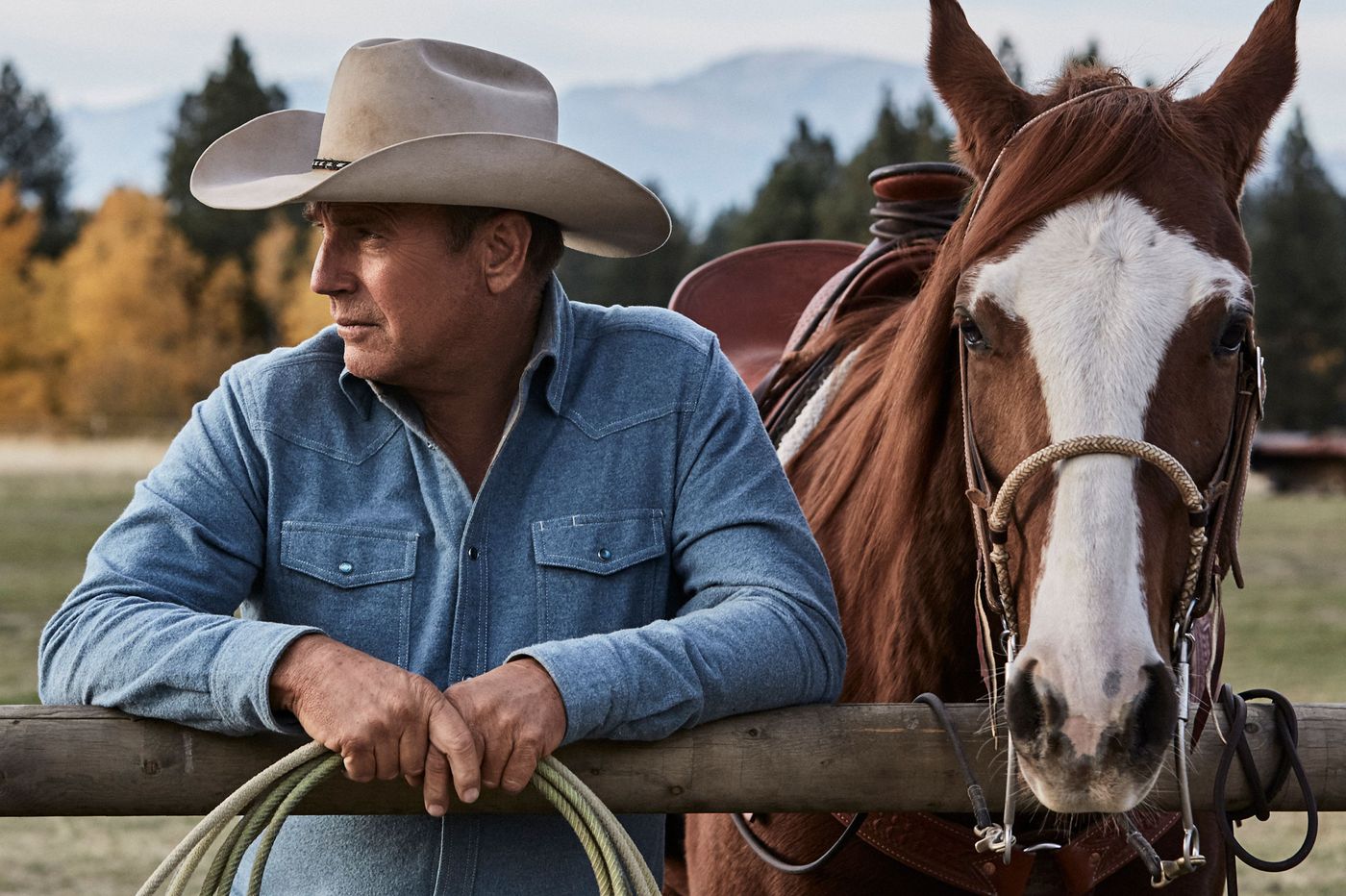
The Paramount Network’s first scripted dramatic series, Yellowstone, arrives with a swagger, intent on taking its place in the long, heady history of American stories about big, big money. Like Dallas crossed with the movie Giant, this expensive-looking TV show mixes soapy domestic melodrama with a sweeping, modernized take on the Western genre, set in and around a Montana ranch described as “the size of Rhode Island” — filled with huge houses, herds of animals, and dozens of employees. Yellowstone even features a bona fide movie star as its lead: Kevin Costner, one of the few remaining Hollywood actors with extensive experience anchoring popular Westerns.

Yet despite the pricey production design and top-shelf cast, Yellowstone’s success or failure will ultimately come down to one person: the show’s writer-director-producer-creator Taylor Sheridan.


If you keep up with the movie business at all, you should already know Sheridan’s name — or, at the very least, his work. After starting his career as a character actor, playing the obstinate opposition in the likes of Sons of Anarchy and Veronica Mars, Sheridan made his screenwriting debut with Sicario, a vividly realistic thriller about the moral ambiguities involved in fighting drug trafficking on the U.S.–Mexico border. He followed that up with the screenplay for Hell or High Water, which used a bank-robbery spree as the driver for a study of economic disparity in the modern American West; and then he wrote and directed Wind River, another sophisticated and culturally specific neo-Western that (like all of Sheridan’s feature films so far) became a surprise hit.

Now here’s Yellowstone, a prestige drama that Sheridan’s writing and directing for Paramount, as part of the cable outlet’s swing at becoming a Peak TV player. With ten episodes to work with in season one — the first of which, tonight’s “Daybreak,” is double length — Yellowstone should in the weeks ahead make great use of Sheridan’s knack for creating complicated characters and exploring where they live, while keeping their circumstances relevant to the modern world. But as the rare indie-oriented filmmaker who pays attention to plot, can Sheridan work within the open-ended nature of today’s serialized television?

“Daybreak” doesn’t really answer that question affirmatively. Most of Yellowstone’s two hours is spent calmly introducing what looks to be an ambitious and sprawling narrative. Then, down the stretch, something terrible occurs. The Big Moment doesn’t come out of the blue exactly, but it does seem sudden … almost like someone at the network politely reminded Sheridan that if he wants audiences to tune in next week, he should probably have something happen in episode one.

I’ll get back to the Big Moment in a second, because rushed storytelling aside, Yellowstone’s series premiere offers plenty of reasons to be hopeful about how the rest of this season’s going to go. The show’s biggest assets are its cast and its premise.

Roughly the first third of “Daybreak” introduces the major players, one by one, showing them going about their daily business. Costner plays John Dutton, the ranch’s sixth-generation owner, and the father of four children: Lee (Dave Annable), his faithful if dull right-hand man; Beth (Kelly Reilly), his acid-tongued representative in hardball business deals; Jamie (Wes Bentley), the lawyer who’s torn between making daddy proud and pursuing his own political career; and Kayce (Luke Grimes), the decorated Navy SEAL who defied the family by marrying and having a son with Monica, a teacher from a nearby Indian reservation.

The Duttons are unfathomably wealthy and powerful — as in “personal helicopters and armed guards” rich. At the start of the story, they’re facing pressure on multiple fronts. A well-connected developer, Dan Jenkins (played by Danny Huston), is using his will and his wiles to coerce John Dutton into giving up land in order to expand his own holdings, which Jenkins hopes will become as attractive to tourists and businessmen as rapidly gentrifying Bozeman. At the same time, wealthy casino owner Thomas Rainwater (Gil Birmingham) is drawing on his political supporters and fighting to assure them that the needs of the original Native American residents of Montana get due consideration in the increasingly bitter squabbles between the state’s old money and new.

“Daybreak” doesn’t introduce all the conflicts slated to come into play this season. Mostly, Sheridan emphasizes John Dutton’s defiance of Jenkins, and his attempt to forge some kind of compromise with Rainwater and the people of the reservation — including Kayce. The latter standoff becomes a genuine crisis when the tribe takes down the barbed wire between their land and the Dutton ranch, then brandishes guns to prevent the Duttons from reclaiming the cattle that roam
across the border.

This sets up the Big Moment. In a show of strength aimed at letting everyone know the Duttons won’t be chumps, John sends his own paramilitary force of livestock agents onto the reservation. A shootout ensues, which turns deadly when Lee gets killed. Kayce initially rides into the fray in support of his in-laws, but when he sees what happens to Lee, Kayce falls back on blood-family loyalty, and shoots Monica’s brother dead.

Again, all of this happens abruptly, even in the context of a two-hour TV episode. It almost feels like the shootout was originally intended to arrive at the end of episode three or four, after a lot more time spent establishing the characters and the stakes. The eruption of violence comes across as a forced attempt to give a story about political gamesmanship some life-or-death urgency.

The implication at the end of “Daybreak” is that the deaths on the reservation are going to be the catalyst to bring even more obstacles onto the field, as the federal government considers intervening. That might amp up Yellowstone’s sociopolitical intrigue, which is something that Sheridan should handle quite well — without having to resort to sensationalist bloodshed every week, I hope. After all, the show’s central tension — between different resourceful entities tht all feel they have a legitimate claim on Montana’s past and future — ought to provide plenty of drama, without a steady stream of gunfights.

In episode one at least, Yellowstone both benefits and suffers from some of Sheridan’s writing quirks: primarily his fondness for characters who pontificate poetically. It’s enjoyable to hear Costner wrap his relaxed California growl around lines like, “When you say no it must be the death of the question,” and, “Leverage is knowing that if someone had all the money in the world, this is what they’d buy.” But sometimes it seems like his John Dutton only speaks in truisms — a trait mirrored by Dan Jenkins when he bafflingly tells a party guest, “Cities are the sunsets of civilization,” and Kayce when he precedes his fatal shooting of his brother-in-law with, “In case you don’t already know, there’s no such place as heaven.”

But for all its sometimes overwritten dialogue, Yellowstone is blessedly assured regarding what it means to be about. Sheridan understands how even the most ruggedly individualistic human beings struggle with unhelpful social institutions, and with the unpredictability of their environment. In “Daybreak” he steers away from the rah-rah kind of heroes and the boo-hiss kind of villains, and instead presents an assortment of men and women who are entrenched in positions that are impossible for them to abandon, given all they’ve committed.

When Jenkins hoards community resources on his property, or Rainwater takes cattle that he’s enticed onto his lands, or the Duttons create landslides on their mountains to inconvenience their opponents, they’re all playing out a larger, long-running debate about ownership and stewardship. The compelling questions Yellowstone promises to ask every week are these: What do we really own? And once we buy something, do we have a right to it forever?

The Last Roundup

• One nifty bit of production design, unremarked upon by any of the characters: The logo for Dan Jenkins’s real-estate concern, Paradise Valley, looks similar to the Duttons’ Yellowstone Ranch brand … almost as though Jenkins were trying to intentionally mislead potential investors about his Montana roots.

• Kelly Reilly is an excellent British actress, who — when speaking with an American accent, anyway — gives off sort of a Rosanna Arquette vibe, at once aggressive and alluring. But her character Beth Dutton is the one I’m most concerned about going forward, given that Sheridan hasn’t shown much facility for writing good female roles. Emily Blunt in Sicario and Elizabeth Olsen in Wind River give strong performances, and at least their characters aren’t passive; but in both cases they’re more or less playing one-note “tough gals,” who take on unfamiliar assignments wherein colorful men explain things to them. So far in Yellowstone, Reilly’s Beth is the knowing one, not the neophyte; but she doesn’t get a lot to do in this extra-long premiere besides show off how cutting she can be. Fingers crossed that the part improves in the weeks ahead.

• Some of you may be wondering what the heck the Paramount Network is, and whether you already subscribe to it. Formerly Spike (which itself was formerly the Nashville Network), the channel launched earlier this year, and currently airs mostly a mix of reality shows and syndicated sitcom repeats. But Paramount’s stated mission is to host original programming that’ll compete with the likes of FX and AMC for audience share, critical attention, and awards. I bring this up only to mention that the network’s first splashy production — the mini-series Waco — was excellent but under-watched and under-discussed. So part of the ongoing story of Yellowstone will have to do with whether it gets respectable ratings and media coverage.


Sunday, April 3, 2022

The Morning Show S1 Ep 10: The Interview


What did you miss? For a review of the last episode, click HERE


from Ready Steady Cut: https://readysteadycut.com/2019/12/20/recap-the-morning-show-season-1-episode-10-the-interview-finale-apple-tv-series/


Daniel Hart
December 20, 2019


The finale of The Morning Show Season 1 provides an incredibly satisfying conclusion to this thematic and well-delivered Apple TV+ series that deserves to be up for accolades. A lot happened in Episode 10, “The Interview”, so here goes…

The Morning Show finale opens up with Yanko drinking himself stupid at a bar — he goes into a rant about the term El Niño, a scientific weatherman term. It’s a great opening monologue for things to come.

Cory, Chip, and Bradley meet Mitch for evidence on Fred’s complicity — the evidence is Hannah. Bradley claims it is too delicate to air but Cory states that the interview has to go ahead “now”. Bradley insists she needs to speak to Hannah first. Meanwhile, Alex meets Marlon about his plans in taking over The Morning Show from Chip.

Maggie, the famous journalist, meets Fred at a restaurant. She lets him know about her investigative piece regarding the upper levels of UBA and apologizes to Fred. He’s shocked at the betrayal, and he wants to find a way to nip the story quickly before it escalates.

The next day, it is studio time. Alex speaks to Bradley which is almost a non-conversation and then bumps into Chip in the corridor — the awkward tension is evident. Meanwhile, a puzzled Hannah gets a text from journalist Maggie, and then the UBA HR team ring Hannah offering her a promotion, which will send her to a different location.

Bradley pulls Hannah aside and talks about her potential interview with Mitch. Hannah states she does not want her name used and lets Bradley know about the text from Maggie and the promotion offer. It’s clear that UBA is trying to silence Hannah, but she doesn’t want to partake in it anymore — she’s clearly troubled and deeply hurt by the pressure.

But Hannah changes her mind and meets with Bradley, constructing a significant moment in the finale, and quite possibly the series. Bradley wants to know about her experiences with Mitch. Hannah tells her story about the night in detail, and how she exploded and barged into Fred’s office. This scene is shot in such a way that you can feel that getting the entire story out feels like a lifetime for Hannah. She hangs on to every word but she is pained by reliving it. Bradley softly tells her that she is tough and asks about whether she is okay. At this moment, Hannah freaks out and begins hyperventilating; as Bradley tries to calm Hannah down, she confesses to thinking about what happened between her and Mitch, someone she looked up to and adored, 100 times every day.


This scene was more than just words — Hannah’s breakdown and the explicit pain she is feeling is intrinsic to the entire story. It’s impactful. Bradley tries to tell Hannah that it wasn’t her fault while finishing the recording. Hannah tells Bradley that she can use her story and then proceeds to tell her to f–k off.

The Morning Show Season 1, Episode 10 then moves to Alex, who meets Fred about removing Bradley and Chip and earning co-anchor approval. Alex hesitates, asking Fred to think of Chip, but he refuses. After a moment, Alex accepts the way. When Alex leaves and heads down the escalators, Chip (who is about to be fired) heads up the other way — Alex cannot even look at him as she feels ashamed. Chip understands exactly what has happened.

Chip meets Fred and refuses to take a seat. Fred reveals that the internal investigation finds Chip responsible for the permissive environment and then fires him. The animosity between these two men in this scene is evident — they absolutely hate each other. Episode 10, “The Interview” is heating up.

As we reach the midway point of The Morning Show finale, Chip tells Bradley that the interview has to happen the next day. Bradley hesitates but accepts — the recording of Hannah has truly got to her. Claire tries to ring Hannah and apologizes for their spat over voicemail.

Chip visits Bradley; the co-anchor is clearly nervous about the interview since her talk with Hannah. Chip tells Bradley that he won’t be there for the show but says it still needs to be done. Bradley accuses Chip of wanting to bury the investigation evidence, and then breaks down about the entire situation and Hannah — Chips tries to hug Bradley to calm her down.

Cory is still an important cog in all this; he visits Mitch and tells him that he cannot act innocent on air and make out that Bradley is the enabler for the interview. A bemused Mitch does not understand Cory’s words but Cory says it is his last chance — “tomorrow is your shot, confess or you are done”. Meanwhile, Hannah rings up UBA HR and lets them know about accepting the promotion in LA — the camera then watches her walk into the distance slowly. Chip asks his assistant to sneak Mitch into the studio.

The next day Claire is determined to make up with Hannah so goes to her apartment before the show starts with coffee. Claire walks upstairs to see Hannah’s apartment door is already open — she brushes past the people at the door and sees Hannah on the floor completely still with vomit all over her. Hannah is dead.

Episode 10, “The Interview” then moves to the studio and Fred delivers a speech about Chip now that he is fired. He introduces Marlon. While Marlon introduces himself, Claire rings Bradley and tells her that Hannah is dead — she overdosed. Bradley is completely winded by the news, the sound around her zones out as she walks back into the studio with a dazed look, shuffles past everyone, turns around and breaks the news to all her colleagues — this scene is entirely silenced to emphasize the shock of the moment until Fred speaks; this highlights the audacity of what he says: ‘Let’s take a moment to honor and remember Hannah, our dear colleague.” Fred is one of the men that made Hannah feel that way.

Bradley rings Chip and explains that the interview is off and drops the news that Hannah is dead. Bradley then tells Alex she is leaving; she admits to wanting to interview Mitch behind her back and confesses that the “Mitch, Hannah and Fred scenario” gave her pressure for the best story. Alex chases after Bradley and tries to calm her down, claiming she had good intentions. Alex admits to going to Fred to get Bradley fired. Bradley still does not care, with guilt consuming her, but when Alex starts freaking out to a fan who wants to take a photo, Bradley has to take Alex back to the studio to calm her down.

Once Alex is back inside, Bradley tries talking out again, but Cory stops her; he explains that she cannot walk out as she has the evidence against the head of the company. He persuades her to stay. Chip meets Mitch and explains that Hannah has overdosed and punches him multiple times which turns into a small fight. Chip admits leaking the story to The Times about Mitch before waling off.

With all this drama in Episode 10, it’s time to go live for The Morning Show. Chip rings Alex and leaves her a voicemail; he explains how UBA was going to get rid of her and that he started all this against Mitch to keep her — “it was always for you”. As Bradley and Alex prep for the show with seconds counting down before going live, Marlon tries to give the women some words of encouragement — Alex throws water over Marlon and says “get the f–k out of my face”.

The Morning Show Season 1, Episode 10, “The Interview”, in finale-like fashion, has The Morning Show live but Alex freezes, prompting Bradley to take over all the lines. Alex begins pacing up and down the studio while all the entire production crew panic about her behavior. Alex starts talking to the camera and admits to the audience that they have not been honest — “this place is different from what it appears”. As the crew gets instructions to cut them off, Cory gives the command to keep it alive. Alex and Bradley unite and tell their audience that Fred created an environment to silence women and that UBA’s investigation which clears his name is not true. Alex also admits to being culpable for not calling out the behavior. They delve into Mitch’s sexual misconduct and Hannah’s story. Fred tries to stop the broadcast, but everyone ignores him and they lock him out. Eventually, Alex and Bradley are cut off but the messages have been delivered. Chip looks up at the big screen in Times Square to see that The Morning Show has been cut off. Mitch is staring into space at home.

The finale truly delivered a story about breaking the silence. What a story. And just as a final thought — the title “The Interview” was brilliantly misleading; the interview was between Bradley and Hannah.