Sunday, September 12, 2021

Black Summer S1 Ep 7: The Tunnel

What did you miss? For a review of the last episode, click HERE


From Showsnob: https://showsnob.com/2019/04/20/black-summer-season-1-episode-7-recap/

Black Summer S1 Ep 7: The Tunnel


by Bethany Lewis
2 years ago

Spears’ true identity is in danger of being revealed as a pair of corrupt soldiers lead the supergroup safely to the downtown area toward the stadium on Black Summer.

Soldiers: After the heist, Spears and Sun outrun the chaos and zombies to the safety of a nearby warehouse. They still have one bag of guns and open them to check them out. Whatever Sun’s history is, she obviously knows about guns as she professionally checks the barrel and sights on one of the weapons. Weakest link my ass. The rest of the Black Summer supergroup meets them there. Spears is amazed to see Lance while Sun is concerned about William, who has activated an old injury and comes limping in.

Carmen immediately notices that Manny is missing and no one knows what to say. Their silence says it all. The group takes cover as a few zombies come running past. After some gunfire, a voice calls out that the way is clear and that they can come out. Its the soldiers from the roof, who are also the soldiers who had captured Spears from the beginning. They recognize each other, of course, but keep those details to themselves. The soldiers offer to take the group through the warehouses toward downtown and the stadium. Rose thanks them and agrees for the group.

Sleep: They find a place to camp down for a few hours and get some rest while the bomber pilots do their work outside. It won’t be safe to go out until they finished. Spears and the soldiers interact tensely, accusing each other in coded passive aggressive comments. The soldiers give some background about the spread of the infection. Denver was the first to go black, followed by most other densely populated urban areas. The evacuation will take people to remote areas like Alaska or islands like Cuba. Sun has an emotional monologue that obviously no one can understand, but they all understand the feeling behind it. They all settle down for the night with the soldiers on watch.

Passage: Rose awakes sometime later and notices Spears and the soldiers are missing. She goes in search of them and finds Spears being led at gunpoint down a dark passage. The soldiers claim that Spears is a criminal and that they’re just carrying out justice. Spears tries to tell Rose that the soldiers are lying, that he’s not who they say he is and that they’re not who they say they are either. They just want loot. In the end, it doesn’t matter who he is or what he did in the past because he’s been there for Rose when it mattered. Rose shoots the soldiers in the head and rescues Spears.

Sunrise: Rose and Spears come back to the group and they all gear up to go outside. Once outside, mystery man whistles and a dog comes running. Its the same dog that shunned Lance. Mystery man leashes up his dog and takes his leave. He seems to have everything he needs. The group watches him go and then they set off toward the stadium.

What did you think of this Black Summer episode? Be sure to tell us in the comment section below!

Friday, September 10, 2021

Black Sails S2 Ep 3

What did you miss? For a review of the last episode, click HERE

From Den of Geek: https://www.denofgeek.com/tv/black-sails-season-2-episode-3-review/

Black Sails S2 Ep 3


Black Sails has another winner with plenty of sex and power plays. Here's our pirate expert's review...

By TS Rhodes|February 8, 2015|


This Black Sails review contains spoilers.

Black Sails is showing us more of the characters of the characters, and hearing more of the reasons why piracy worked back in the day. “Put a man on an island far from home, give him power and he’ll turn corrupt,” pretty much sums it up, especially when you throw in the fact that the New World has always attracted people who want to get rich quick. Pirates, for example.

I’m almost sorry that the conflict between Vane and Lowe comes to a head as quickly as it does, but it makes a huge amount of sense. The characters on Black Sails didn’t get to where they are by fooling around and failing to make decisions. Vane circles around the issue just enough, sorting out what he wants out of the situation, making the smart choices. He wants to protect Eleanor, but knows he’ll lose his tough-guy rep if he lets that become well-known.


I was worried about this character when he first appeared. But he’s proved to be as smart and tough as a pirate captain needs to be. His reputation is well-earned. It’s also a pleasure to see him in clothes. Not that I’ve ever minded actor Zach McGowan with his shirt off. But I’m aware of how odd his shirtlessness looked for the time period. He can still take the shirt off at appropriate times, and now we get to see him rock a really hot pair of black linen pants.


I’d just like to say how much I’m enjoying the costumes in general. Yes, this is TV and therefore, fantasyland. I have been in the Caribbean, and a black leather coat on a sunny day is not something anyone would actually choose to wear, not unless they are trying to actually cook themselves alive.

But there’s a lot of stuff that’s “just right.” Hornigold’s neat, conservative attire, perfectly in keeping with his past and his recent position. Miranda Barlow’s apron and sleeve-protectors. Tea cups and rum bottles. All the wide variety of clothing, including a lot of Eastern influence, appropriate on pirates who travel for a living, and who might have been robbing ships from India only a few months before.

And of course, there’s the requisite nudity.


Another great thing is the skillful use of exposition. Last episode John Silver endeared himself to Flint’s crew by becoming the local source of gossip and scandal. This episode his skills remind us that Flint’s currently sailing a Spanish warship, and also of what the political situation was when Flint left Nassau. And the small detail of the crew imitation his foot-stamping introduction to each news item lets us know that his position has changed.

Flint’s problems are a little more intellectual. How to prevent Vane, the man in power, from claiming the Spanish gold once Flint gets it back to Nassau. This is the plotline that doesn’t quite ring true. If I were Flint, I’d recruit Vane’s help, then double-cross him or kill him on some pretext later. As it is, Flint’s crew looks a little thin to take on the Spanish.

His method of persuading his crew to go along with his plan is sketchy, and his tactics, as I’ve noted with this character before, suck. If you’re going to attack a fort, the place to do it from is NOT a ship that’s right under that fort’s guns. Flint doesn’t have the firepower to hit something that high up on a hill, and he doesn’t have a good second in command to either lead an attack from the rear or lead a diversion from the front.


Vane solves his problem with Lowe the smart way – first by teaming up with Max to find a way to make it all about the money, then in an attack that’s brutal and self-serving. The head on a spike was brilliant. Of course, it’s very convenient that so many of his men could swim (a rare skill back in the day) and that, having observed him rowing over from shore, Lowe’s lookouts then took the rest of the night off, failing to notice a bunch of pirates coming up for air.

But all in all, this storyline works for me. And Vane, who has asserted his power, gets his reward in the form of sex with Eleanor.

Max has apparently decided that her power lies with helping Anne and Jack. It’s a smart move. If they are supposed to be the bouncers for her place, they need to be effective. And if they go back out to sea, she has more autonomy.

Sure, she might be falling for Anne a little, but I don’t think for one second she’s not about to help herself. Max is one of the smartest characters on the show. I had no idea how the writers were going to get Jack Rackham back to sea, but Max made a logical move that worked perfectly.

So Jack Rackham is to be a captain. It’s something he tried to do for himself, but he needed a little help. I think the line of Vane’s about Jack arising from the dead is significant. Vane rose from the dead in a more literal sense, and he came back smarter and more in control of his great weakness, his temper. I expect Jack to lose some of his confused, wilted look, and start playing it smart now.

Vane also dropped a line about how Anne and Jack will either kill each other, or end up running the whole island. Keep an eye out.

So Jack Rackham regains his power as a pirate, and gets rewarded with an invite to the bed of the two women. Legend says Jack Rackham bedded both Anne Bonney and Mary Read (that legend isn’t quite accurate, but I digress). Max isn’t Mary Read, so I’m wondering if that’s in the future. In the meantime, I hope the next episode shows us what these three – uh – friends are up to.

So Vane and Rackham gain power and are rewarded with sex. What about Flint? He’s stuck out in the bay under the guns of a hostile fort. And he didn’t get to talk to Miranda. He leaves her the book, and the book says, “I’m sorry.” The title of the book, I believe, refers to the sculptor who created a statue so beautiful he fell in love with it. If I’m right, my bet is that Miranda created Captain Flint, and that he’s now going to stop being quite what she created.

But he didn’t have the guts or the timing to talk to her. So no sex for you, Flint.


Thursday, September 9, 2021

The White Lotus S1 Ep 3: Mysterious Monkeys

 from Vulture: https://www.vulture.com/article/the-white-lotus-episode-3-recap-mysterious-monkeys.html

What did you miss? For a review of the last episode, click HERE

The White Lotus S1 Ep 3:
Mysterious Monkeys


The White Lotus Recap: Sex Talks
By Amanda Whiting


Photo: HBO

Just the idea of Hawaii is sexy to me — burnt sunsets, warm sand, hot nights. Maybe it’s the Hollywood gaze. From Deborah Kerr and Burt Lancaster rolling in the surf in From Here to Eternity to Blue Crush and the fantasy of the vacation romance, love in the Pacific is horny and urgent. Can Ann Marie score a perfect barrel ride and an NFL hunk before he flies home? Will Lancaster rescue Kerr from her ugly marriage before she sails to the mainland? Even Gigdet had a love triangle to untangle before she bid Waikiki aloha. This week on The White Lotus, sex is the topic of conversation and, occasionally, even on the itinerary. It is variously divisive, clandestine, lusty, affirming, embarrassing, and solitary, but it’s never very sexy.

The Pattons are tiffing again, this time because Shane wants to have sex. It’s not that Rachel doesn’t want to have sex — though sometimes she doesn’t want to — but that she wants Shane to want to have sex less. Until, that is, he says he doesn’t want to have sex, in which case she looks hurt until he admits that he actually would in fact like to have sex. Honestly, this horndog discourse is hard for me to buy. The newlyweds have so far ended each evening with a bang, but otherwise it’s pretty chaste between them.

In “Mysterious Monkeys,” they also have morning sex, which appears mutually satisfying if perhaps perfunctory. Rachel’s not fully undressed and there’s no post-coital cuddle, but no judgment here, the breakfast buffet probably ends at 10. So I was as thrown as Rachel’s polo shirt of a husband to hear she’s unhappy with the central role sex is playing in their relationship. “I can’t wait to fuck in Tahiti” isn’t the most romantic sweet-nothing I’ve ever heard, but how much sex is too much on day three of marriage? Rachel is looking for a fight, desperate to find cracks in the relationship to justify her second thoughts. It’s hardly necessary! There’s a surfeit of obvious reasons not to be with this dude, like his complete disregard for her career, his reliance on his mother to solve his problems, and how long it’s taking him to finish Blink. Still, her criticism sends Shane on a quest to show he’s more than an erection with a black card.

At least the Pattons are doing it on vacation. The Mossbachers are nowhere close. There are mood-killers, of course: their daughter’s derision, their son’s tech/porn addiction, Nicole’s workaholism, and Mark’s existential crisis. When Rachel asks Mark how the Mossbachers keep “the spark alive,” his candor is more disconcerting than Shane’s libido. In the beginning, Mark couldn’t get enough of Nicole; now, he compares sex to a food challenge on Fear Factor, a show on which I saw a person drink the juice from a cow’s eyeball. But radical honesty is Mark’s new watchword. He doesn’t even flinch when his teenage son overhears.

Because honesty, Mark declares, is going to be the difference between Mark and his own dad, the one we learned died from AIDS. Steve Zahn, who refuses to recede into his character for me, wakes up stupefied from the news, leaving his wife to explain the situation to the kids. The girls are predictably merciless. They only see the homophobia in Mark’s reaction when really he’s grieving the loss of a fictional childhood, plus also being homophobic. “Maybe he was just too embarrassed to ask grandma to use a dildo on him?” suggests Olivia, who is maaaybe trying to help? But there’s an unmissable twinkle in her eye when she informs her parents that grandad “was probably a bottom. That’s how you mostly get it — receiving.” She’s perpetually thrilled with her own worldly knowledge, mistaking it for a reason why her opinions are the most correct. Mark has Bloody Marys for breakfast until it’s time for day one of scuba school.

Which brings us to poor, suffering Quinn. Kicked out of the hotel suite by his sister, he spent the night sleeping under a canopy of stars. It was magical until the tide washed away his many, many devices. His mom orders replacements that can’t make it to the island in time, but this is Maui, not the edge of civilization. He’s a 20-minute Uber from Target — give the kid a credit card. Phoneless and Switchless, Quinn has no refuge from his dad’s unfiltered truth, or at least what Mark thinks the truth is. It’s fascinating to see how quickly Mark bends the new information about his dad into a self-serving narrative. He believed he was the “flawed child of an icon”; now, he’s using his dad’s secrets to excuse his shortcomings. “He hid the monkey and that screwed me up.” To save Quinn, Mark is going to tell the truth, and the truth is mostly frank sex talk with anyone who will listen. Later, Nicole explains to her daughter over family dinner that, as you get older, you come to value your dignity more than sex — a revealing set of counterpoints. Mark doesn’t hear because he’s still at the bar, accidentally propositioning Armond, who has enjoyed 400–500 pau hana drinks.

Armond’s sinking fast since busting open the dispensary of Paula’s lost bag. Belinda finds him asleep in his car. He can’t stop hitting on Dillon, a young staffer with an aesthetic that screams “my beat-up Toyota is covered in bumper stickers.” (Armie likes his top knot.) And just when it seems the Pineapple Suite fiasco is over, a reckless Armond can’t resist the chance to escalate. He books the Pattons onto the hotel boat for sunset dinner on the same night Tanya is planning to scatter her mother’s remains. An Armond with a stash and a vendetta is a dangerous thing. Honeymoons will be scorched.

As good as Murray Bartlett is at playing a man buzzing with Adderall and schadenfreude, this week’s MVP is hands-down Jennifer Coolidge, who takes boozy Tanya from fragile to fractured over a case of champagne. Tanya feels like a fuller version of other characters that Coolidge has played — washed-up and spaced out, simultaneously puerile and battered — but with backstory enough to justify her sadness. She had an oppressive, collapsed relationship with her “cruel” mother that even the woman’s death can’t end. She dreams that she’s wading into the chest-high sea, throwing handfuls of ashes into an on-shore wind that blows them back into her face. Her mourning is hysterical in every sense of the word. “I wish I had a man here,” she says, watching Rachel and Shane over dinner. Belinda, whom Tanya’s compelled to leave work early to join her, agrees. These women are bad bedfellows: Belinda is pathologically empathic, and Tanya’s distress seems to blossom when she has witnesses.

In a shrewd metaphor, Tanya can’t even get the urn open herself. On the boat, she breaks down crying and screaming before the ashes can be emptied. She’ll probably carry them with her forever. As the boat sails back to The White Lotus, the shell-shocked Pattons clutch each other close, and Belinda sings to Tanya, scratching her head like the child she’ll never outgrow.

Predictably, Shane’s sense of perspective on his own life disappears faster than you can say “land ho.” He’s fuming at Armond. “People have been coming for me my whole life,” he tells Rachel, somehow with a straight face. “I’m just playing the hand I was dealt. Like, yeah, it’s a great hand, and that’s not my fault.” Rachel promptly initiates what I can only imagine is please-stop-talking sex.

Eventually, Mark drunkenly stumbles home to his family, chattering like a monkey and thumping his bare chest. It’s so weird and pathetic that I almost wanted Nicole to be into it, just to spare us the humiliation. “You’re taking this really hard,” she says with total remove. If she ever stopped answering emails and rearranging furniture long enough to consider it, Nicole might find she detests her husband.

The only people having enviable sex on The White Lotus are Paula and the nameless waiter. Olivia is the one doing the envying. As “Mysterious Monkey” opens, she wakes to find her friend missing from bed, but Paula has an instinct to lie about it, and Olivia has an instinct to hide that she knows Paula is lying. The next night, Olivia follows her into the night to confirm what she already knows. But why? Is Olivia jealous of Paula? Jealous of the waiter who gets to be with her? What do these friends even have in common besides a penchant for scoffing and the same section of Poli Sci 201?

Speaking of, it’s time for another round of bookwatch. Paula has progressed from Freud to Frantz Fanon’s book on colonialism — a topic she brought up at dinner in last week’s ep and which is always germane when holidaying in the stolen Kingdom of Hawai’i. Olivia has traded Neitzsche for his disciple Camille Paglia’s Sexual Personae, an ambiguously anti-feminist text that is sure to rankle her even more than her mother does. What point is Mike White making with their vacation syllabus? That a liberal arts education is largely performative? That it breeds cynicism? Or is Shane, who alleges they’re not reading at all, kind of right — intellectual history is simply the new black? Shane splashing the young women with pool water while at the same time negging them is my personal watch-through-your-fingers, cringe-of-the-week moment. Rachel, horrified and embarrassed and maybe even jealous, has to flee the scene. For her part, Rachel is finally cracking open Elena Ferrante, which is fitting. My Brilliant Friend is the exact novel you bring on vacation and can’t finish when you realize it’s darker than you thought it would be. As previously mentioned, Shane, who really doesn’t need encouragement to trust his own gut instincts, is still flipping through Malcolm Gladwell’s Blink.

We’re halfway through The White Lotus already, and I’m starting to question my assumption that the death teased in the pilot was a murder. Nothing seems headed in a murder-y direction. But then I remember Juan Cristobal Tapia de Veer’s twisty Polynesian theme tune, which felt almost ironic when it introduced episode one. With each successive week, it conjures something darker and nervier for me. Every character is fraying in some sense, but in ways that make them less intimidating. Tanya can’t do a murder; she can’t even open a box. Mark would have to ask Nicole’s permission. And yet this can’t all end with a tragic ridge-hike-selfie death, can it? The first three episodes of the series collectively established and exposed these flawed castaways and the chaos they cause just by being themselves; now it’s time for things to get really out of control.

Wednesday, September 8, 2021

American gods S3 Ep 7: Fire and Ice

What did you miss? For a review of the last episode, click HERE


from nme.com: https://www.nme.com/reviews/tv-recaps/american-gods-season-3-episode-7-recap-fire-and-ice-2891463

American gods S3 Ep 7: Fire and Ice


‘American Gods’ season three episode seven recap: it’s raining men

Shadow (Ricky Whittle) goes down like Bambi at the ice rink. CREDIT: Starz


There’s a storm coming. With just four episodes remaining, American Gods is steadily drawing towards its third season finale. That means there’s no time in this episode for our usual pre-titles flashback to the adventures of the old gods. Instead, we begin in the present day with Wednesday (Ian McShane) and Cordelia (Ashley Reyes) motoring along a country road when a burning corpse suddenly appears. “A flaming body just fell out of the sky!” complains a visibly shaken Cordelia. “I’m up for a lot of shit but I did not sign up for whatever the fuck that is!”

Wednesday’s reaction to this fiery bump in the road is to finally tell Cordelia about the gods and that he’s one of them. He then does exactly what he once did to Shadow (Ricky Whittle): send her away to the off-the-grid safety of Lakeside, Wisconsin. Quite how safe Lakeside really is remains to be seen, especially given that the townsfolk still aren’t any closer to figuring out who abducted local girl Alison McGovern. Shadow thinks he’s got a lead, having spotted Mabel’s diner employee Derek (Spencer Macpherson) breaking into homes to get his hands on women’s underwear. Shadow reports him to police chief Chad Mulligan (Eric Johnson), but under interrogation from the pair Derek maintains he had nothing to do with Alison’s disappearance and only wanted the knickers so he could wear them himself. After leaving Derek’s place, Shadow runs into Cordelia, but his attempts to reassure her that he’s been where she is just raises more questions. “You are what, exactly?” asks Cordelia. “The jury’s still out on that one,” replies Shadow.

Someone else asking that very same question about Shadow is Bilquis (Yetide Badaki). After performing a spell to look into Shadow’s past, she takes a trip to Chicago to meet Eugenia (Sharon Hope), the midwife who helped bring the baby demigod into the world. After winning the wise old woman over with some nifty dance moves, Bilquis is tasked with an important mission: “Only you have the power to find the other,” Eugenia tells her. The other who? “Shadow Moon is only one half. He cannot lead the people, the ‘we’, alone. You must find the other. If you do not, the people can never come together and these will be our last days.”

So the big question for Bilquis is: who is Shadow’s other half? Right now, his neighbour Marguerite (Lela Loren) might stake a claim. Shadow finally wins her over this episode by face-planting on the ice more times than Bambi before they go home to the hot tub and he shows off his party trick of making it snow with only his breath. All that snow just makes things steamier…Danny Trejo makes a cameo appearance in this week’s episode. CREDIT: Starz
Things are heating up between him and Marguerite, but let’s not forget Shadow may or may not still be a married man – depending on how seriously you take the “’til death do us part” bit. His wife, Laura (Emily Browning), spends much of this episode deep in negotiation with Mr World (Danny Trejo) about exactly how they’re going to get Odin’s spear back from her beloved Leprechaun’s magical hoard so that she can assassinate Wednesday with it. As Mr World explains, better that she does and they then write it off as a personal vendetta rather than do it himself and provoke a holy war.

Speaking of turning against Wednesday, we learn that the beast dropping flaming followers at his feet is none other than Johan (Marilyn Manson), the berserker who has now, apparently, gone fully berserk. When Manson was dropped from the show following recent abuse allegations we were told he’d be cut from future episodes and his likeness appears here just once: his bloated face resting above his own disembowelled chest cavity in a dentist’s chair.

The dentist responsible, Wednesday’s old war god buddy Dr Tyrell (Denis O’Hare), knows there’s no time to waste. He picks up Shadow and hits the road, leaving a note for Wednesday to find on a prescription pad buried deep in Johan’s bloody guts. It reads: “Odin, find me at Wolf’s Den, with the son you hold most dear.” That’s one dentist’s appointment Wednesday won’t want to miss.

HITS AND MYTHS
In the midst of her struggle to readjust to her new reality, an exasperated Cordelia gets the episode’s funniest line: “When my boss announces he’s a god, and someone is killing his followers, which apparently explains why it’s partly cloudy with a chance of human remains… I mean, what the fuck?”
The local children’s theatre in Lakeside, a town in which a young girl has recently disappeared, is currently advertising a performance of child-abduction classic Hansel & Gretel. Either that’s a clue or the theatre bookers really need to learn to read the room.
Most McShane moment of the week: Wednesday’s list of reasons why Johan may have started slaughtering his followers is delivered in a vintage McShane rant: “Psychedelics, brain fever, the curse of Fu Manchu, who knows?”
The devil has the best music: Bilquis’ arrival in Chicago is aptly soundtracked by Otis Clay’s ‘Got To Find A Way’. Clay was a gospel singer, born in Mississippi, who signed to Chicago’s One-derful Records in 1965 to make secular recordings. American Gods season 3 episode 7 concludes with Leonard Cohen’s remarkable ‘You Want It Darker’, the title track of the record he released just weeks before his death in 2016. In the chorus, Cohen sings: “Hineni, hineni/I’m ready, my lord.” Hineni is a Hebrew word meaning ‘here I am’, and was the response Abraham gave when God asked him to kill his son Isaac. Tread carefully Shadow, these old Gods really do have a thing for child sacrifice.

Friday, September 3, 2021

Evil S1 Ep 2: 177 Minutes

What did you miss? For a review of the last episode, click HERE

From TV Guide: https://www.tvguide.com/news/evil-season-1-episode-2-recap-177-minutes/

Evil S1 Ep 2: 177 Minutes


Evil Recap: We Did Not Expect That Big Reveal About David

Dalya Knapp, Brooklyn Shuck, Katja Herbers, Maddy Crocco, Skylar Gray; Evil Jeff Neumann, CBS


Mike Colter's priest-in-training has some fascinating demons
Maggie FremontOct. 3, 2019, 8:00 p.m. PT


Reader, have you been spending the last week replying, "Oh boy, do you have that right," to anyone who even remotely tries to tell you anything about yourself? If not, I highly recommend it -- it is extremely empowering. By now, we should all be worshipping at the altar of Kristen Bouchard (Katja Herbers), who in "177 Minutes" again refuses to take crap from anyone, even if that 'anyone' happens to be the very disturbing and definitely evil incarnate Leland Townsend (Michael Emerson). That's right, folks: Just because Kristen, David (Mike Colter), and Ben (Aasif Mandvi) are investigating a miracle instead of a demonic possession, it doesn't mean it's any less creepy on Evilthis week.

In fact, both of our monsters from the pilot are back. You didn't think they'd introduce a fabulously horrible demon like George (Marti Matulis) and then get rid of him, did you? This week, he visits not only Kristen in a night terror but her youngest daughter Laura (Dalya Knapp), as well. After fretting about it, Kristen realizes that George looks an awful lot like the monster of the new scary show her daughters are watching -- excuse me, streaming -- and that must explain why both she and Laura saw the same demon in their nightmares. It makes sense, but something tells me that's not the end of old Georgie boy.

The more pressing and, let's be honest, much scarier monster resurfacing this week is Leland. That dude is the definition of "giving one the creeps," and it looks like he's not going away any time soon. Kristen is approached by D.A. Lewis Cormier (Danny Burstein) about forgetting that whole "if you can't lie for me on the stand, I don't want you" thing from last week and bringing her back on board as his expert forensic psychologist. Kristen, most definitely not a dummy, uses this offer as leverage to secure a two-year contract with David Acosta and the Catholic Church (she is their "psychological and medical expert," after all). She looks like she enjoys telling Lewis she has to turn down his offer, but any enjoyment is completely crushed when he informs her that he actually found a different forensic psychologist to take over all of her cases: Leland Townsend.

Apparently, Leland was able to convince Lewis that his connections to Orson the Serial Killer were due to an online hack. Leland once again harasses Kristen about what he knows from the notes he stole from Kristen's therapist, Kurt (Kurt Fuller). He also informs her that with his new position he'll be letting the bad guys go free because, well, because he's a dick. Finally, he tells her that David is not what he seems and she should ask him "about the second time he saw God." Which is a very creepy thing to ask even when you have context! Can this dude get a life? Or at least a plant?

Not like Kristen isn't already stressed enough without Leland poking around. The case she, David, and Ben are working on is making her feel all sorts of ways. Three weeks prior, a teen named Naomi Clark (Hannah Hodson) suffered from cardiac arrest during a soccer game and was declared dead at the hospital. Three hours after that, and after she'd been given a blessing by a Father Augustus (Dakin Matthews), a doctor began an autopsy...and Naomi Clark woke up. She's alive! It's a miracle!

Well, it's a miracle under investigation. Father Augustus and his new legion of fans would like you to think it was a miracle. The hospital would certainly not: Naomi suffered from hyper-inflation and undiagnosed COPD, meaning her lungs couldn't hold oxygen and it gave the appearance she was dead. That's it, the very defensive Chief of Whatever says. And David Acosta's boss, the Monsignor (Boris McGiver), just wants to get to the bottom of it without embarrassing the church.


Katja Herbers and Mike Colter, Evil ELIZABETH FISHER, CBS


The biggest clue for Team Miracle comes in the form of some bright white entity flashing across the surveillance footage that shows the doctors at Harbor Hospital administering chest compressions to Naomi Clark in the trauma bay -- a bright white entity that has the face of the woman who died in that very same room just an hour before Naomi. You guys, we've got a Maybe Angel. If anyone is going to debunk such a ridiculous concept, it is "tech specialist" and contractor Ben Shakir, who is a treasure we do not deserve. He thinks it could be an artifact from an old digital recording on the same card, or maybe something called "ground looping" that is also very tech-y and possible and whatever, I believe Ben. Protect Ben at all costs!

There's also Naomi's own experience to be considered. She tells David and Kristen that while she was "dead" she saw a swirling black hole from which 60 people emerged (is it The 60? Who are those people?), but then that Maybe Angel touched her hand and she woke up on the autopsy table. It is a story equal parts compelling and terrifying, and I wish that teen the best of luck in her future endeavors. Although there is some evidence pointing toward miracle, ultimately, David takes a closer look at the surveillance footage and figures out what's going on. This is no miracle; this is implicit racism. That's a wild sentence, but by no means will it be the wildest I'll ever write in regards to this show.

David goes back through the hospital records and discovers that on average, the doctors at Harbor Hospital spend 58 minutes performing life-saving measures on white patients and only 23 on patients of color -- patients like Naomi Clark, who, yes, suffers from COPD, and who would never have been declared dead in the first place if they had worked on her longer. Kristen and David gather all the evidence and get it in the hands of a prosecutor who can argue a civil rights lawsuit against the hospital. Suck on that, Chief of Whatever! Still, there is the matter of the Maybe Angel that cannot be explained either way -- and the Monsignor shadily tells David to just drop it -- so the Miracle Squad doesn't get all the answers they may be craving.

It's more than curiosity; this case hits Kristen from an emotional angle, too. She reveals to David that her youngest daughter, Laura -- the one dreaming of demons -- was born with a heart condition that means she has a 50/50 shot of making it to her 20th birthday. It's hard for Kristen to wrap her head around the idea of miracles -- that God chooses some people to bestow them upon while leaving others to fend for themselves. How could God pick winners and losers, she asks David. He doesn't really have an answer for her, but would any answer suffice?

David has his own issues with God, anyway. We get a glimpse of just how plagued he is by temptation. He's constantly praying -- even when a vision of Leland hangs around and performs Abbott and Costello's "Who's On First" to try to distract him -- and in the end, he can't seem to fight temptation on prayer and jogging alone. He ends up in a club buying hallucinogenic drugs in hopes of having spiritual visions. Yes, it's true: Leland wasn't making things up when he mentioned Kristen should ask David about "the second time he saw God" -- David had a vision and he's kind of a big deal with the Church because of it. It happened around the time Julia died, and the vision helped him through it -- but he hasn't had one since. Well, hopped up on drugs, we see him have another one. While floating above his bed, he peers into the bring light swirling above him, full of people (souls?), looks closely, and says, "Julia?"


To say things on this show are getting weird would truly be an understatement.

Thursday, September 2, 2021

Dexter S1 Ep 1

from the Dexter wiki: https://dexter.fandom.com/wiki/Episode_101:_Dexter

Dexter S1 Ep 1


Dexter's trophy box

It's nighttime in Miami, Florida, and the streets are busy. People are out having fun but so is Dexter Morgan. As he drives, he observes the people in the area, and reminisces on how he enjoys a variety of cultures and food. However, tonight he's after something different. He's hungry...but not for food. He needs to feed his urge to kill. Dexter's target is a pedophile and child killer named Mike Donovan whom he tracks to a choir event and hides in the backseat of his car, awaiting his prey. When Donovan enters, Dexter quickly slips a wire around Donovan’s neck and orders him to drive. They end up in a wooded area near three open graves that Dexter recently dug up.

Dexter forces Donovan inside a nearby building and confronts him about his crimes. He forces Donovan to look at the decaying bodies of his young victims - Corey Balanti, Tyler Kale, and Joe Bigalow. Donovan begins to pray, only to be smacked across his face. Dexter tells him that praying never helped anybody (referencing victims who prayed for their lives). Donovan begins to beg and Dexter asks if those little boys had begged. Donovan then admits his guilt, insisting that he couldn't help himself and Dexter has to understand. Dexter smiles, remarking that he definitely understands, but that he could never, ever hurt kids. When Donovan asks him why, Dexter moves forward, injects him with M99, and replies, "I have standards." As Donovan falls to the floor, unconscious, Dexter puts away the needle and removes his gloves.

Dexter is next seen wearing his kill attire as he stands above Donovan, who is lying wrapped in plastic on a table. Using a scalpel, Dexter slices Donovan's right cheek and collects a drop of blood. He releases it onto a blood slide and places a second slide on top of it. A circle of blood appears and Dexter gazes at it for a moment. He tells a terrified Donovan, "Soon you'll be packed into a few, neatly wrapped Hefties in my own, small corner of the world. It’ll be a neater, happier place. A better place."

Dexter picks up a small power saw, and stands above Donovan’s head. Lowering his visor, Dexter turns on the saw, brings it down, and slowly saws into Donovan’s neck as muffled screams are heard. During the night, Dexter uses his boat, Slice of Life, to dump Donovan’s remains into the ocean near Bay Harbor.

In the morning, he encounters a passing boat and he cheerily greets the captain as part of his "blending in" with the world. Dexter’s thoughts are revealed:

"My name is Dexter. Dexter Morgan. I don't know what made me the way I am, but whatever it was left a hollow place inside. People fake a lot of human interactions, but I feel like I've fake them all, and I fake them very well. And that's my burden, I guess. But I don't blame my foster parents for that. Harry and Doris Morgan did a wonderful job raising me, but they're both dead now. I didn't kill them...Honest."

Dexter then flashes back to his childhood. His adoptive father, Harry, brings up a dog named Buddy, who went missing. Harry tells Dexter that he found the grave, and Dexter defends himself, saying that he did it because the barking kept his sick mother awake. Harry then says that more than just Buddy's bones were in the grave. The flashback ends and Dexter takes his boat to his marina, returning to his apartment shortly thereafter.

Dexter lives on the top floor of a two-story apartment complex with a swimming pool. When he enters his apartment, its neat order is revealed. Dexter immediately heads to the air conditioning unit, removes the casing, reaches inside, and pulls out a blood slide box. Setting the box down, Dexter reminisces about the kill while he looks at the blood drop on Donovan’s slide. He then places it next to a group of other slides inside the box. After he returns his trophy box to the AC unit, Dexter sits at his desk, pleased that he had honored the Code of Harry in this kill. (The code is set of rules taught to him by Harry that allows Dexter to kill without being caught.)

Dexter notices a phone message from his adoptive sister, Debra Morgan, who is a vice officer. Grinning, he listens to her foul-mouthed request for him to join her at a crime scene at the Seven Seas Motel. He has thoughts that if there's anyone he could have feelings for, it would be her (like a brother would). Dexter obligingly heads out to meet her at the crime scene.

As he walks toward the crime scene, Dexter has the thought, "There's something strange and disarming about looking at a homicide scene in the daylight of Miami. It makes the most grotesque killings look staged, like you're in a new and daring section of Disneyworld: Dahmerland." As Dexter crosses under the yellow police tape, Officer Oliver steps in his way and asks if he's a cop, to which Dexter replies by flashing his forensics laminate badge and saying, "No. Forensics." He looks around the location until he sees his sister, undercover as a prostitute, calling him over to meet in a motel room.

Upon entering the room, Dexter jokingly comments on the "sex suit" that Deb is wearing and asks where she keeps her gun. She excitedly tells Dexter that a dead hooker was found chopped up in bits and pieces, and its the third one in five months. They agree that a serial killer is at work.

Debra doesn't know if there are suspects because Lt. Maria LaGuerta is keeping her in the room since she's working Vice and not a member of the Homicide division. Dexter suggests that she take a lesson from LaGuerta in politics. Deb responds that she only wants to catch this guy before he kills another girl. She begs Dexter to look at the scene because he always gets "hunches," and he finally agrees to do so. Knowing that Dexter will help her with the case, Debra smiles at a possible chance to be assigned to Homicide.

Dexter walks over into the pool area and slips on his latex gloves as Vince Masuka runs up to greet him. Dexter comments on his "haircut" and Masuka quips about Debra looking "hot" in her outfit. Masuka then asks why he's at the crime scene since there's no blood. When Dexter expresses disbelief, Masuka asks Detective Angel Batista to lift the sheet and show Dexter the body. The strange aspect to this crime scene - no blood on, in, or outside of the body sparks Dexter's curiosity and admiration. Batista notes an oddity in how the victim was dismembered. While the right leg is separated into four sections, the left leg is only separated into three with a final cut, apparently "interrupted." Dexter, still fascinated with the killer's bloodless technique, departs the scene after he tells Batista that, since there's no blood, he isn't needed there. Dexter wonders if this killer has exceeded his own abilities.

On his return from the Seven Seas Motel, Dexter stops by Sadie's Donuts for his usual Donut Run. On most work days, in order to appear as a nice, normal guy, he offers a large box of donuts to his co-workers.

At the station, an Officer at the desk takes a donut followed by Detective Dan and Detective Sue who joke about the next "blood bath" (since Dexter is a blood spatter analyst). After they walk away, Officer Debra Morgan, shows up wearing her police uniform. She also chooses a donut and tells Dexter that Captain Thomas Matthews put her on the case, despite Lt. Maria LaGuerta's objections.

Dexter then takes the donuts to Camilla Figg, the records supervisor. After she picks a donut, Dexter asks her if she has "anything new." She smiles and rolls her chair back to pick out a case file. Before she gives it to him, she states, "One of these days, you're going to tell me." Dexter responds with, "I already told you. Blood spatter doesn't take up all my time. I like doing it. Maybe I can help out. It fills my nights." She says that he has a morbid sense of fun, and he agrees. In reality, Camilla is one of Dexter’s unwitting sources for victims. He asks for case files on someone particularly heinous, in order to get information for a kill.

Next, Dexter greets Det. Angel Batista in basic Spanish and he takes the last donut. Walking away, Dexter looks into the box and thinks, "Just like me. Empty inside."

In front of a wall hung with blood spatter patterns, Dexter sits spinning around in his chair. Sgt. James Doakes (looking rather angry) walks up to Dexter's desk and asks where the hell he's been. Within Miami Metro Homicide, Doakes (who deeply dislikes Dexter) is the immediate supervisor of the dept. and works under Lt. Maria LaGuerta.

Doakes orders Dexter to write a blood report about another murder case. Doakes insists that two people died in a drug deal, but Dexter has his doubts. As Doakes walks away, he looks back at Dexter with suspicion. Dexter thinks to himself, "The only real question I have is: Why in a building full of cops, all supposedly with a keen insight into the human soul, is Doakes the only one who gets the creeps from me."

Before Dexter writes the report for Doakes, he goes to check out the Hotel Cokehead Murders crime scene where Officer Simon is assigned. Dexter states that the blood "tells a story" and shows off his unique knowledge of blood. He acts out how the male victim was quickly stabbed in the carotid artery, based on the blood's pattern on a white wall. Dexter then walks over to where the female victim was killed. There the wall has thinner streaks of blood causing by slashing. Dexter says the killer knows how to use a blade, and then leaves to take a lunch break.

During his break, Dexter stalks his next target, Jamie Jaworski, a valet with a secret hobby of being a rapist. When Jaworski murdered a woman named Jane Saunders in a snuff film, he escaped justice due to a faulty warrant. Dexter breaks into Jaworski's house to snoop around and is almost attacked by his dog. Dexter finds the definitive proof that Jaworski is guilty and Jaworski’s fate is sealed. However, Dexter feels that he must wait until the time is right to place him on his table.

Dexter goes on a date with his girlfriend, Rita Bennett, a domestic violence victim. As a result of her violent past with her husband, Rita has no interest in sex. Since Dexter secretly feels comfortable with the lack of intimacy, he thinks she is an ideal girlfriend for him. Rita also has two young children, with whom Dexter gets along well. While on their date at the Crab Festival, Dexter notices a crime scene in which another victim has been cut into pieces with no traces of blood; however, this time the head is missing.

When Dexter brings Rita home, he is still thinking about the dismembered body. In trying to describe the killer’s technique, he makes cutting motions across Rita’s thigh. She thinks he wants to have sex and hurriedly gets out of the car, leaving Dexter to wonder why he did that to her.

While at lunch, Dexter and Debra discuss the dismembered bodies, and Deb says that one of them felt ice cold. When she mentions the term “cell crystallization,” Dexter speculates that the killer is using a Refrigerated Truck to transport the body parts. (Later, a truck like this is found, and the serial killer is dubbed The Ice Truck Killer.)

While Dexter waits to attend a briefing about the bloodless victims, he notices Mrs. Donovan inquiring about her missing husband. While reassures himself that he covered his tracks, Sgt James Doakes appears and asks Dexter if he has a thing for grieving widows, and calls him a psycho. Dexter says he is there for the briefing. Doakes tells Lt. Maria LaGuerta that Dexter doesn't belong in the briefing and that he's still waiting on Dexter's spatter report on the Hotel Cokehead Murders Case. However, LaGuerta lets Dexter sit in at the briefing, which irritates Doakes. During the meeting, Debra brings up the idea of a refrigerated truck, but she is shot down by LaGuerta.

Following the briefing, Dexter and Doakes meet with LaGuerta in her office to go over the Cokehead Murders Case. Dexter insists that the murders had nothing to do with cocaine. He says that the man was quickly dispatched, while the woman was an emotional kill. He suggests an old boyfriend, but Doakes plays off Dexter’s hunch as a waste of time. As Dexter is checking his spatter pattern, Doakes warns him, "I'm watching you, motherfucker." LaGuerta simply sits at her desk and smiles at Dexter.

The time is right for Dexter to kill Jaworski and he captures him at a construction site. Jaworski is wrapped in plastic and secured to a table, after which Dexter collects a blood slide. When Jaworski admits his guilt and says he is not sorry, Dexter kills him with a cleaver. While he is dismembering the body, Rita calls Dexter and asks to see him. He says that he is finishing a task and will stop by later.

As Dexter drives to see Rita, he is sidetracked when he notices a refrigerated truck. He follows it, only to have the head of the last victim tossed at his car by the driver. Police arrive on the scene and he is questioned by LaGuerta, while Doakes stands glaring at Dexter from afar. LaGuerta tells Dexter that he was right about the Cokehead Murders, and Doakes arrested the boyfriend, but he still hates Dexter. When LaGuerta begins to flirt with Dexter, he says that he is tired and pretends to go home. Instead, he heads to Rita’s house.

It’s early morning when Dexter arrives at Rita's house. She is hurt that he didn’t come over the night before, but he explains about the head and she understands. Then he finds out why Rita wanted to see him. She awkwardly expresses her interest in taking their relationship to a more intimate level. Dexter is taken off guard and doesn’t quite know how to respond. They move to the couch, but Dexter is saved from following through when Rita's son, Cody, calls from the neighbors house. He is sick and needs to be picked up.

When Dexter enters his apartment, he notices a small doll's head fastened to his refrigerator door. Inside, he finds the other parts of the doll, severed just like the bloodless bodies. Dexter is intrigued and his thought is, “I suppose I should be upset, even feel violated, but I’m not. No. In fact, I think this is a friendly message, kinda of like, “Hey, want to play?” And, yes, I want to play. I really, really do.”

Wednesday, September 1, 2021

Fargo S4 Ep 1: Welcome to the Alternate Economy

What did you miss? For a review of the last episode, click HERE


from Vulture: https://www.vulture.com/article/fargo-season-4-premiere-recap-episode-1-welcome-to-the-alternate-economy.html

Fargo S4 Ep 1:
Welcome to the Alternate Economy


Fargo Season Premiere Recap: Benvenuto in Famiglia
By Keith Phipps


Photo: Elizabeth Morris/FX

Like the 1996 film that inspired it, FX’s Fargo has always been more about a state of mind than a spot on the map. The series, also like the film, has partly taken place in North Dakota, but even when set elsewhere it’s consistently used the most barren stretches of the American Midwest as a spot for noir-inspired stories, stories in which ordinary people find themselves surrounded by corrupting forces and struggle — and often fail — to avoid getting sucked into the darkness. In Fargo, if not Fargo, it’s just as easy to lose your soul amid the lonely plains and alongside little-traveled stretches of road as in any shadow-drenched, big city back alley.

Fargo’s fourth-season premiere, “Welcome to the Alternate Economy,” takes it further away from its geographic namesake than ever. Set primarily in Kansas City in 1950, the episode opens with a crash course on the city’s underworld history that stretches from the first years of the 20th century to its midpoint — as narrated by Ethelrida Smutney (E’myri Crutchfield), a 16-year-old who, by episode’s end, will find herself swept up in that history’s latest chapter.

The setting marks a departure for Fargo in a couple of respects, bringing the action south and moving it to a major city. But Kansas City, as depicted here, feels like one of the previous season’s Minnesota towns, just writ a bit larger. And the characters — mostly colorful, Coen-y, talkative types with memorable names, a gift for sharp lines, and a propensity for violence — fit nicely beside their predecessors. So does Ethelrida, a character sharper than most of those around her who rarely gets the credit or attention she deserves. Even without a badge, she fits the tradition of Marge Gunderson and Molly Solverson. Though just a kid, she’s clearly wise beyond her years.

She has to be to survive. The daughter of Thurman (Andrew Bird) and Dibrell Smutney (Anji White), a mixed-race couple who own the King of Tears mortuary, she’s had to learn to navigate a post-war Kansas City that doesn’t try to hide its racism. Her parents have worked out a system: Dibrell handles the funerals for Black customers and Thurman takes the white ones. But Ethelrida has to face prejudice head-on at her high school, an institution filled with Black students and white authority figures where she meets only punishment — sometimes corporal punishment — for being, in her words, “a student of exceptional virtue and high achievement.”

She’s certainly a diligent student of history, though parts of this episode’s expository wind-up feel like they need a scorecard to keep track of who’s who, even with Ethelrida’s narration. The short version: for decades, Joplin’s department store has served as the center of the city’s underworld activities, even as different factions have taken over. At the turn of the century it belongs to the Jewish Moskowitz Syndicate who, in 1920, see their primacy threatened by the arrival of the Irish Milligan Concern. To keep the peace, the heads of the Moskowitz and Milligan families exchange sons, but the Moskowitzes meet their downfall when the Milligan in their midst — who will pick up the name Rabbi during his time with Moskowitzes — opens the doors to an Irish invasion, during which Rabbi’s father traumatizes him by forcing him to commit murder. Despite this result, the Milligans agree to a similar arrangement in 1934, with the on-the-rise Italian Fadda Family. Only this time, it’s their own son they send in the exchange, Rabbi, who turns traitor. Now in cahoots with the Faddas and his Irish/Italian exchange partner Josto Fadda, he helped organize a raid on the Milligans, killing his father during the ensuing gunfight, and paving the way for 15 uninterrupted years of Fadda rule.

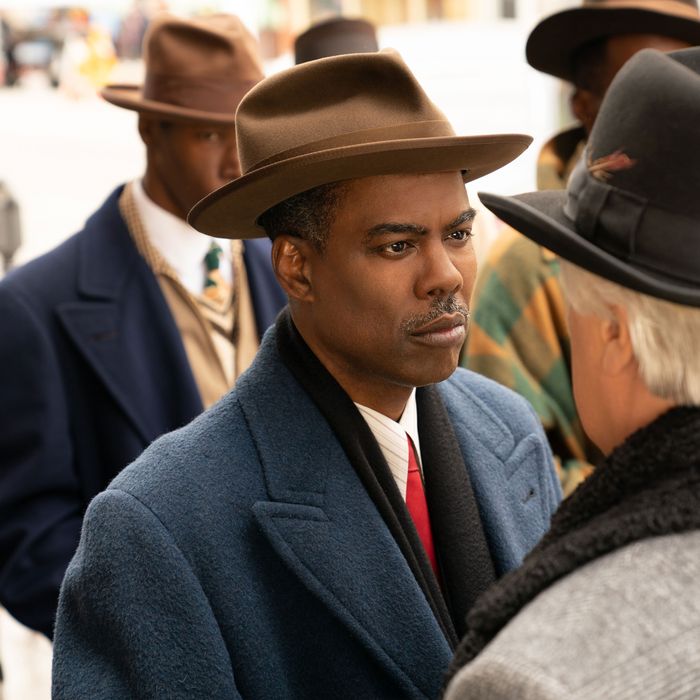
It may not be built to last. “Whoever was the last off the boat, finding the doors of honest capital closed, rolled up their sleeves and got to work getting rich the old fashioned way,” Ethelrida notes. Expanding on that thought a bit later, she observes, “Here’s the thing about America: The minute you relax and fatten up, somebody hungry is going to come along, looking for a piece of your pie.” And by 1949, the Faddas have found their piece of the pie in jeopardy thanks to the ascent of The Cannon Limited, a Black crime syndicate headed by Loy Cannon (Chris Rock). Not fearing history will repeat itself, or maybe hoping it will again favor them over their rivals, the Faddas agree to another son exchange. They send Zero Fadda (Jameson Braccioforte) to the Foys with the instruction to keep his eyes open, and take the reluctant Satchel Foy (Rodney Jones) into their home. One year later, the peace still holds, if barely.

Part of the pleasure of Fargo comes from seeing which Coen brothers films creator Noah Hawley will draw from with each new season. With its warring, ethnically distinct families wrestling for control of a city, the bloody, Dashiell Hammett-inspired Miller’s Crossing provides the obvious source of inspiration here. But another subplot calls to mind The Hudsucker Proxy. Loy, already serving as an unofficial banker for Black Kansas City, has aspirations beyond racketeering. His associate Doctor Senator (Glynn Turman) has pioneered an ingenious new invention called a “credit card,” but when they take the idea to “third-largest bank in the state” — after being yelled at for using the “wrong” door — they meet indifference from a smug bank president who works out of a posh office serviced by pneumatic tubes. This, by all appearances, won’t be just a crime story. It will be a story about what it takes to make it in an America seemingly determined to maintain the status quo.

In fact, Ethelrida essentially says as much, musing about the meaning of assimilation and pondering “If America is a nation of immigrants, then how does one become ‘American’?” Fargo’s characters don’t seem to know. The grown-up Rabbi (Ben Whishaw) still speaks in an Irish brogue, having never fully abandoned the ways of the people he betrayed. The adult Josto (Jason Schwartzman) bristles at the news that his brother Gaetano, who’s been working in Italy, will soon be visiting Kansas City. In Josto’s words, “He’s not even American!” Ethelrida also says, regarding the city’s Jewish, Italian, Irish, and Black criminals that “none of them were white,” at least not in the eyes of proper society.

Other events in the episode bear this out. When Josto’s father Donatello (Tommaso Ragno) is injured in a freak pellet-gun accident outside a school — after appearing to suffer a heart attack, an incident that resolves itself in a fart of epic length — his family rushes him to the nearest hospital. Unfortunately, this happens to be St. Theclas, a private hospital run by Dr. David Harvard (Stephen Spencer), who insists it’s for “Americans” and that they should instead drive Donatello to Saint Bartholomew’s, which serves their “kind of people.” “You and me are gonna dance again later,” Josto tells Harvard, but the doctor doesn’t appear to take the threat seriously. Some people know they’re untouchable.

The rerouting will prove fateful. It’s at Saint Bartholomew’s that Josto meets Nurse Oraetta Mayflower (Jessie Buckley), a Minnesota transplant with an accent to match. After snorting some powerful drugs with her in a supply room, Josto says of his father, “I don’t like to see him like that. Will you take care of him?” to which Oraetta replies, “I shall attend him faithfully until the Lord arrives.” Josto’s response: “Aces.”

You can play that scene over and over, like Kevin Costner with the Zapruder Film in JFK, and never quite figure out if Josto means for what happens next to happen. (The cryptic look on Schwartzman’s face after their exchange clarifies nothing.) Later that night, Oaretta cheerfully visits Josto, speaks to him comfortingly in Italian, declares herself a “people person,” then poisons his IV, killing him. Does she think she’s doing Josto a favor or is she some kind of Angel of Mercy killer? (Or maybe she just really wants his ring.)

Any clarification about what’s going on here will seemingly have to wait until later episodes. Having previously met Oraetta when Ethelrida stumbled on her at her family’s funeral home, we already know her to be an eccentric character with a fondness for small talk and casual, if unconscious, racism. Within moments of meeting Ethelrida she’s complimented her on her “wise words for people of your complexion” and saying “I’ve noticed your people are often more in touch with their spirit and emotional side.” At the episode’s end, Ethelrida watches Oraetta disembark a bus then enter her apartment building across the street from King of Tears. Then, as the camera pans up, we see what Ethelrida can’t: Oraetta watching the place, her lips moving as they form words we can’t hear.

We’ll undoubtedly find out more as the season progresses, just as we’ll find out more about Josto and Loy. The glimpses we get of the taciturn Loy at home, where he apparently leads a quiet family life despite trading away his son for another man’s suggest we’ve only seen the surface of the character. In fact, “Welcome to the Alternate Economy” is so packed with characters and information it often feels like we’re zooming past important elements. Whishaw only gets a few lines. Ditto Francesco Acquaroli as Ebal Volante, a seemingly levelheaded lieutenant in the Fadda clan; Matthew Elam as Loy’s son Lemuel; and other members of the Cannon syndicate. And, like Ethelrida, we only fleetingly see the Cannons visiting her parents, who’ve apparently hit on some sort of money trouble. It’s, put simply, a lot. But then Fargo usually is and, if history holds, what follows will shine some light on the shadowy corners and labyrinthine connections only hinted at here. Besides, the fogginess of history seems to be part of this season’s themes. “History is made up of the actions of individuals,” Ethelrida says. “And yet, none of us can know at the time we act, that we are making history.” It appears as if, before the season’s through, a handful of Kansas City residents will soon make history of one kind or another, whether they know it or not.
Okay Then!

• Denseness and all, this feels like a promising start for a new Fargo season. The typically impressive cast helps. Crutchfield’s a real find, shouldering a lot of the storytelling burden here and capturing the steely demeanor of a character who’s already seen more of her share of bigotry and nonsense. She has some nice tender moments with Bird, a musician making a confident acting debut, as well. It’s a pleasure to see Rock get a chance to stretch out and for Schwartzman to get such a meaty role. Both the story and a split-screen shot near the episode’s end set up the season as a clash between these two men. But Oraetta appears likely to provide an x-factor that could throw that conflict off, and Buckley’s performance keeps hinting at depths of still-unseen weirdness beneath that crooked smile.

• The Kansas City setting doesn’t come out of nowhere. In the real world, it’s been a mob hotspot. And in the second season of Fargo, it served as home base for the crime family that tried to push the Gerhardt clan out of North Dakota. Among them: one Mike Milligan, played by Bokeem Woodbine. If Mike is related to Rabbi Milligan, or anyone else in the Milligan Concern, it raises more questions than answers about the outcome of this season and what happened in Kansas City between 1950 and 1979, the setting of season two.

• The musical theme that plays throughout the episode is “Caravan,” written by Juan Tizoi and Duke Ellington and first made famous by Ellington in 1936. It works nicely, though it’s kind of odd to put the spotlight on Ellington in a show set in the town that belonged to his friendly big band rival Count Basie.

• This is obviously a fictional account, but the credit card as we know it did start to enter wide use around 1950.

• A few more items about 1950s Kansas City: Native son Robert Altman was living there at the time, having returned home after failing to make it as a writer in New York. Baseball fans could still see a game played by the Kansas City Monarchs, the Negro League team that was home, at one time or another, to Satchel Paige, Cool Papa Bell, Buck O’Neil, Jackie Robinson, and Ernie Banks. After Robinson broke the Major League color barrier in 1947, the Negro Leagues’ days were numbered, but the Monarchs persisted for awhile, a symbol of pride and achievement but also a reminder of a divided nation.

• If the enemies-exchange-sons-to-keep-the-peace scheme sounds familiar, you might have read the Fourth World stories Jack Kirby created for DC comics in the early ’70s. To restore order to the cosmos, the good Highfather and the evil Darkseid trade sons, with Highfather raising Orion and Darkseid raising Scott Free, later to become the heroic Mister Miracle. It doesn’t work out so well there, either.

• Kansas City also serves (partly) as the setting for the classic 1952 noir Kansas City Confidential, directed by Phil Karlson.

• Another Coen echo: withholding the credits until 20 minutes into the episode is reminiscent of Raising Arizona, which is well underway before it reveals its title.

• It’s been over three years since Fargo concluded its third season. During the interim, Hawley oversaw the second and third seasons of Legion and made his feature directing debut with the not-that-warmly received Lucy in the Sky. This season was supposed to premiere in the spring, but got pushed to the fall because of the pandemic, which shut down production. It also largely uses Chicago as a stand-in for Kansas City, where previous seasons used Alberta as a stand-in for the Upper Midwest.

• Stick around for the credits and you’ll see Stefani Robinson listed as a supervising producer. Robinson’s a veteran of Atlanta and What We Do in the Shadows. For the latter, she wrote “On the Run,” a.k.a. “the Jackie Daytona episode,” and picked up her second Emmy nomination for her efforts. Robinson has at least one writing credit later in this season of Fargo. Good get!