Thursday, July 8, 2021

American gods S3 Ep 2: Serious Moonlight

From AVClub.com
https://www.avclub.com/american-gods-struggles-to-recapture-some-of-that-seaso-1846060476

American gods S3 Ep 2:
Serious Moonlight
*******

American Gods struggles to recapture some of that season one magic in “Serious Moonlight”


Ani Bundel
1/17/21 8:05PM


Ricky Whittle stars in American GodsPhoto: Starz


“Half the art of war is knowing when to switch sides.”

American Gods returns to the moonlight, the serious moonlight. But no one is offering to put on their red shoes and dance the blues. Instead, “Serious Moonlight” opens in Wisconsin in 1690. It’s a slaughter race, and the Nordic settlers are winning out against the Native Americans, despite the latter crying out to their gods for help.

It’s the second episode in a row where the series attempts to recapture the openers from season one—in this case, Mr. Nancy’s famous slave ship scene. On the one hand, the slaughter race is a brutal scene, reminding viewers of the history of white men coming to these lands and Whiskey Jack’s (as Wisakedjak is known in the book) understandable hatred of Odin. But it also highlights how much of that has been muted, like a shadow of its former self. (Moreover, for those who have been paying attention, it’s a profoundly uncomfortable reminder of Orlando Jones’ claims he was fired from the show because the seething rage of Mr. Anansi’s speeches “send the wrong message.” Does the series view the genocide of the native populations somehow as easier on white sensibilities than to remind us what we did to Black people?)


Speaking of Shadow(s), poor “Mike” is in a miserable place out here in Lakeside. Despite the pasties (I do love a good pasty), the town is deeply creepy. And not just because “Ms. Property Manager,” Marguerite Olsen (Lela Loren), is a white lady who is all too comfortable putting a shotgun to the back of a Black man’s head and never bothering to apologize for it. (Please note that at no time in this episode does she apologize, even when she admits it was shitty behavior towards the end of the hour.) The apartment she’s “managing” is miserable, with the heat turned off, because she can’t be bothered to flip a breaker for her new tenant, while hanging a sign on the fireplace that says “Do Not Use.”

Moreover, when the show addresses the racial elephant in the room, it’s weaksauce compared to what came before. Having a teen who Shadow’s never met attempt to fist bump him to “show he’s down” makes for a nicely uncomfortable moment between him and the well-meaning sheriff, Chad Mulligan (Eric Johnson). But then the series just moves on, preferring us to focus on Chad and Ann Marie (Julia Sweeney) dropping large circular hints that this is a small town where they all worship a certain All-Father.

As for The All-Father, it would be the week I had an emergency dental appointment where Odin’s road trip brings forth Tyr the War God-turned-Dentist (Denis O’Hare). (There’s lots of blood split in his dental chair.) Tyr is merely a step on the road to eventually meeting Demeter anyway, who replaces Easter in the Old God lineup. But his scene is also useful to let us know that despite every bus canceling last week, it’s time to make like the Blue Brothers and head to Chicago.

Tyr and Odin aren’t the only ones making the road trip. Both Salim (Omid Abtahi) and Mr. Ibis (Demore Barnes) head to the Windy City, as all the Old Gods gather for the funeral of Zorya Vechernyaya (Cloris Leachman), the Evening Star and Odin’s former lover. Salim is still mourning the Jinn, and attends hoping he’ll turn up. (He does not.) Shadow also gets an invite, though not from host Czernobog (Peter Stormare), but Zorya Polunochnaya (Erika Kaar), the Midnight Star, reminding him to bring the silver coin she drew from the moon and gave to him for luck. Odin’s not invited, but when has that ever stopped him?

Odin at least talks his way into staying and partying the night away, until he has Czernobog pledging to join his fight. Shadow merely gets more riddles for turning up to see Zorya Polunochnaya, though he admits seeing her put the moon back in the sky was worth the price of all it took to get there.

And it did take a lot, including renting Marguerite’s bright purple old beater that once belonged to “Sandy.” Shadow also hit a deer on the way, though he got the windshield and the frame fixed before heading back. But the real cost shows up when he returns, as Lakeside has turned on him for leaving. Teenager Alison (Andi Hubick), who was making eyes at Shadow earlier in the episode, has disappeared, and Marguerite is all too ready to go full Karen and point the sheriff at Shadow’s mysterious car fixes as proof he murdered her.

But by the end of the episode, it seems like Lakeside (and probably Odin) is relenting. Chad announces Shadow’s story checks out, and the townsfolk once again accept him. Now to find out what’s going on with the moon.

Stray Observations:
With no real plot advancement for the New Gods, both Ms. World and Technology Boy are conspicuously absent this week.
The series reveals Bilquis’ patron is the head of an IT company, William Hunting Sanders (Gil Bellows), before having her swallow him in the show’s most conspicuous rerun yet.
That being said, a “pregnancy” storyline would at least give Bilquis something different to do. (If that’s where they are going.)

The White Buffalo is back in new visions for Shadow, stemming back to his childhood. I’m here for that, as long as it goes somewhere.
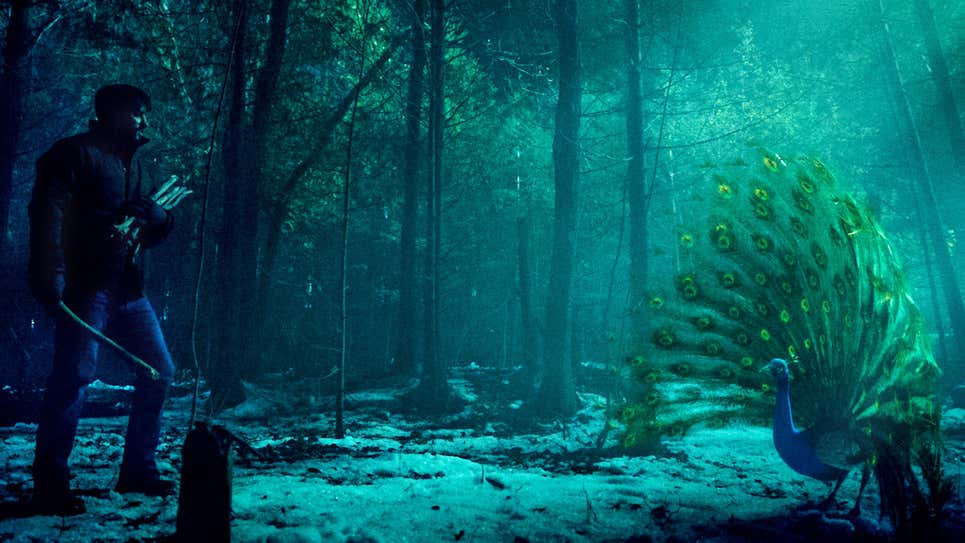
It’s not clear if the figure at the end trying to warn Shadow is a Peacock Angel, the Melek Taus of the Yazidi creation stories, but I’m hoping so.
My gods, Ian McShane is having SO MUCH FUN with this season so far. Even if the plot muddles along going nowhere, it’s worth tuning in to see him partying it up.
Can we get a full track list of S.Olsen’s Temp Mix, a la Guardians Of The Galaxy? Please and thanks.


Wednesday, July 7, 2021

The Girlfriend Experience S2 pt 2

from Indiewire.com
https://www.indiewire.com/2017/12/the-girlfriend-experience-season-2-finale-carmen-ejogo-ending-spoilers-1201910307/

The Girlfriend Experience S2 pt 2
*******


‘The Girlfriend Experience’: Carmen Ejogo on the Finale’s Added Relevance in 2017 and If Bria’s Story Should Continue

The future star of "True Detective" Season 3 doesn't like playing the same character over and over again, but she might make an exception for Bria.
Ben Travers
Dec 24, 2017 10:00 pm
@BenTTravers


John Golden Britt / Starz

[Editor’s Note: The following interview contains spoilers for “The Girlfriend Experience” Season 2 finale, Episode 14, “Relapse.”]

Gun violence is an institutional problem in American culture, but as the latter days of 2017 are filled with reports of sexual assault, harassment, and worse, there’s something cathartic about watching a woman go buy a gun and fire off a few rounds at the men who are holding her down.

Sunday night’s Season 2 finale of “The Girlfriend Experience” is an experience unto itself, as Bria, played by Carmen Ejogo, uses the favored tool of the patriarchy to fight back against it. Be it the cops, the organized crime lords, or her inattentive would-be boyfriend, Bria was manipulated, intimidated, and ignored by every man around her in Amy Seimetz’s half of the season.

“Bria is like this simmering pot that’s been ready to boil over the entire season, and I think that Amy really successfully figured out how to let everything boil over,” Ejogo said in an interview with IndieWire.

Even if her last-ditch efforts were more of a desperate release than a long-term solution, one of the tools of the system turned against the system itself provided ample context for timely interpretations of the episode itself — especially given who’s doing the shooting.

“In terms of payback, or in terms of a sense of retribution, or in terms of a sense of who’s manipulating who and all these questions that are kind of ruminating in the culture generally right now when it comes to gender politics and male/female interactions, I think [the finale is] so satisfying just topically,” she said.


“I think as a woman, if you’re in any way conscious of what’s happening to most women most of the time, this is always subject matter that’s going to be in you and ready to emerge in terms of story. It just happens to have become something incredibly topical and something everyone’s talking about at the same time.”

Ejogo said when she first read the script, she was “very satisfied” and struck by how well Seimetz tied together Bria’s journey in the ending. Her story didn’t need any outside context to add weight, but the climate in which it’s airing certainly does just that.

“I can talk to older women, I can talk to young girls, and we all have a common knowledge of the kind of sexual harassment and sexual politics that swirl around us every day in our lives,” Ejogo said, noting how ridiculous it is that women make up 50 percent of the population but are still treated like a cultural subsidiary.

“In making the show when we did, Amy and I knew exactly what we were aiming for, and if the audience caught up to it or didn’t, we still felt like we had to make the story that resonated to the subset of people that would get it. Given the wider conversation that’s now happening, I think there are a lot more people who are going to be [watching] open-eyed about what these episodes really look like and have the capacity to explore them with the kind of depth we hoped.”


Though Ejogo has already signed on for her next project — “True Detective” Season 3 alongside Mahershala Ali — she can see a future for Bria.

“These were always intended as capsule shows: The second season is the beginning and ending of Bria’s journey,” Ejogo said. “That being said, the idea of Bria being fodder for a continued journey, I think she’s complex and interesting enough that I’d like to see her entire life onscreen.”

Ejogo said she prefers to “keep it moving” as an actress, always looking for new parts and fresh challenges, but she would be willing to play Bria again.

“I feel very satisfied with where it left, but I can totally understand why people might want to see more — of where it goes next,” she said. “I would definitely be open to this character having a longer shelf life. Typically, that’s not how I look at things, but this is a special character. I can see there’d be a lot more to mine that would be satisfying for me as an actress.”

Tuesday, July 6, 2021

The Nevers S1 Ep 5: Hanged

From Vulture.com
https://www.vulture.com/article/the-nevers-recap-season-1-episode-5-hanged.html

The Nevers S1 Ep 5: Hanged
*******

The Nevers Recap: Penny and the B-Sides
By Amanda Whiting


Photo: Courtesy of HBO Max

It’s the penultimate episode of part one of season one of The Nevers. Part two of season one of The Nevers has yet to start filming and won’t be helmed by Joss Whedon when it does. Right now, the series is not exactly pick-up-and-play material: The world is appealingly elaborate, but its characters are messy and the plot is octopine. It’s tricky to see how Phillipa Goslett, the British screenwriter and first-time showrunner tapped to replace Whedon, can excavate what’s working (Amalia and Penance’s repartee, Hugo Swann’s cocksure smarm) from what isn’t (a longer list). But after watching “Hanged,” a much tidier episode than we’ve come to expect, I’m suddenly optimistic again. It’s feeling less like we’re nearing some arbitrary halfway point and more like the end of a lengthy prologue.
My Week In New York
A week-in-review newsletter from the people who make New York Magazine.


Most excitingly, the glowing blue orb that’s lodged underground and maybe has something inky swimming inside it finally, somehow, has a name. It’s a galanthi! Or some word that sounds like “galanthee.” Gullanthy? What I would give for a nice chalkboard session in which Mrs. True writes the word on the board, underlines it, and then explains her step-by-step plan to dig it up, likely never picking up the chalk again! Alas, all we glean from her morning standup with Penance is that the best access point is under the Royal Military Army base, so the St. Rom’s gang needs a big drill and a bigger diversion.


The diversion takes care of itself. After what I’m sure was a fair trial, Maladie is convicted on 15 counts of murder and sentenced with public execution, the first since the practice was banned in the 1860s. The hanging incites dissension amongst Lord Massen’s cabal. Their plan to assassinate Mary backfired, and now the orphanage is twice as full as it was before they sullied their hands. Her Majesty’s Government introduced the Certification Act (all touched have to register with the local constable) and the Blue Badge Act (all touched have to wear ribbons announcing themselves); the undocumented forfeit their legal rights. But it’s not enough for Lord Massen to see the touched brought to heel, he needs hope obliterated. Maladie’s public hanging will be “a bloodletting,” Massen says, desperately invoking a procedure already in the process of being discredited.

There’s just one problem with using Penance’s supercharged rock drill while the carnival of Maladie’s untimely end has them all looking the other way: Penance wants to stop the execution. Amalia objects to the side-mission for some solidly pragmatic reasons. (1) The gullanthi, which promises to explain the presence of the touched in London, is far more important. (2) For PR purposes, it’s a bad idea for St. Rom’s to harbor a serial killer. And (3) for safety purposes, it’s a bad idea for St. Rom’s to harbor a serial killer. Penance is unmoved. Sure, yes, okay, Maladie’s guilty of murder. But she’s being hanged because she’s touched.

Ultimately, the Scooby Gang can’t be in two places at once (though that would be a sick turn). Amalia and Penance stand on opposite sides of the courtyard, and the small group cleaves itself atwain. Penance recruits Harriet, Desiree, George, Violet, and, after promising to pay him, Nimble. Bonfire Annie sides with Amalia, as does Penny’s crow crush Augie, which stings. Of course, Amalia also wins Dr. Cousens because that’s apparently back on again, and, honestly, the sex scenes between them are disappointing. It’s all … punctuated … heavy breathing … and talking … between kisses — just do it right and catch me up on the plot over a post-coital cig.

The Amalia/Penance face-off isn’t the emotional crescendo it wants to be because no one’s drawing real sides here. Amalia is still queen bee, even if some of the girls go to the movies when she told everyone they were going to the mall that day. But it is a rewarding glimpse into what makes Amalia’s first lieutenant tick. Like Oppenheimer to his atomic bomb, Penance laments the violence of her inventions. She thinks her soul is being tested. But when hateful purists string up rows of nooses outside the orphanage, Penance goes back to the lab committed to the fight for good. If Amalia is the unyielding soldier, Penance is her conscience. Only a person with such scruples should have access to her powerful turn.

We make inroads to understanding the philanthropist Lavinia Bidlow, too, this week. The galanthi is cracking — hatching? — and she orders Dr. Hague to kill it — it’s alive? — before it kills everyone else. She wanted to reverse-engineer a cure for the touched; now, she believes that dream was naive. Over lunch with Augie, the two reminisce about ice skating with Hugo Swann as children, which means Lavinia didn’t always get around by wheelchair. Usually brusque with her brother, Lavinia finally shows some sisterly affection here. How does this all add up? It deeply does not, but I’m starting to like Lavinia for more than her high-lace collars. She’s the one female regular who isn’t touched, which makes me extra curious to learn how the touched were chosen. (I am directly asking you, Philippa, please, tell us.)

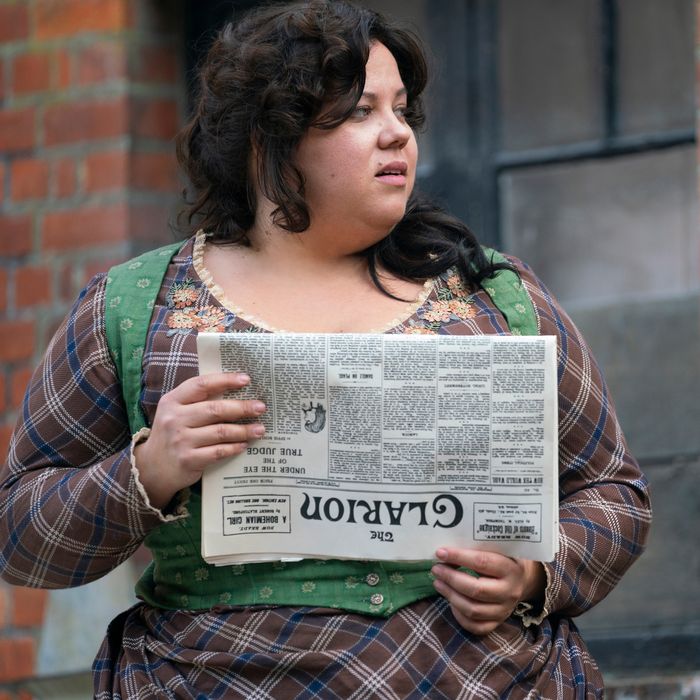
Since the beginning of the season, popular media has played a role in how The Nevers tells its story. We first learn of Maladie from a newsie’s holler in episode one. This week, the orphans read aloud the pro-touched newspaper column of Effie Boyle, intrepid lady reporter. Boyle’s been low-key hanging around Frank Mundi’s office since last episode; this week, she overhears yet another clash between Frank and Hugo Swann, whose Ferryman’s Club — another form of exploitation as entertainment — is facing pushback as the tide turns against the touched. It’s hard to care really. Every episode conspires to throw Hugo and Frank into conflict and nothing ever comes of it. I’m happy for the chaotic interlude, but what exactly is the scope of their previous relationship and why is it relevant? (This, too, Philippa, is a direct appeal.)

Death row is short in Victorian London. Before long, Frank, who now works special events security as well as homicide investigations, decides to limit how many people can watch the execution, parsing a difference between “public” and “packed.” He tells some minion to lock the doors at 400 spectators, and because I have seen television before, I know this is a bad idea. Anytime a character ostentatiously locks a door or does the opposite, it’s safe to assume they’ve made the wrong choice. The atmosphere inside is giddy. There are concessions for sale — oysters, gin. The child laborers in the Beggar King’s sweatshop have been making Maladie Barbies that come complete with their own gallows. Real life Maladie is trotted out to her noose to boos and taunts. The ground grumbles like an earthquake, which everyone more or less ignores, but I’m guessing it has something to do with whatever Amalia’s clique is doing up at the Royal Army site.

Penny and the B-Sides, meanwhile, shouldn’t have bothered. They start to put their elaborate rescue in action, but Maladie merrily, bafflingly, willingly leaps to her death anyway. “She wanted people to see,” Mundi observes, a few moments before it dawns on him what a bad idea those locked doors were. While everyone was watching the mainstage, the Colonel — Maladie’s henchman who could make you believe his lies — arranged some retaliation. He electrocutes anyone gripping the gate at the front row of the execution and the current ripples through the throng, and sometimes I’d really like to know what the bodycount is on this show. People are desperate to escape. Harriet is injured in the stampede that follows, and she’d surely have been trampled to death if Effie Boyle didn’t stop to save her. In the streets just beyond the hanging grounds, the Beggar King, now Massen’s mercenary, has lit bonfires to stir up more trouble. Nothing too destructive, just enough fabricated mayhem to convince Londoners that Massen’s extraordinary measures are necessary.

Before you can process the bedlam that just broke out, the other shoe drops. Specifically, Maladie’s shoe, and it reveals a foot missing some toes. I don’t know how much it’s reasonable to ask a person to remember week to week, but there was a Maladie devotee who confessed to hacking off her toe in devotion. It seems now she’s made a darker contribution. But if that’s not Maladie on the other end of the noose, where is she? Mundi pieces it together like Chazz Palminteri in The Usual Suspects, which is to say, by looking around his office walls a little too late. Maladie has been posing as Effie Boyle, and Boyle is the girl who turned up dead in the underground tunnels all the way back in the series premiere. Was this somehow Maladie’s plan all along? How is it possible she could predict the chain of events that would fill the space between the episodes? Maybe she killed Effie for some other unknown revenge and saw opportunity later. Regardless, Mal isn’t dead and the only person who knows it is the one getting credit for her capture.

Back at the orphanage, the B-Sides roll in. The A team is already back. Everyone is battered to shit, no one looks happy. Next week, I assume, we’ll find out what happened to Bonfire Annie’s leg. Or maybe we won’t. It’s honestly that kind of show.

Monday, July 5, 2021

Halston Ep 3-5

from Variety.com
https://variety.com/2021/tv/reviews/halston-netflix-review-ewan-mcgregor-ryan-murphy-1234971021/

Halston Ep 3-5
*******

‘Halston’ Is a Flat, Empty Provocation: TV Review

By Daniel D'Addario
Plus Icon

ATSUSHI NISHIJIMA/NETFLIX


Halston, the mononymous designer whose peak fame dovetailed with the celebrity whirl of Studio 54-era New York, rose thanks to his originality and coasted thanks to his willingness to be duplicated. In the new Netflix limited series, also called “Halston,” we see, at first, Ewan McGregor’s gleeful realization at just how much money he can make stamping his name on inferior product; later, he realizes the fees he’s collected came at the price of his artistic soul. “You are not Halston anymore,” an intimate informs him, as the loss of his autonomy sinks in, suddenly and all at once. “They are.”

Producer Ryan Murphy never works alone — “Halston” was created by Sharr White, directed by Daniel Minahan, and produced by, among others, Christine Vachon (also an executive producer on the FX queer-history documentary series “Pride,” out the same day as “Halston” and engagingly big-hearted in ways the limited series never approaches). But his stamp is easily detectable. And it hardly takes a Murphy obsessive to note the timing of a show about an artist whose creative life was ruined by attaching his name to products that didn’t represent the best use of his talents; this arrives some years into a Netflix partnership that so far has borne series that are creatively wobbly at best. Halston the man — at least according to the show bearing his name — was a creative powerhouse who, eventually, let his talent go largely wasted. That “Halston” the show similarly throws away real talent would be less frustrating if the show didn’t seem to be responding to its own shortfalls in real time.

McGregor tries his best. He’s certainly given a lot to play: Halston is extravagant, courtly, an addict in the thrall of many substances, attention most of all. He has a careful eye both for the drape of a garment and for the right thing to say in conversation with a more powerful person. To its credit, the show’s scripts have a sophisticated understanding of, say, the dynamic between Halston and Liza Minnelli (Krysta Rodriguez), the star who to Halston is everything; she views him as a wonderful pal. This unbridgeable gap leaves Halston lonely and unfulfilled — he feels a sorrowful ambiguity when she gets married. What’s more, for reasons historical as well as personal to a rigid aesthete, he cannot find real romantic love. Gay life in 1970s New York is depicted as isolating; Halston, alternately a homebody and a riotous, financially profligate extrovert who uses the party as a place to hide, is further isolated, even from himself.

This is not a new lane for Murphy, and once again it seems revolutionary — how rare to make an entire five-episode series dedicated to amplifying such a sour, cynical note — until one realizes there is nowhere for this story to go. Certainly the notion that the modern history of gay life is one as colored by repression and self-loathing as much as by the power of expression is a rich vein throughout Murphy’s work. Just last year, he produced a feature film remake of “The Boys in the Band,” the 1968 play that is the ultimate theatrical howl of isolation and pain. Previously, Ben Platt in “The Politician” and Darren Criss in “The Assassination of Gianni Versace: American Crime Story” played queer men driven by ambition that looks a lot like misdirected rage.

This show doesn’t go that far, because it doesn’t let itself go anywhere. Having established that Halston is without love for reasons within society and within himself, too, the show just shrugs. It eventually just stops telling its story — cuing up onscreen titles explaining Halston’s death and what happened to the other famous figures we met — without having provided a real ending, or much of a beginning or middle, either.

There’s an uncertainty, a diffidence, to the way “Halston” is told that raises the question, as it unfolds, as to what story producers wanted to tell at all. Flashbacks to Halston’s youth nod at the idea of the difficulty of growing up gay in midcentury middle America, but are so brief as to give the audience little of the real pre-notoriety Roy Halston Frowick to grab onto. And conjuring the magic and possibility of Studio 54 would be a heavy lift, but the show barely tries; crucially, Rodriguez seems under-directed and uncertain in the key role of Minnelli, upsetting the power imbalance between the two and letting key scenes drift away. As Halston’s lover, Gian Franco Rodriguez fares better, but his role in the story — existing in Halston’s life at an icy remove even at the height of their affair, then working to exploit him after they disentangle — seems intended to serve themes of gay treachery and venality that, with “Boys in the Band,” Murphy has already sold us. There, gay men exist in a sort of unredeemed pain and crisis, loveless and loathing. It’s a story of its moment, but it’s a bit shocking to see its ideas resurface again so soon.

“Halston” emanates from a fashionably blasé place, a pose of indifference assumed throughout the attempt to shock. Perhaps the most Murphy scene in “Halston” comes when the designer, asked to provide scent inspiration for a new perfume, blandly hands over his lover’s jockstrap. Poor Vera Farmiga presses it over her face and, as my TV’s closed captions had it, “breathes deeply.” She then tells Halston he is a born perfumer. Presenting the intentionally shocking as grist for premium product — treating raunch as the engine that creates a subversive new sort of class — is a quintessentially Murphy touch. He rewards his character for doing the same, but it feels all too predictable. In moments like these, “Halston,” a show that relies on the allure of familiar names and the thrill of bad behavior without giving any insight about either, plays it safe.

I am not a believer that accuracy is paramount in projects like these; that the Halston Archives have complained that they were not consulted is interesting contextual information but not, in theory, a deal-breaker. In practice, though, the show feels so completely a work of invention intended as dark comment on larger motifs of gay life in the 20th century that I have no idea whether, say, the underwear story would have been in character for the real Halston. Ranging freely over the life of a fascinating and accomplished person, Murphy finds loneliness not just the most interesting facet but the only one.

Murphy has, within the constraints of cable television, made some truly great art — including “Pose,” a show that exists in utterly joyful celebration of queer struggle. By contrast, “Halston” looks for all the world like premium product, but McGregor is the only person here trying. There is a lesson here. Halston wasn’t just creatively ruined by diffusion lines stealing his name. His reputation crumbled, too, and the meaning of wearing a Halston simply went away. Had he been allowed to drill down and really, carefully focus on what he did best, he’d be a legend for reasons other than how easy it is to twist his unfamiliar story into a too-familiar narrative.

“Halston” premiered May 14 on Netflix.

Sunday, July 4, 2021

Black Monday S3 Ep 2: Nine

from Meaww.com
https://meaww.com/black-monday-season-3-episode-3-recap-corky-shoot-blair-murder-roger-harris-widow

Black Monday S3 Ep 2: Nine


'Black Monday' Season 3 Episode 3: Did Corky shoot Blair? Roger Harris' widow has motive

Who shot Blair in the Season 3 premiere of 'Black Monday'? Was it someone he trusts or was it someone who has the most obvious vendetta?

By Alakananda Bandyopadhyay
Updated On : 22:14 PST, Jun 6, 2021

Blair Pfaff was having an affair with Corky Harris' congressman husband Roger (Showtime)

The one thing that has occupied the minds of fans of Showtime's hit comedy 'Black Monday' has been the harrowing shooting of Blair Pfaff (Andrew Rannells) planted right at the beginning of Season 3. The show sure does love pulling at people's heartstrings but it's nothing serious enough to lose sleep over. Unless one is way too obsessed with who shot Blair, leaving him in a giant pool of blood at the end of the Season 3 premiere.

Of course, Blair survived and the latest Episode 3 of this season sees him put on quite the show to appease the RNC. But are threats to Blair's life over or should he still lay low because the murderer could be lurking around? This subsequently brings us to the bigger question of who shot Blair after that epic Season 2 finale. Was it someone he trusts? Or was it someone who has the most obvious vendetta against the young trading prodigy?


Andrew Rannells as Blair Pfaff, Tuc Watkins as Roger Harris (Showtime)

According to the official synopsis of Black Monday's Season 3 Episode 3, titled 'EIGHT!', "Dawn (Regina Hall) puts on a show at her new “job” for her parole officer, while Blair puts on a show for the RNC. Mo makes a big personal announcement, and Keith tries to please Larry. Blair shoots for political points and his electroshock therapist gets a shock of his own." Nothing seems out of the ordinary for our gang of trading geniuses, but fans of the show still cannot help but wonder if the threats to Blair's life are really over.

Taking it to Twitter, one fan suggested: "Hear me out what if the murd3rer is corkie bc she loved roger n is framing blair ... she's the only one who has access to the plane yaknow." Not that anybody needs a reminder of the devastating tragedy that was Blair's romance with the heavily closeted politician, Roger (Tuc Watkins), but some fans consider Roger's wife Corky (June Diane Raphael) might have been the reason behind Blair getting shot. As the particular user notes, Corky loved Roger despite his infidelity and sexuality. Both Roger and Blair have been married to women on the show's arc and were skillful enough to not let their spouses have the faintest idea about the affair. Or even their sexuality, for that matter.

But one master plan from Blair's end turned out to have devastating effects on his relationship with Roger, as he tried to use a sex tape of the two of them to blackmail Roger's father-in-law, Pastor Newell (Jay Romero), all for a big bank rollout. The plan backfires as the pastor ends up releasing the tape to the media, and Roger kills himself almost immediately afterward. To make things even more tragic, Blair was the one to have found his body, and that was the end of Season 2. Next arrives the Season 3 premiere and Blair is shot. It makes sense for Corky to shoot Blair considering the heartbreak, devastation and humiliating his and her husband's affair caused. Especially in the wake of losing the love of her life, it seems just right for the curious Corky to take out the man behind the expose.


Actor Paul Scheer, who plays Keith on the show, also gave some interesting insights into who could have fired the shot. “This season is a big murder mystery,” Scheer had told TV Line ahead of the premiere of Season 3. The actor had further added, "It starts off in our first episode, and then it starts tracking throughout the season. Hopefully, people are going to try to figure out who it is, because it is a person that has been on the show at one point in the last three years.” Corky, although not regularly appearing in every episode, has been a steady presence for quite some time in the show's trajectory. Is the fan who speculated she was the murderer, right?

Find out on the next episode of 'Black Monday' Season 3, airing on Sundays at 10pm only on Showtime.

Friday, July 2, 2021

Fargo S3 Ep 6: The Lord of No Mercy

from Den of Geek:
https://www.denofgeek.com/tv/fargo-season-3-episode-6-review-the-lord-of-no-mercy/

Fargo S3 Ep 6:
The Lord of No Mercy
*******


A shocking goodbye made this an episode of Fargo to die for!
By Nick Harley|May 25, 2017|


This Fargo review contains spoilers.
Fargo Season 3 Episdoe 6

Last week, I said that this season of Fargo had become a powder keg waiting to blow, and this week it quietly went boom. A brotherly tussle quickly turned fatal when Ray took an unfortunately sharp shard of glass to the jugular. Though it unfolded slowly and without much noise, Ray’s death was perhaps the most shocking death of Fargo’s run thus far. It was never going to end well for the dimwitted “loser,” as his murderer described him, but I didn’t expect Ray to be dispatched so early.

That being said, it’s his own damn fault that he’s dead. I was under the impression that Ray was going to step his game up a notch after he came home to find Nikki badly beaten and barely able to walk. Ray was willing to sacrifice not only his job, but his entire relationship with his brother for the woman that he loved, so I certainly thought he would pull out all of the stops to get revenge on Meemo and Yuri. Through a mixture of luck and skill, Ray was able to avoid Gloria and Winnie when they came by his house looking for him, and he was even able to get Nikki and himself safely to a motel. Too bad poor Ray wasn’t as sharp as the glass that took his life; otherwise he may have remembered to bring his money with him while fleeing and he wouldn’t have had to return to the house.


However, I’m sort of thankful for Ray’s forgetfulness, because it provided us with that scene between him and Emmit. I’ve said it before, but Ewan McGregor does a hell of a job convincing the audience that these are two different people. Emmit’s defeated melancholy and compassion coupled with Ray’s teary eyed defiance are two powerhouse performances in one. Had Ray not been so prideful and stubborn, he could have been on the run with his prized stamp in hand, but instead he ended up face down in a pool of his own blood. Another big reason that Ray’s death is so surprising is because I think I was expecting Emmit to bite the dust first. My reasoning is laid out by Emmit himself; he’s kind, well-liked, and successful, but also he’s sort of vain and empty-headed, which on a show like Fargo makes him a perfect target. I guess it will be more fun trying to see Emmit stick to the story that Varga gave him as the heat starts to surround him.

Though Fargo’s two brothers may be lacking in brains, our women characters aren’t. Nikki is wise enough to avoid going to the hospital since authorities are looking for “Vanessa,” and even though Meemo leaves the motel before she returns to the room, Nikki is prepared for an ambush after going out for some ice. Maybe even defying the believability of her street smarts, she easily is able to deduce just what sort of trouble Emmit and Sy have found themselves in. Ray may be gone, but Nikki is alive and kicking, and I’m sure she won’t just disappear into the night.

Expect Gloria to shake things up too. Something appears to have snapped in Gloria, and she comes off much more aggressive and stern in this episode. She doesn’t allow herself to be pushed around by Varga during her visit with Emmit, and she’s also back to calling herself chief, as if she’s bucking against the condescending man in front of her and the one that’s on her mind. Worried by her visit, Varga tries to get some dirt on Gloria, but Gloria’s disdain for modern technology has made her completely invisible to Varga online. He’ll wish he had unearthed something too, because Gloria embraces her devil may care side and heads back to Ray’s for one more visit, just as Varga has been summoned there to deal with a body.

The possible collision of those two characters makes me anticipate next week, but there are other things I’m looking forward to as well. Sy’s reaction to Ray’s death will surely be something to behold, and there’s still the matter of the Widow Goldfarb hanging in the air. Also, Varga’s discovery of the low tech Eden Valley Police Station leads him to order Yuri to go obtain Ennis Stussy’s case file. No matter how low tech the station may be, breaking into a police station still sounds exciting. Fargo has steadily gotten better each week and I hope that trend continues.

Thursday, July 1, 2021

The Expanse S2 Ep 6: Paradigm Shift

from Syfy.com
https://www.syfy.com/the-expanse/episodes/season/2/episode/6/paradigm-shift


The Expanse S2 Ep 6:
Paradigm Shift
*******


137 years ago, back when Mars was just a colony under UN control, an engineer named Solomon Epstein was tinkering with the jalopy of a space ship that he owned. Initially just trying to marginally improve fuel efficiency, Epstein hits the drive button and immediately begins traveling far faster than he ever imagined. Narrating the flashback, Epstein says his discovery changed everything.

Back in the present, the UN security council is grappling with what Eros has done. Colonel Janus thinks it was a test of a new Martian fuel drive, a notion that Avasarala scoffs at. Whatever it is, Janus says, Eros represents the "greatest technological leap since the Epstein drive." They plan to send a team to Venus to investigate.

Holden sends a message home to his mother, telling her he's okay and how proud he is of his crew (especially Naomi). Later, he and Naomi continue to debate over whether or not they should destroy their sample of the protomolecule.

Holden and Naomi stand in front of the rest of the Rocinante crew and make the big announcement that they're seeing each other. After a pregnant pause, Amos and Alex erupt into laughter and say that Alex lost the bet. Amos is surprisingly cool with all of this.

Alex then pulls Holden aside to point out that 30 of the nukes that Earth sent have not been shut down. Where are they now? Well, they see that they've been caught by a giant space net. Guess whose net it is...

137 Years Ago: Epstein's fuel-burning breakthrough was great for mankind but kind of terrible for him, as he's now speeding off into space at Gs that will surely kill him. He tries to reach the panel to turn off the burners but he can't.

Avasarala has dinner with Dr. Michael Iturbi, who was present at the earlier UN meeting. The two of them seem to have some kind of romantic history, but she shuts that down quickly. He's fascinated by what's happening with Eros, and his theory as to why it did what it did is essentially what actually happened, so he's on the ball. He asks Chrisjen to find a way to get him onto that transport to Venus. He offers to be her eyes and ears there if she does.

On Tycho station, the Roci crew gets a heroes' welcome. They see that Diogo has already begun evangelizing Miller as the hero to the Belter masses.

Holden and Naomi speak to Fred Johnson about the 30 missing nukes. Fred doesn't so much see it as a problem because he's got them. Holden thinks they ought to jettison the missiles and tell Earth and Mars about the protomolecule. Fred counters that the nukes can be good bargaining chips, and as for the protomolecule, the safest thing they can do is keep Earth and Mars in the dark.

Alex, enjoying his hero status, chats up a lady but runs afoul of her husband. This starts a brawl, but Amos shows up out of nowhere and beats the husband down. He's bunking at the brothel next door, see.

137 Years Ago: Epstein makes a last-ditch effort to signal his wife, but he can't reach the signalling device. Things are looking grim.

After Fred tells Holden that he's going to need to pick a side as things escalate, Naomi goes to see Fred as well. She thinks they should tell the people everything about what Miller and Julie did on Eros. Not the protomolecule stuff; just how an Earther/OPA member and a Belter came together to save humanity. That story has value. Fred agrees.

Later, the Roci crew debates whether they should destroy their protomolecule sample. Alex says they should give it to Mars, which earns him a heap of side-eye from Belter Naomi. Ultimately, Naomi drops her objections and agrees with Holden and Amos that they should kill it.

Naomi launches the protomolecule out on a torpedo on a course to the sun. Alex tracks its movements according to plan, but we see the torpedo suddenly power down, unbeknownst to anyone.

137 Years Ago: Epstein is about to die - of a stroke, most likely. But he voices over about his discovery and how it would allow Mars to finally break free of its colonial limitations, travel out into space, mine the asteroids, and colonize the belt.

Avasarala finally confronts Errinwright about Mao, and how she knows Errinwright is working with him. She says they need to know what Mao knows and cut a deal with him. Avasarala goes OFF on Errinwright, saying that she will threaten to ruin Mao's family if they don't bring him forward.

On the Roci, Alex comes upon Amos defacing the Martian flag (erasing Deimos since it's not there anymore) and starts beef with him. He's still mad about the bar fight and Amos treating him like some damsel in distress. Amos matter-of-factly says he does see Alex as weak and in need of protection. Alex, as you might imagine, objects to that assessment.

Naomi gives Drummer a hand in disabling the countermeasures on the pilfered nukes. They bond some more over being Belters.

On the shared US/MCR station of Ganymede, Bobbie Draper and her marines patrol the border zone. While in a communication blackout, they spot gunfire on the UN border line. Suddenly, the marines' comms are jammed, and six marines appear to the charging at them. If it's a battle, Draper has been ready for this for a while. But upon closer look...is something chasing the UN marines?

Suddenly, there's gunfire everywhere. Ganymede station is attacked by unknown parties. Everyone in Draper's unit gets gunned down, as does her commanding officer. Draper's the only one left to see the approach of the attacking figure … and its looks alien.